


Southern Illinois University’s School of Medicine points to software cost avoidance and the ability to supplement SaaS products as benefits of its process automation approach.
The rise of medical records and data creates a burden for healthcare organizations in the form of increased costs, manual labor and operational challenges.
AI impacts critical healthcare areas such as process mining, clinical data management, and front-office, mid-office, and back-office operations —all of which play a key role in managing patient information and providing better care.
Here’s How AI is Making a Difference in Healthcare Data Management
- Data Management: AI is a critical tool for managing massive volumes of healthcare data. It automates tedious tasks like data entry and analysis, freeing up valuable time for medical professionals. This not only improves staff efficiency, but also minimizes the risk of errors with manual data entry.
- Improved Insights: By analyzing vast amounts of patient data, AI can uncover hidden trends and patterns that inform better treatment decisions. This paves the way for personalized care, tailoring treatment plans to each patient’s unique needs and medical history.
- Streamlined Operations: AI improves how organizations automate repetitive tasks like appointment scheduling, billing, and prior authorization approvals. This frees up staff for more crucial duties, reduces wait times for patients, and increases efficiency and cost-effectiveness.
Key Areas of Focus for Healthcare Organizations—and How AI Is Impacting Them
Interoperability: The key to successful digital transformation in healthcare is interoperability. This refers to the seamless exchange of accurate patient information between different departments and systems. By ensuring data flows smoothly, AI can unlock the true potential of healthcare data exchange. This not only improves operational efficiency, but also enhances the experience for both patients and staff.
Revenue Cycle Management (RCM): the process of tracking and managing the lifecycle of financial transactions associated with patient care is crucial to a healthcare organization’s operations. However, lack of standardization across patient information and medical records, as well as time-intensive back-office manual processes, can be a strain on healthcare organizations. AI enhances process automation and data extraction to eliminate manual data inputs across medical billing, prior authorization approval and claim processes, eliminating errors that delay payments and burden healthcare staff.
Value-based Care: The shift towards value-based care, where healthcare providers are rewarded for patient outcomes rather than the quantity of services provided, requires a holistic view of a patient’s health journey. AI helps by seamlessly managing real-time datasets between systems, physicians, and internal/external clinicians. This comprehensive view allows providers to see the full picture – all sources and history of a patient’s clinical data and treatment patterns. This enables providers to make informed decisions, personalize treatment plans and deliver more effective value-based care for patients.
How Can AI Solve Digital Transformation Challenges in Healthcare?
A Lack of Automation in RCM
One of the biggest challenges healthcare faces is streamlining the often-manual and error-prone Revenue Cycle Management (RCM) process. This translates to inefficiencies in:
- Prior authorization and eligibility checks: Verifying insurance coverage and obtaining approvals for procedures can be a time-consuming and frustrating process.
- Insurance claim scrubbing and submissions: Manually submitting claims and ensuring they are coded correctly is prone to errors and delays.
- Insurance denials management and appeals: Dealing with denials and appeals is a complex and resource-intensive task.
- Medical coding and payment collections: Assigning accurate medical codes and collecting payments from patients requires significant manual effort.
- Provider credentialing: The process of verifying a healthcare provider’s qualifications can be lengthy and bureaucratic.
AI helps by offering a suite of capabilities to support healthcare providers:
- Streamlining patient data management: AI can integrate various data sources, including patient information and medical records, into the Electronic Health Record (EHR) system. This creates a comprehensive view of a patient’s health history.
- Automating patient communication: AI can automate tasks like appointment scheduling and sending post-operative reminders, freeing up staff time for more critical duties.
- Generating medical insights: AI can analyze patient data to generate insights that can be used for diagnostics and treatment planning.
- Improving clinical decision-making: AI can analyze large datasets of clinical data to identify patterns and trends that can inform better treatment decisions.
- Accelerating drug discovery: AI can analyze vast amounts of data to expedite drug discovery and development, leading to faster breakthroughs in medical science. AI can also help predict treatment outcomes and track development plans, ensuring compliance with regulatory requirements.
The Need to Reduce Operational Costs
- Optimizing medical records management: AI facilitates secure and centralized storage of medical records, enabling authorized staff to access information quickly and efficiently, while adhering to HIPAA regulations. Automation can also streamline record lifecycles, minimizing manual work and potential compliance fines.
- Enhancing healthcare data exchange: AI can easily capture and integrate various types of patient data, including demographics, insurance information, and medical records. This not only ensures accurate data processing, but also allows for quick retrieval of information. AI streamlines administrative tasks, freeing up staff time previously spent handling large volumes of medical documents.
- Transforming the patient and staff experience: AI can automate tasks like appointment scheduling and information access, empowering patients to take a more active role in their healthcare journey. Additionally, AI can automate the linking of information across different healthcare systems, allowing for smoother referrals, lab integrations, and overall improved patient experience. For staff, AI streamlines provider credentialing processes and automates data management across patient information and revenue management systems, reducing administrative burdens.
Overall, AI is revolutionizing healthcare by improving data management, enhancing task automation, and providing valuable data insights. This leads to better care for patients, reduced costs for organizations, and improved efficiency across healthcare organizations.
Want to learn more about digital transformation trends in healthcare? Download the white paper, Intelligent Automation in Healthcare — What Motivates Investments in the Next Generation of EHR Integrations.
Learn how Laserfiche AI is transforming enterprise content management—enabling organizations to increase efficiency, enhance data privacy and security, and do deeper analysis of their unstructured data.
At Laserfiche we’re always looking forward. We also know that industries like manufacturing and healthcare are continuously searching for new ways to address their industry’s unique challenges.
That’s why in the new year, we asked one of our resident industry experts — Grace Nam, Strategic Solutions Manager: Manufacturing and Healthcare — to make predictions about what innovations and ideas healthcare organizations and manufacturing firms are going to prioritize in 2024.
Healthcare organizations will leverage new technologies to innovate and reduce costs:
- Trends in healthcare technology in 2024 will heavily focus on cost-effective solutions, specifically in Finance/RCM areas, to drive operational efficiency and increase workforce satisfaction. AI-enhanced workflow tools will be used to enhance existing processes and better leverage data to become more efficient and solve legacy industry challenges such as staffing burnout and the lack of harmonization for healthcare operations.
- Interoperability and artificial intelligence will play a large role in the innovation of healthcare technology in 2024 and will be necessary to control the rising needs in healthcare data management and analytics, specially in the clinical field. By allowing AI-enhanced workflow, organizations can implement better data exchange between processes and immediately deliver results in cost and time savings, while significantly improving staff and patient satisfaction.
- AI tools will be utilized to enhance current healthcare technologies, further expand the capabilities of automation and streamline day-to-day operations. As personal value-based care will continue to grow in 2024 and it will be critical for healthcare providers to create digital access to support in-person and telehealth visits in order to maximize outcomes for both healthcare organizations and patients while driving consistent operational efficiency.
Manufacturing will utilize AI and other technologies to achieve improved interoperability:
- In 2024, more manufacturing companies will integrate artificial intelligence and machine learning to address high-cost functionalities with compliance documentation and interoperability issues between software and technologies. By utilizing process automation and enhancing data processing speed, manufacturers can increase operational efficiency and reduce costs with improved systems while achieving business agility and scalability.
- We can expect greater adoption of digitization and process integration by manufacturers in 2024. These solutions will allow manufacturers to make critical decisions in a timely manner, prioritize high-cost challenges, and control compliance. Additionally, more manufacturers will make significant investments in AI, ML and integrations in order to address delays in production, document and data control, inventory management, inspection and shipping.
- Manufacturing enterprises are often vast and complex, and in 2024, data exchange and management will be crucial in achieving interoperability. By efficiently using and processing data through the power of automation, manufacturers will be able to create a work environment that not only encourages employee productivity but attracts younger generations of talent. Using digital tools to move data more seamlessly throughout manufacturing systems will be key to boosting ROI in 2024.
Start your digital transformation journey
Want to make an innovative start to 2024? Check out the following resources to learn how ECM can be your organization’s key to newfound efficiencies this year.
Schedule a personalized Laserfiche demo
A complete ECM solution like Laserfiche can help organizations across industries dramatically improve the efficiency of its business processes. See first hand how Laserfiche can be your solution and schedule a demo.
Discover powerful solutions on the Laserfiche Solution Marketplace
Some of the more robust ECM systems, including Laserfiche, offer marketplaces for process templates that organizations in a variety of industries, including manufacturing and healthcare, can use to jumpstart digital transformation initiatives. To learn more about the Laserfiche Solution Marketplace, watch the video below:
Gain new insights with our latest industry white papers
Check out this healthcare industry whitepaper to learn more about the role intelligent automation is playing in the industry.
In addition, our manufacturing whitepaper can be a useful resource for firms looking to further protect their production pipelines from disruptions.
Check out the G2 Grid® for Enterprise Content Management (ECM)
Comparing ECM systems? Compare the top vendors in the space with the G2 Grid® for Enterprise Content Management (ECM):
In an era of evolving technology and limited staffing resources, the question of automating or optimizing workflows to reduce repetitive work within medical practices is a matter of “how” and when.”
Healthcare leaders feeling the pressures of a competitive labor market and stagnant reimbursement rates report they are not prepared to make a switch to a new EHR or practice management (PM) system in the coming years, but they do find value in the elimination of manual work when they invest in new platforms to save operational costs.
Laserfiche, the leading SaaS provider of enterprise content management and business process automation, partnered with Medical Group Management Association (MGMA), in 2023 to better understand the opportunities and challenges for medical practice leaders in evaluating their platforms for workflow, electronic forms, document and records management and more.
In May 2023, Laserfiche and MGMA surveyed medical practice administrators, physicians, billing and coding leaders and health information technology (HIT) workers for their views on EHR and PM systems, business automation and more to understand:
- What is their current level of satisfaction with these systems?
- What improvements are these healthcare leaders looking for in new platforms?
- What are their priorities when looking to invest in new platforms or integrations?
Three big Ws: who, what and where
To understand the survey respondents’ overall satisfaction and willingness to embrace new platforms or integrations, we must start by assessing their current systems:
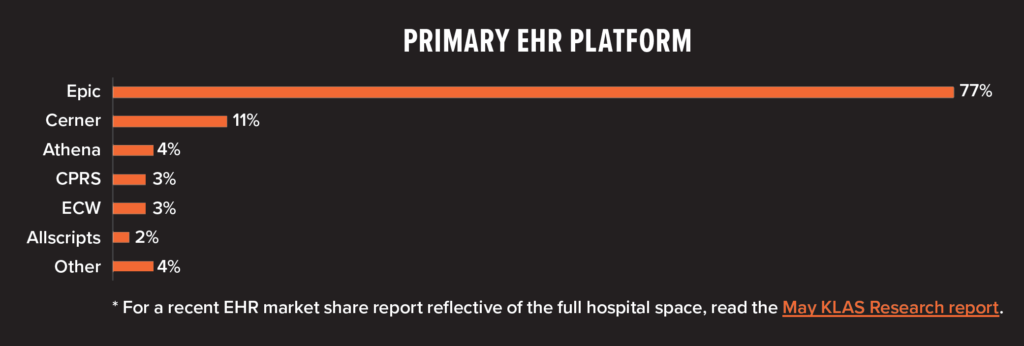
- More than three-quarters (77%) of respondents reported that Epic is their primary EHR platform, with another 15% on Cerner or Athenahealth, about 8% on CPRS, eCW or Allscripts, and another 4% who responded “other.”
- More than eight in 10 (82%) respondents come from large organizations of more than 100 full-time-equivalent physicians.
- Hospitals or university hospitals made up the largest share of respondents by organization type (43%), followed by integrated health/delivery systems (24%) and medical group practices (23%), with the remaining 11% comprised of other academic medical settings, federally qualified health centers (FQHCs), rural health clinics (RHCs) or “other.”
Rating current platform performance: a mixed bag
Almost four-fifths (79%) of surveyed healthcare professionals gave their current EHR system a “very good” or “good” rating on overall performance, though no single attribute of their EHR system rated as highly as that broad assessment:
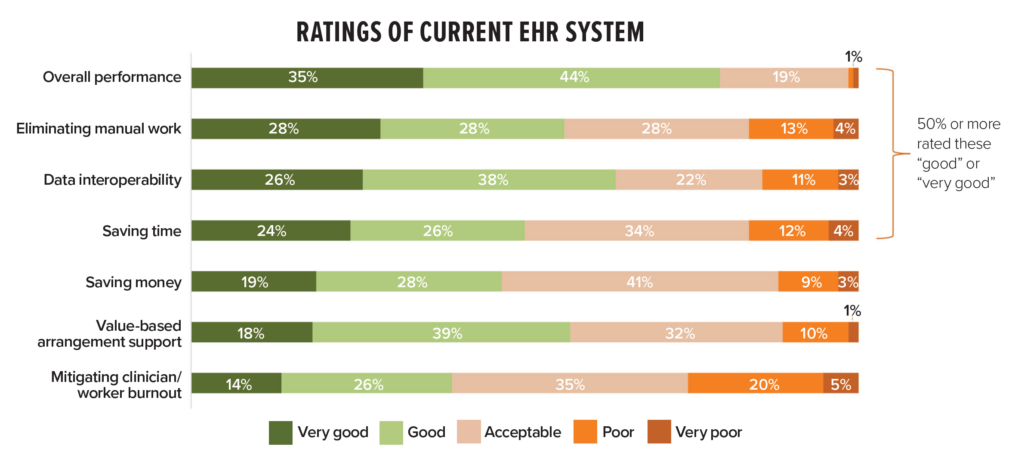
- Data interoperability (64%) and value-based arrangement support (57%) were the top two specific ratings for “very good”/“good” performance behind the overall performance rating.
- When rated for ability to eliminate manual work, the “very good”/“good” rating falls by more than 20 percentage points to 56%.
- “Very good”/“good” ratings were even lower for attributes such as “saving time” (50%), saving money (47%), and mitigating clinician/worker burnout (40%).
Want to learn more?
Download the whitepaper, “Intelligent Automation in Healthcare — What Motivates Investments in the Next Generation of EHR Integrations.”
SITUATION
• Legacy online storage and file-sharing system was complex and lacked searchability
• Difficult navigation and manual effort frustrated employees and school districts
RESULTS
• Streamlined collaboration between school districts and Greenbush’s Medicaid and business office
• Increased accuracy and transparency
• Reclaimed time for staff to focus on serving students and families
Using a shared drive or common online storage solution like Google Drive to store and share information works — until it doesn’t. That was the case for the Southeast Kansas Education Service Center – Greenbush, an organization that offers a wide variety of services to schools, students and families throughout the state of Kansas.
Greenbush works with 117 school districts and 18 infant toddler networks across Kansas. One critical service the organization provides is helping districts maximize their Medicaid reimbursement through special education programs. Acting as a third-party biller, Greenbush helps to process claims accurately, while managing the complex information gathering and billing requirements of Medicaid.

Recently, the Greenbush Medicaid billing team reimagined its information gathering process by replacing its BAA compliant Google Drive with a Laserfiche content services platform. The new system streamlined collaboration between the school districts and Greenbush’s Medicaid and business office, increasing accuracy and transparency, while reclaiming time for staff to focus on what matters: serving students and their families.
Accessibility, Visibility and Searchability
The Greenbush Medicaid billing team’s Google Drive was organized in a complex indexing system, which served the purpose of collecting and storing student information but was difficult to navigate. To help employees find specific records, the team created a series of file folders or spreadsheets that showed which students had been uploaded in which batch. District administrative contacts expressed frustration with the number of clicks it took to share or find information.
“The districts didn’t have the ability to intuitively search by a specific student name to confirm that they had sent the student’s information to us,” said Marlene Willis, project manager and coordinator of Medicaid billing at Greenbush. “We didn’t have the ability to search within document batches by an individual child’s name if a question arose regarding that child. It was just a lot of clicks, a very complex system, not a lot of visibility into the data.”
Willis and her team championed the adoption of Laserfiche, a content services platform that would not only make information more searchable, but also improve recordkeeping, support compliance with regulatory requirements, and open up new opportunities for automation.
“Our department found that the legacy system was taking time away from production — getting demographic data into the billing system so that districts could actually have things ready to bill when it was time to bill,” Willis said.
Greenbush worked with Laserfiche solution provider Modified Logic on the implementation, testing and rollout of a Laserfiche Cloud system, which had a quicker timeline than originally anticipated. “We started the project in July of 2022, and had a soft launch with a few key clients in October,” Willis said, adding that the full rollout to all clients happened in January 2023. “The Modified Logic team and everyone we’ve worked with at Laserfiche are phenomenal. They have a similar work ethic that we have at Greenbush, which is focused on the client first, and removing barriers.”
The new Laserfiche system gives the Greenbush team the ability to search across folders and document batches, without the need for additional spreadsheet guides. “We have the ability to see bulk uploads and the split of information into singular student data records,” said Willis. “The accessibility, visibility and searchability in Laserfiche — that is a hallelujah moment.”
Laserfiche has streamlined the client experience as well. When school districts log in, they are presented with the option to fill out two different Laserfiche Forms. One form enables school districts to add a student into the system, which has the option to attach supporting documentation such as parental consents to submit Medicaid claims, information from the medical provider saying that they signed off on specific therapies, etc. The second form allows the school districts to submit books of information, for instance if they need to submit one document of 30-40 pages.
Data and documentation from the forms are all automatically routed and classified in Laserfiche, enabling easier access for the Greenbush Medicaid team. The Greenbush Medicaid team also uses Laserfiche to share information with the Greenbush business office, giving the organization granular access controls and making it easier for employees to support HIPAA compliance requirements without additional administrative burden.
“We keep records up to six years from the date of the actual service; it’s a compliance requirement,” Willis explained. “These records contain PII for students — and there are also some FERPA requirements involved, so there are a lot of different legal entities to appease. The management of all that data is where Laserfiche has been a boon.”
Embracing Opportunity and Looking Toward the Future
The Greenbush team is kicking off its first full school year with the new Laserfiche system and already expanding its digitization efforts. Building on the successful Medicaid billing transformation, the business office automated invoicing, eliminating the need to hand-key over 175 remittance devices weekly.
“We previously had a very cumbersome process involving explanation of benefits or remittance advices, which had to be hand-keyed,” Willis said. “With Laserfiche, optical character recognition is now able to read remittance devices, and they fly into the invoicing portal. The data are aggregated, disaggregated, percentages are applied. Laserfiche totally automated the work between the billing department and the business office, and then automatically routes the information to the clients.”

Adoption is spreading quickly, thanks to the system’s ease of use and clear benefit to employees, clients and the families they serve. The organization is looking forward to taking advantage of new opportunities to optimize and transform processes with the new system, while keeping the focus on students and their families.
“It’s going to alleviate the time stress on front line staff who are actually out working one-on-one with families, driving house to house,” Willis said. “They’re going to claw back that paper administrating and be able to have time to better serve families and children. That’s the opportunity that Laserfiche provides.”
A process automation team at Southern Illinois University (SIU) Carbondale’s School of Medicine uses Laserfiche to automate paper-based tasks. According to Jennifer Washburn, IT manager at the SIU School of Medicine, “The demand for services just keeps growing.”
SITUATION
• Complex processes surrounding procurement, service requests and other business needs lacked consistency and oversight.
• The organization sought a solution to automate business processes and streamline them for staff.
RESULTS
• Automated solutions accelerated key workflows including the timesheet process, which was reduced from one week to less than a minute.
• Digitization and automation initiatives supported staff satisfaction, new hybrid work models, interoperability and compliance across the organization.
SIU Medicine is a publicly assisted medical school and clinical practice with more than 2,000 providers, researchers and staff members across the state of Illinois. Additionally, SIU is home to a world-class scientific research facility. The facility’s more than 100 active projects complement the institution’s mission of optimizing the health of the people of central and southern Illinois through education, patient care, research and community service.
SIU’s multi-pronged approach requires complex business processes for procurement, service requests and other everyday activities. The organization has been using Laserfiche for digitizing records for the past 10 years, partnering with Laserfiche solution provider TKB Associates. Recently, SIU found a need to modernize processes and expand use of Laserfiche to include Laserfiche Forms and workflow.

“[We saw] an opportunity to get executive buy-in and automate processes like online timesheets,” said Jennifer Washburn, IT manager at SIU Medicine. “And since then, we’ve had people lining up and really wanting us to tackle their projects.”
Today, the organization has embraced process automation across departments, leveraging Laserfiche as a capture, decision-making and workflow engine. With streamlined processes and automated records management that reclaims time for employees to focus on more value-added work, Laserfiche supports the organization’s goals, enabling SIU to sustain high employee and patient satisfaction.
Responding to Change with Tech-driven Solutions
Like healthcare IT teams across the country, SIU Medicine’s Process Automation Team has navigated three significant challenges in recent years:
- Staffing and new work models: Healthcare provider shortage remains a growing concern to public health professionals. The industry must adapt to new hybrid and remote work models.
- Interoperability: Operating across numerous systems, healthcare organizations need timely and secure access to health data to optimize outcomes for the people they serve.
- Compliance: The regulatory landscape is increasingly complex, and requires fast and full adherence to avoid poor outcomes, financial penalties and negative attention.
The Process Automation Team’s commitment to continuous improvement has been a boon to the organization’s ability to respond in innovative ways.
“Laserfiche allowed us to tackle problems and solve them in ways that I don’t think would have been possible otherwise,” said Jennifer Washburn, IT manager at SIU Medicine.
Supporting New Work Models
To support hybrid and remote staff, the organization started by automating the timesheet process with Laserfiche Forms.
“Laserfiche Forms allowed us to help our staff continue to do their jobs from wherever they were,” said Washburn. The team created electronic forms and associated workflows for different types of timesheets in various employee categories.
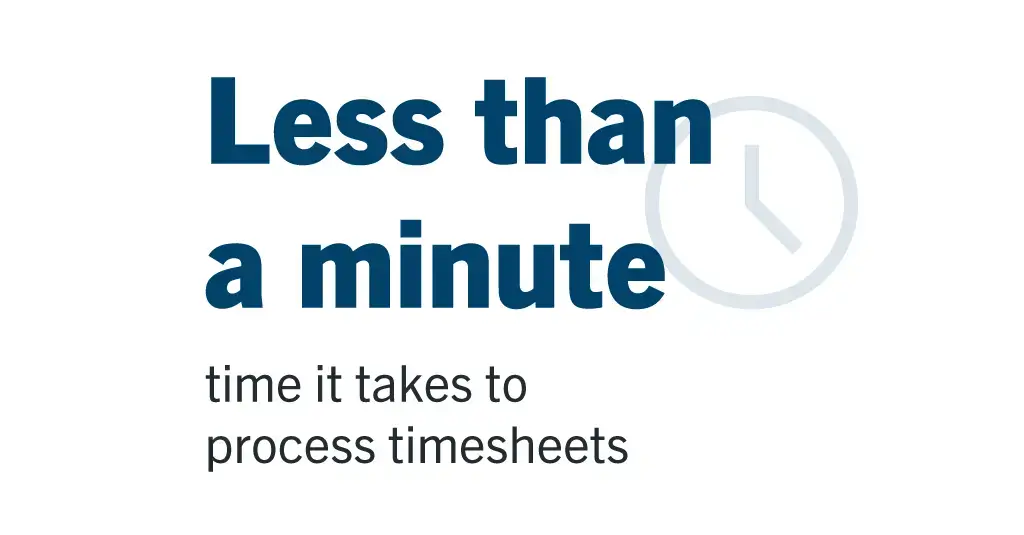 “SIU’s timesheet process was reduced from 1 week to less than a minute.” align=”left”>The difference in the automated process was significant. “Previously, the manual processes could take a week or longer,” Washburn said. “Today, it takes less than a minute.”
This initial automation project also sparked a shift in which many departments began to see real value in digital transformation.
The selection of timesheets for a pilot was also strategically successful for the Process Automation Team. “Not only was it a huge efficiency gain for us, but it also introduced every single member of our workforce to Laserfiche Forms,” Washburn explained.
The Process Automation Team has continued to take on new projects with the goal of enhancing the employee experience and empowering users to do the work and research that supports the organization’s mission. Meanwhile, Laserfiche tools like electronic forms, automated workflows and electronic records management also support compliance with internal and external requirements, as well as users’ ability to access data across different systems.
Improving Interoperability across the Organization
SIU Medicine has automated both simple processes such as animal requests — enabling researchers to request animals for research projects, with streamlined approvals and documentation— and more complex workflows that are used organization-wide.
For example, purchase orders are now on Laserfiche Forms. What was once a manual process that involved PDFs being emailed or paper forms being passed from desk to desk is now completely digital and automated.
“We created a Laserfiche form that pulls budget purpose numbers and auto-populates the necessary information from another system, which then brings in the fiscal officer that’s responsible for that budget number,” said Mike Overmeyer, data architect at SIU Medicine. The automated system also helps employees by auto-routing POs that may need to go to multiple officers, or that are rejected by one or more officers. “We also give purchasing the ability to run POs by IT or an administrator, if they need to. It’s conditional, and we’re not putting the onus on the employee to make those decisions or execute those manual tasks that can end up causing delays.”
Washburn said that budget purpose numbers are housed in a separate, legacy accounting system that can be leveraged via lookups from Laserfiche Forms. “Users enter a number and it all pre-populates. They click submit and it’s near instantaneous getting to the next person. The end users are amazed that they can do all of this in one place.”
Feedback has been so positive that the project was expanded to include purchases that are made through state procurement cards. “The intent is now to use it for everything that gets purchased for the school, from paper towels and office supplies to computer or laboratory equipment,” Washburn added.

SIU also used Laserfiche to expedite the collection of patient information when a local healthcare provider retired. “There was a local practice where the provider retired, and all of their patients were transitioned into our practice,” Washburn explained. “We had to collect release of information notices, so we quickly deployed a Laserfiche form to streamline that process. Our clinical staff just had to enter the patient’s health record number. Our system integrates with our practice management system to pull everything automatically, which significantly reduced the time it would have taken manually.”
SIU Medicine’s IT department also stood up its own Laserfiche-powered system for entering requests. Employees fill out an electronic form to request a variety of IT services, including reports, software installation, or even new processes through Laserfiche Forms. “Prior to using the forms, we would get requests that were very unstructured, and there might be a lot of follow-up questions to find out, for instance, what reports someone needed, or what we could to do provide support,” said Jeff Wilson, IT director at SIU Medicine.
Other processes that the organization has transformed using Laserfiche include:
- Medical provider onboarding
- Student registration
- Proof of vaccination collection
- Program requirements tracking for medical students
- Animal research laboratory access requests
- Human resources performance evaluations
- HR applications for retention bonuses
- Position change requests
- Invoice distribution
- Special event approvals
- Equipment move requests
- Equipment inventory count certification
Navigating Compliance and Supporting Staff Satisfaction
SIU leverages Laserfiche’s robust records management capabilities on a daily basis for compliance with industry and state requirements. All forms and information generated from Laserfiche processes are saved and managed in the Laserfiche repository, supporting information governance practices at SIU.
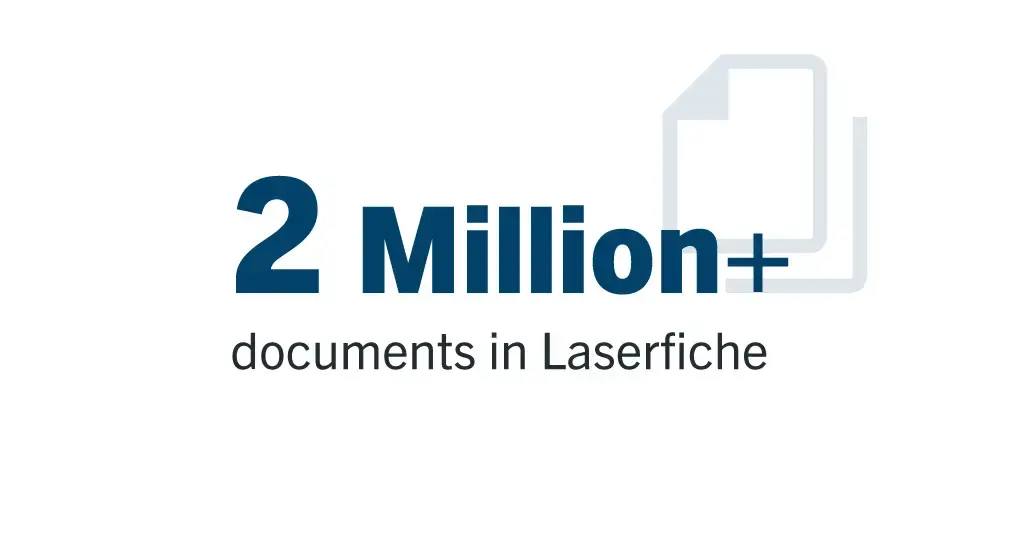
“We have well over 2 million documents in our repository,” said Washburn. “If there’s not an existing folder structure for the area that we’re working in, Laserfiche Forms can create it dynamically. We make sure that everything lands in Laserfiche at the end of the day.”
Finally, the organization’s digital efforts have extended beyond process, productivity and compliance improvements, into staff resilience and satisfaction — which has been invaluable in the current healthcare climate. “Working in healthcare, there’s a lot of pressure and demand, so we are constantly thinking about how our staff is doing and what we can do to make the experience better,” Washburn said. “SIU’s executive leadership has emphasized that staff are more contented in their roles when they feel supported and know what they can expect from their leaders. In the most recent employee satisfaction survey, we were rated highest in staff understanding of their roles and responsibilities, and we ranked steady in satisfaction.”

Manage content with built-in intelligence
Spend less time searching and sorting. Laserfiche helps you better manage unstructured data — like transcripts, meeting notes, audio files and more — using AI and automation to organize, route and manage documents with speed and accuracy.
Put your documents to work
AI-powered tools extract key data, identify document types, and generate instant summaries — helping you turn content into insights, not clutter.



“Laserfiche captures all the information we need from the documentation, making it easier for people to find what they’re looking for.”
— Gloria St. Denis, Records Management Consultant at Orano
— Gloria St. Denis, Records Management Consultant at Orano
Featured Success Story
Laserfiche Transforms Orano Operations with Records Management and Process Automation
Document and records management solutions

Records requests
Easily deliver records to citizens or customers with a secure link, and track when and how content is accessed.

Contract review
Instantly extract contract terms, clauses and more to speed up review and identify potential risk.

Accounts payable processing
Automatically route, approve, process and archive invoices to reduce errors and speed up payments.
Case management
Capture and securely share requested case data to speed response times and ensure compliance.
Our Difference
Why Laserfiche?
From analysts and customers
Gartner® named Laserfiche a Leader in the 2026 Gartner Magic Quadrant™ for Document Management.

Laserfiche named 2026 Emotional Footprint Champion by Info-Tech Research Group in the Enterprise Content Management – Enterprise category.
Highly rated by customers, with a 4.7 average star rating and #1 in the Document Management category on G2.

Featured Resource
eBook: the Document Management Buyer’s Guide
According to IDC, the amount of global data will balloon to over 200,000 exabytes by 2026. Learn how organizations can centralize growing volumes of data with a secure document management system.
Further Reading



Contact Us for Your ECM Needs
Whether you have product questions, support needs or want to partner with us, we’re here to help you on your digital transformation journey. Fill out the form and a Laserfiche team member will be in touch as soon as possible.