
ETC Scales Automation to Support Australia’s Workforce

SITUATION

• Compliance with regulatory requirements was driven by manual tasks and loads of paper
• An increase in caseload uncovered a greater need for digital transformation of the customer onboarding process

RESULTS

• ETC managed a 100% increase in caseload without hiring additional staff
• Gained the ability to place job seekers 50% faster than competitors

When the Enterprise & Training Company (ETC) team began a digital transformation initiative in 2019, the goal was to improve compliance. In 2020, the COVID-19 pandemic upended the organization’s plans. As a not-for-profit specializing in employment and training services delivered on behalf of Australian and state governments, ETC found itself on the front lines of a global crisis. People were losing their jobs and ETC’s caseload doubled from 7,000 to 14,000 in a short period of time.

Over the past 30-plus years, ETC has helped over 95,000 people find jobs and trained over 46,000 people, but this was a completely novel challenge.

“We had to pivot to find a digital solution that would replace our face-to-face model and continue to provide a service for our current customers,” said Tim Welsh, manager of Innovation at ETC. “Our 18-month automation plan was brought forward, and we used Laserfiche to completely digitize 40 forms and associated workflows and release them into production within two months. This was a real game changer for our organization because it enabled us to get on the front foot and proactively service our customers.”
50% faster job placement compared to competitors

Ultimately, the team’s efforts allowed ETC to accelerate processes and place job seekers 50% quicker than ETC’s competitors — while still supporting compliance practices as originally intended.

“The impact of our Laserfiche initiatives meant we were able to support some of society’s most vulnerable people on their journey to finding work a lot quicker than what was occurring nationally, and what we would have normally been able to achieve,” Welsh added.

Building Digital Resilience to Support Australia’s Workforce

As stay-at-home mandates began to roll out across Australia, ETC braced for impact. Accustomed to supporting young people, people with disabilities, migrants and refugees, long-term unemployed, Aboriginal Australians and Torres Strait Islander people as well as the broader community, the ETC team knew that the pandemic would have widespread impact.

“Uncertainty around a worldwide pandemic was a stressful time for everyone, but even more so for many of our customers who had recently been made unemployed, some for the first time in their lives,” Welsh said.

The team accelerated its digital transformation plans, streamlining the customer onboarding process using Laserfiche Forms and workflow.

In the legacy customer onboarding process, customers complete documents required for compliance, including privacy consent and permission to contact their employer forms. Additionally, they complete a skill and ability to work assessment. Prior to the Laserfiche solution, ETC teams were required to:

  • Print all the forms for the customer to fill out
  • Manually scan and send them to the customer’s email
  • Create and rename a new customer folder on the server
  • Download the document from the email
  • Rename and save to the correct folder

All aspects of this process are now automated with Laserfiche, saving between 10-15 minutes per customer. Welsh added that it was a significant enhancement to the employee experience as well, as team members spend less time on manual tasks and more time helping customers get training and placed into jobs.

Streamlining the process further, ETC uses Laserfiche Connector and a custom API to query the organization’s CRM, which provides up-to-date customer information. “This ensures that the data we require, such as email addresses, are up to date when sending, receiving, and filing content and are not subject to user error,” Welsh said. “It also ensures that customer documents are saved in the correct location each time, which not only makes it easier for our staff in accessing information but is also essential during audits of our government contracts.”

Supporting Scale with Automation
100% increase in caseload without hiring additional staff

Before Laserfiche, if ETC saw a sudden spike in caseload, the organization would hire more staff to handle it. “In this case, we would have had to employ an additional 36 staff,” Welsh said. “Instead, thanks to Laserfiche, we brought forward our digitization and automation plans for onboarding customers. Rather than hire new staff, we created a centralized digital servicing team consisting of 13 people, saving us about $1.6 million in salary and on costs.”

This approach also saved ETC from having to source new premises to accommodate staff. Most importantly, however, the new digital servicing team enabled ETC to place people into jobs, on average, 50% quicker than competitors. At the same time, ETC is able to provide new opportunities for its staff to upskill and grow professionally.

“The low-code framework that Laserfiche provides means I can scale up people who actually understand the business,” Welsh explained. “Now we talk about them as citizen developers. … I can actually bring them in and teach them how to do more of that in-depth Laserfiche workflow.”

Compliance practices, too, have been simplified across the organization. “Employees love it,” Welsh said. “We’re a very, very heavy admin organization and there is a lot of compliance for our government contracts. And prior to Laserfiche, that was all done by hand.”

Today, ETC continues to grow and leverage digitization and automation to scale. In July of 2022, ETC was awarded government contracts that required an additional 258 staff to be trained to understand the delivery of service via Laserfiche for a customer base of over 10,000.

Future plans include more integrations that will help to create a holistic view of customer journeys and needs. The company is currently working to incorporate Laserfiche in an accounts payable solution that will integrate with ETC’s business intelligence and finance reporting systems.

“Laserfiche has revolutionized ETC’s ability to service the customer both internally and externally where and when they need it,” Welsh said. “Streamlining and digitizing our workflows has significantly reduced our administration overhead, allowing our teams to spend valuable time assisting their customers.”
Employment Training Center (ETC)

New Beginning Children’s Homes Transforms Foster Care Placement and Services

New Beginning Children’s Homes Transforms Foster Care Placement and Services

New Beginning Children’s Homes—an Arkansas-based nonprofit dedicated to providing long-term, family-style living to children in the foster care system—began a digital transformation initiative to expedite and better personalize services. Using Laserfiche to digitize and automate many of the manual, everyday tasks required in caring for children in the foster care system, the nonprofit reduced inefficiencies and communication delays across a child’s entire support team.

Powering Faster Placement with Electronic Forms

New Beginning first implemented Laserfiche to streamline its referral program. By using Laserfiche Forms to digitize the paperwork required for placement inquiries, New Beginning now enables Department of Health Services (DHS) caseworkers to submit a complete profile of a child’s background to the organization.

Automated workflows assist staff in quickly evaluating and matching children with the right foster environment. Both caseworkers and foster parents of new placements are instantly notified via email.

“By knowing a child’s background in advance and being able to prepare for their arrival, we are in a better spot to serve them,” says Joseph Rocko, Director of Residential and Community Services at New Beginning.

New Beginning also used Laserfiche Forms to transform a 52-page intake packet that often used to arrive from DHS months after a child’s placement. Now, collecting the information electronically and automating the packet’s review process greatly reduces delays and manual data errors. These improvements enable New Beginning to facilitate rapid action, communication and service delivery among multiple agencies, caseworkers and foster families from the start.

“All of these things have helped to reduce the amount of time we’re spending emailing back and forth, making calls to and from the caseworkers, attempting to touch base with our foster homes to talk with them about the children we’re looking to place,” Rocko says. “Just about any process that took more than two phone calls to make, we made that into an automated process in Laserfiche in one click—simple edit, done.”

Powerful Service with Server-Less Cloud Systems

By implementing a Laserfiche cloud solution, New Beginning benefited from scalability. The organization also automated other critical forms-based processes, like employment applications and monthly summaries, to ensure quality care is provided throughout a child’s stay.

Previously, New Beginning’s staff and foster parents spent hours processing over 60 handwritten pages of weekly case notes. With digital forms, parents can now complete case notes in a matter of minutes, and administrators spend just 40 minutes each week filing case documentation. Laserfiche instantly sends new documentation to a child’s therapists, DHS works and attorneys, forming a complete, accessible and accurate snapshot of a child’s experience in foster care and insight into areas for immediate follow-up.

“By having Laserfiche implemented and having these pre-fillable forms for these families, we have found that 100 percent of the efforts that go into documentation have been reduced,” says Rocko. “Our families are able to turn that time and focus more on the family unit.”

Benefits

  • Reallocated over $11,400 in yearly printing costs toward mission-critical foster programs.
  • Repurposed paper file and server storage rooms into extra office space for caseworkers.
  • Improved placement services for individual children and sibling groups through better data management and governance.
  • Expedited new case approvals by digitizing referral inquiry forms for DHS caseworkers.
  • Turned a 52-page intake packet into an online form, streamlining home care placement and reducing data entry errors.
  • Reduced administrators’ time spent filling weekly case notes and documentation from three hours to just 45 minutes.

“The crazy thing about implementing Laserfiche was that we knew we could save time and be more efficient; however, we never realized the other cost savings that would come with it,” says Rocko. “Best of all though, our parents can now spend more time being a supportive family for the children that come into our care. Instead of hours pushing paperwork, they spend a fraction of the time with the electronic forms.”

Want to learn more about transforming case management with Laserfiche? Click here to get a personalized demo.

Scaling a Global Nonprofit as It Strives to End World Hunger

The rapid pace of technology innovation is transforming how organizations manage contracts and collaborate with customers, vendors and partners to drive business results. Heifer International, a global nonprofit organization, is finding ways to use technology tools alongside farm animals and crops to help fight hunger and poverty. Heifer specializes in providing sustainable agriculture and commerce to impoverished communities around the world—and its operations depend on being able to quickly review, approve and access legal contracts. “Helping just one family could take dozens of vendors, several government organizations, hundreds of legal contracts and extensive collaboration,” says Bob Bloom, Heifer International Chief Financial Officer. “This is where technology intervenes to save lives. The vision is to streamline Heifer’s processes and use Laserfiche to manage contracts and track documents for projects that impact millions of families throughout the world.”

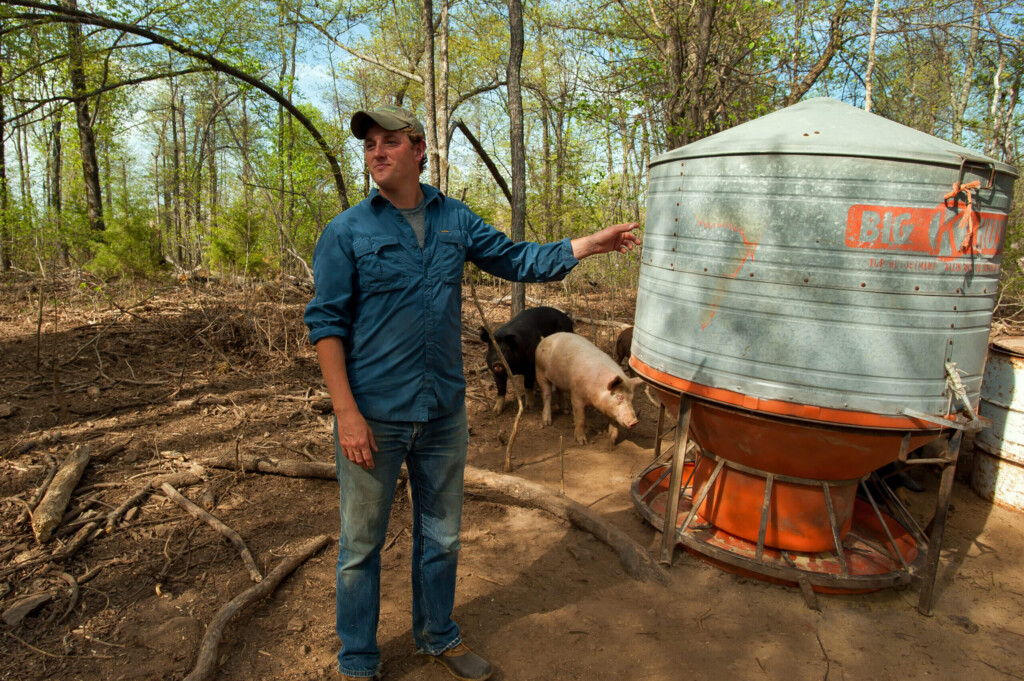
Today, more than 1 billion people live in poverty, as defined by the World Bank’s international benchmark of living under $1.90 per day. For over 70 years, Heifer has worked to lift people above that threshold, building thriving, self-sustaining communities with an innovative model that has grown to encompass 30 countries worldwide. It has helped more than 25 million families while attracting high-profile partners including major, multi-national corporations. Projects include an East Africa Dairy Development initiative that affects Kenya, Uganda and Tanzania. In Nepal, Heifer empowers women farmers. And, closer to home, Heifer helped launch the Grass Roots Farmers’ Cooperative and Foodshed Farms, which support small-scale, sustainable Arkansas farmers by connecting them to profitable markets.

Formed with support of Heifer International’s Seeds of Change Initiative, the purpose of the Arkansas Sustainable Livestock Cooperative is to operate a processing and marketing cooperative that supports profitable, environmentally conscious, and socially responsible Arkansas livestock farmers. The ASLC promotes local food systems that produce nutritious foods while reinvigorating rural economies.

While its achievements have been no small feat, Heifer is committed not only to alleviating world hunger—but to eradicating it completely. “Our goal is to take 4 million families out of poverty by 2020,” says Bob Bloom, Chief Financial Officer. In order to achieve this, Heifer’s leadership team decided to scale up the organization’s work and diversify revenue streams. Before they could do that, however, the organization had to increase efficiency through technology such as enterprise content management (ECM) software. “We needed to manage our content better. It’s a key component to our global platform strategy.”

A Tech Transformation

In 2010, Heifer began to reassess its core systems including document management. “We have a much different scope today, one that requires a lot more capability in terms of how we manage and report on these projects,” says Bloom, who oversees all financial, treasury, information technology and human resource activities for the organization. “We developed a strategy to increase our scale, diversify our revenue and build a supporting technology platform to enable us to track, report and provide transparency.” Scaling up requires a new level of reporting and accountability as donors target large-scale projects in specific communities. Some projects require multiple corporate sponsors. Dedicated to remaining steadfast in its transparency and compliance, Heifer must be vigilant in monitoring projects that often involve hundreds of contracts, memorandums of understanding, teaming agreements and other project-related documents. Combined with additional marketing materials, field stories and videos, Heifer faced a content overload. The organization’s new strategy included selecting Laserfiche ECM software in 2014 to address issues that Bloom and his team identified, including:

  • Thousands of contracts pending review, with no automated system to track varying versions or the status of reviews and approvals
  • Content spread across offices and project locations, which perpetuated silos and hindered growth

Heifer needed to leverage content and knowledge across projects. Staff in remote locations who worked with families in the developing world needed the ability to collaborate with headquarters staff in Little Rock, AR. “Ideas weren’t being shared across the organization,” Bloom explains. Although Heifer relies on strong relationships between team members and communities, and networks of local nongovernmental organizations (NGOs), it is now embracing the idea of moving toward a digital workplace—where offline relationships are strengthened with online cooperation. “We need innovation,” Bloom says. “We need technologies that can help us achieve our mission better, faster.”

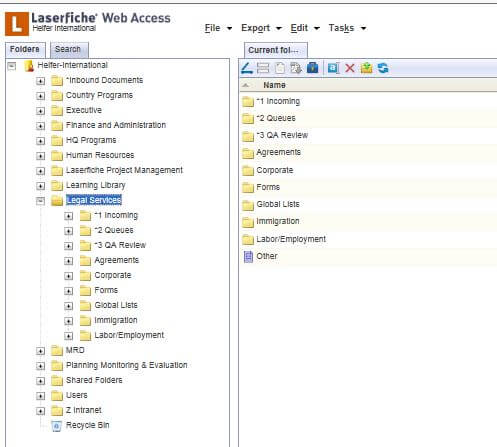
Heifer’s legal department folder structure

Laserfiche ECM software enables staff to streamline contract management processes using electronic forms and robust workflow automation solutions. Heifer also automated the Network Account Request process to grant, revoke and change access to its core applications using Laserfiche Forms and Workflow. This has helped to facilitate compliance and protect sensitive information. Bloom has outlined key areas in which Laserfiche ECM software could further improve efficiencies at Heifer:

  • Partner agreements: Continuing to automate processing partner agreements by using Laserfiche Workflow with third party suppliers, vendors and local government agencies
  • Records management: Improving document management and records management processes, breaking down silos, and increasing accountability and transparency
  • Personnel change requests: Managing personnel change requests (i.e., job role changes, etc.) quickly to help it scale up internal staff resources

“Our vision for Laserfiche is to allow all of our field workers, regardless of which country they are in, to be able to interact with documents, find records and submit forms—all from their mobile devices,” explains Cedric Lambert, IT Director at Heifer. The integration has helped the organization on its path to reaching more families and communities, and elevating existing projects, helping communities to help themselves. “We are fairly new on the journey, but we are very excited about what we can do here,” Bloom shares. “Automating our internal business processes using Laserfiche electronic forms and workflow is part of our technology transformation that enables our mission in fighting hunger and poverty.” Click here to learn how Laserfiche ECM software can help your organization streamline contract management and leverage information across the entire enterprise.