


Refine your knowledge of Laserfiche Forms and Business Processes with this hands-on lab, focusing on making forms user-friendly while ensuring your information is standardized. This course will take you through common use cases for more complex forms, task routing, and automation!
New to working with documents in Laserfiche? In this hands-on lab, follow along with our expert instructors to learn how to use the Laserfiche repository. Follow the day in a life of an average user as you add new documents to Laserfiche, efficiently locate files, and configure options to get the most out of your Laserfiche system.
Enhance your workflows for document processing and import! In this hands-on lab, we’ll explore complex workflow solutions for bulk document import and re-processing repository documents.
Streamline data processing with Workflow! In this hands-on lab, we’ll explore complex workflow solutions for working with batches of data.
Join this hands-on, instructor-led virtual training to automate records management and data retention in Laserfiche.
Join this hands-on, instructor-led virtual training to enhance metadata templates and fields and dive into more administrative features.
Elevate your form and process design! This hands-on lab will show how to build sophisticated forms and processes to enhance user experience and process maintenance.
Designed for new users to get caught up on Laserfiche administration basics, this lab-style instructor-led training will provide the foundations necessary to successfully manage, administer, and troubleshoot your Laserfiche system. Topics covered include repository design, metadata administration, repository security and records management, along with repository and task automation.
Delivering Time-Sensitive Services Across Northern Minnesota
Imagine facing a harsh winter without heat. Or struggling to put food on the table for your family. For many individuals and families across northern Minnesota, these challenges are a reality. Arrowhead Economic Opportunity Agency (AEOA) has a mission to help them. With programs spanning housing, energy assistance, Head Start, SNAP, senior services and transportation, AEOA delivers these critical services to thousands of Minnesotans each year.
The work is both high-volume and time sensitive. For years, much of it depended on paper files and manual processes. Across departments, staff managed large volumes of documentation by hand:
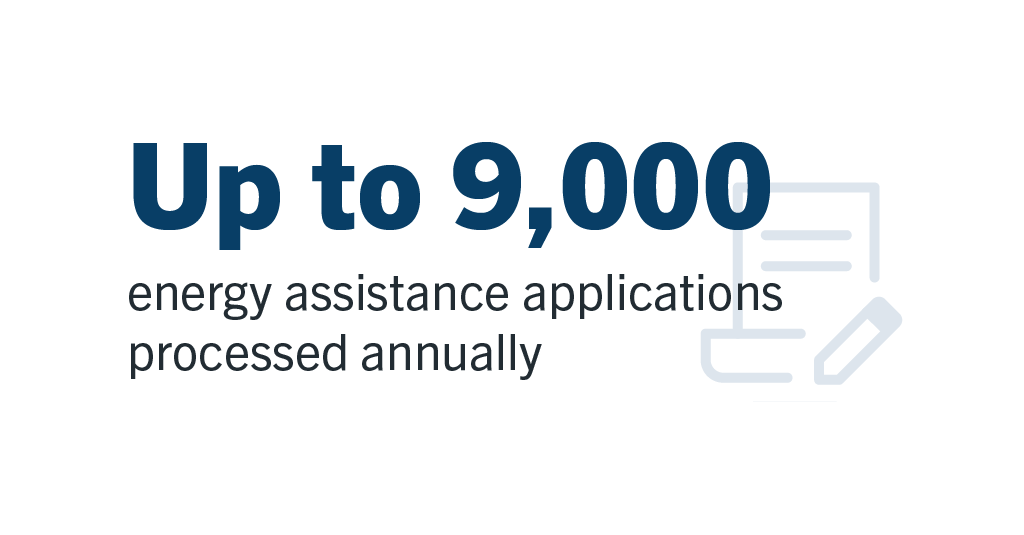
- In the Energy Assistance Program alone, staff processed 8,000 to 9,000 applications annually, with each application requiring physical handling, filing and retrieval
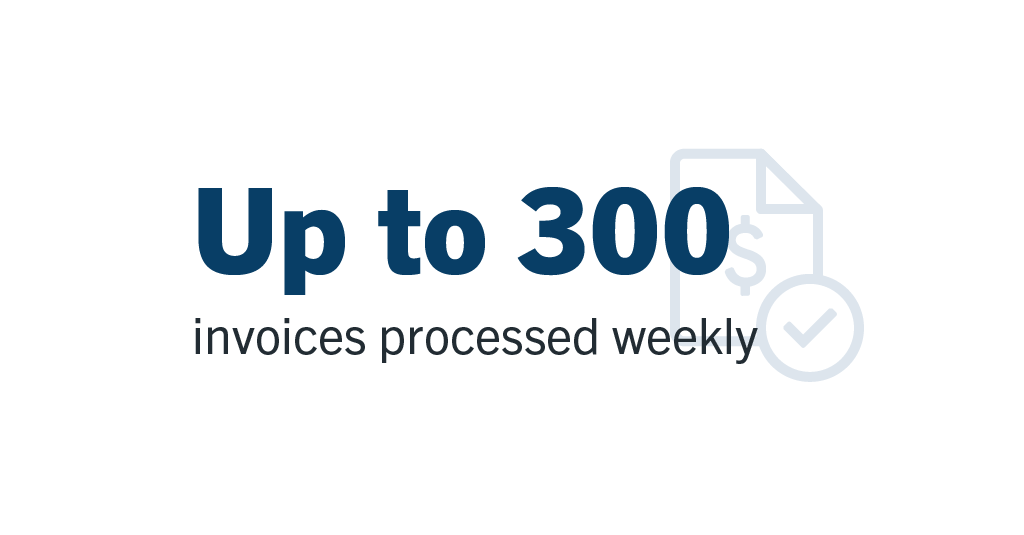
- The fiscal team managed 100 to 300 invoices weekly, often pulling and re-filing documents to support financial and compliance audits and reporting requirements
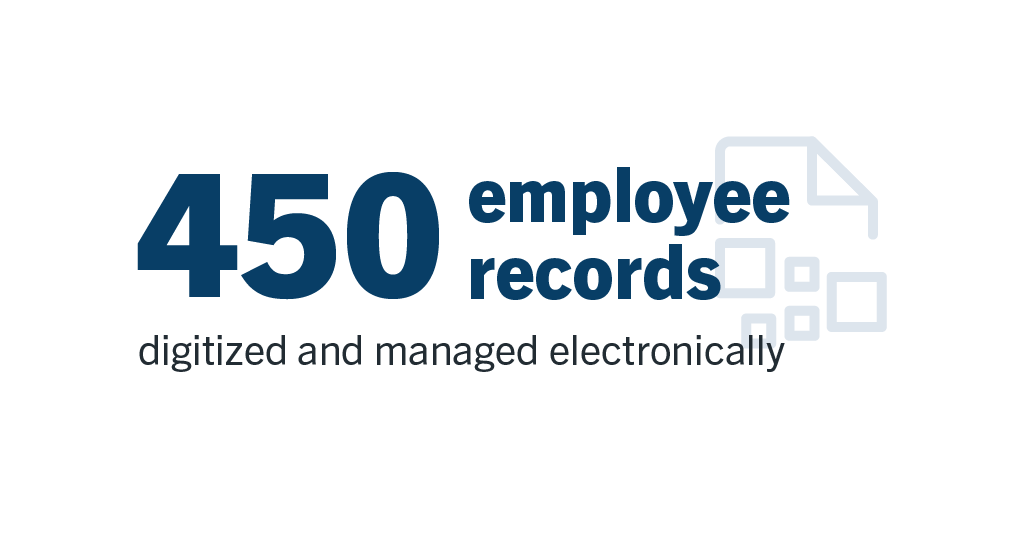
- Human resources maintained personnel records for approximately 450 employees, stored in paper files that required manual filing, organizing and ongoing maintenance
- Housing and community programs relied on paper intake forms and manual processes to support high-volume client services across departments
These processes created delays at multiple points in the workflow. Staff often had to search across file cabinets, coordinate handoffs between teams or track down missing information. This made it harder for AEOA to respond quickly to community needs. It also provided limited visibility into where applications or documents were in the process, which made it especially challenging for managers and program leaders responsible for oversight and reporting.
“We were managing critical programs with systems that made it harder to move quickly,” said Emily Celley, chief financial officer at AEOA. “When your mission is to serve people in urgent situations, operational efficiency directly impacts outcomes.”

Building In-House Workflows to Support Evolving Programs
AEOA initially adopted Laserfiche to replace paper-based files and centralize how staff store, retrieve and manage program documents. Over time, use of the platform evolved into a foundation for how AEOA manages its programs, data and day-to-day operations.
Working with Laserfiche partner OPG-3, AEOA expanded Laserfiche across departments, building and refining workflows to meet the needs of each program.
“From the beginning, we weren’t looking to just digitize documents. We wanted to build processes that could grow with us,” said Celley. “The Laserfiche platform lets us continuously improve how we work.”
AEOA’s team now develops many of its Laserfiche workflows in-house, tailoring solutions to support high-volume, time-sensitive services. This allows the organization to quickly adapt processes as program requirements change without relying on extensive IT resources or outside development.
Streamlining Programs from Energy Assistance to Meals on Wheels
One of the strongest examples is the Energy Assistance Program. Previously, applications were managed as paper files, manually sorted and routed. Today, applications are batch scanned into Laserfiche and processed through automated workflows. Metadata determines how each application is categorized and routed, including directing urgent cases, such as households facing shutoff notices, into priority workflows. This eliminates the need to pull and manage physical folders and enables AEOA to identify and address time-sensitive cases more quickly.
Similar improvements extend across AEOA, where Laserfiche supports a wide range of high-volume, digital workflows across programs:
- Housing: Applications for building rehabilitation and home ownership begin with simple digital intake forms. Submissions are then automatically routed through review and approval stages. Families can move through the process more quickly, supporting housing stability.
- Education: Staff manage multiple form-based processes, including Head Start childcare acknowledgments and onboarding, ensuring information is collected consistently and stored securely across locations. Families experience a smoother path to accessing early education services.
- Senior services: Programs like Meals on Wheels and volunteer coordination use intake forms and metadata-driven workflows to capture participant information and streamline service delivery. Seniors benefit from more reliable and better-coordinated support.
- Transportation: Documents such as trip records, driver logs and program documentation are imported and organized using metadata, making it easier to manage high volumes of information and quickly retrieve records for reporting, compliance and daily operations. This results in more reliable transportation services for riders.
“Laserfiche fundamentally changed how work gets done across our organization,” said Celley. “Processes that once relied on manual coordination and paper are now faster, more consistent and easier to manage across teams and locations so services can reach people sooner.”
Moving to Cloud-Based Operations
As Laserfiche adoption grew, AEOA modernized its infrastructure by migrating to the cloud. Moving away from aging on-premises servers reduced the burden of system maintenance while improving accessibility for staff across locations.
A phased migration allowed AEOA to continue expanding its use of Laserfiche without being limited by infrastructure constraints. Today, the cloud environment supports ongoing innovation and gives staff faster, more reliable access to information across programs.
“Moving to the cloud positions us to continue evolving without being limited by infrastructure,” said Celley. “That changes how quickly we can respond, both internally and to the people we serve.”
Strengthening Compliance Across State- and Federally Funded Programs
That same visibility also strengthens how AEOA manages risk, compliance and data security across its programs. The nature of AEOA’s work means it handles vast amounts of sensitive client and program data. Laserfiche enables the organization to control access to information based on roles, supporting confidentiality while maintaining accessibility for authorized users. The system also simplifies audit preparation by allowing staff to quickly compile documentation across thousands of records.
“In our environment, compliance and accountability are critical,” said Celley. “Laserfiche gives us confidence that we can meet those requirements while still operating efficiently.”
Advancing the Mission Through Greater Efficiency
AEOA staff now spend less time managing paperwork and more time supporting Minnesotans in need. “Our mission is to strengthen communities by providing opportunities for people experiencing social and economic challenges,” said Celley. “Laserfiche helped us remove barriers in our processes to better deliver on that mission.”
With a strong foundation in place, AEOA continues to explore new opportunities to optimize workflows, expand automation and improve service delivery across its programs. “Laserfiche allows us to operate more efficiently at scale,” said Celley. “This directly impacts how quickly we can deliver services to the communities we support.”
Reclaim your time. Fast-track tedious tasks.
Transform ideas into autonomous execution and get more done, faster. With simple natural language prompts, AI Agents streamline administrative work and help teams improve efficiency, consistency and operational speed.
Turn chat into action.
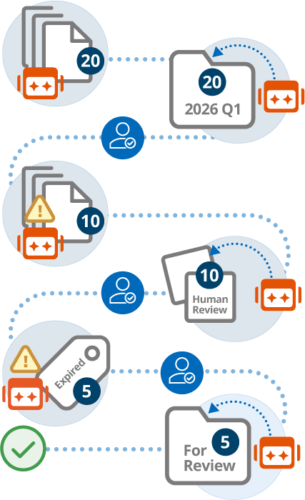
Type your request in Smart Chat, and Agents will deliver a ready-to-review action plan. You approve the work; they handle the execution.
Use Agents to automatically carry out a wide range of bulk actions:
- Bring order to scattered content
- Move, rename and organize large volumes of files
- Apply tags and update content templates with ease
- Group relevant documents into personal Collections
- Break down complex projects into clear actionable steps





Expand team capacity across every department
Laserfiche AI Agents boost productivity for the entire team, tackling complex tasks across all levels of the organization.


Our Difference
Why Laserfiche?
From analysts and customers
Gartner® named Laserfiche a Leader in the 2026 Gartner Magic Quadrant™ for Document Management.
Laserfiche is a Customers’ Choice in the 2025 Gartner® Peer Insights™ ‘Voice of the Customer’: Document Management report.
Laserfiche named 2025 Emotional Footprint Champion by Info-Tech Research Group in the Enterprise Content Management – Enterprise category.
Highly rated by customers, with a 4.7 average star rating and #1 in the Document Management category on G2.
Named a Leader in the Nucleus Research CSC Technology Value Matrix™.
Featured Resource
Get the Agentic AI Playbook
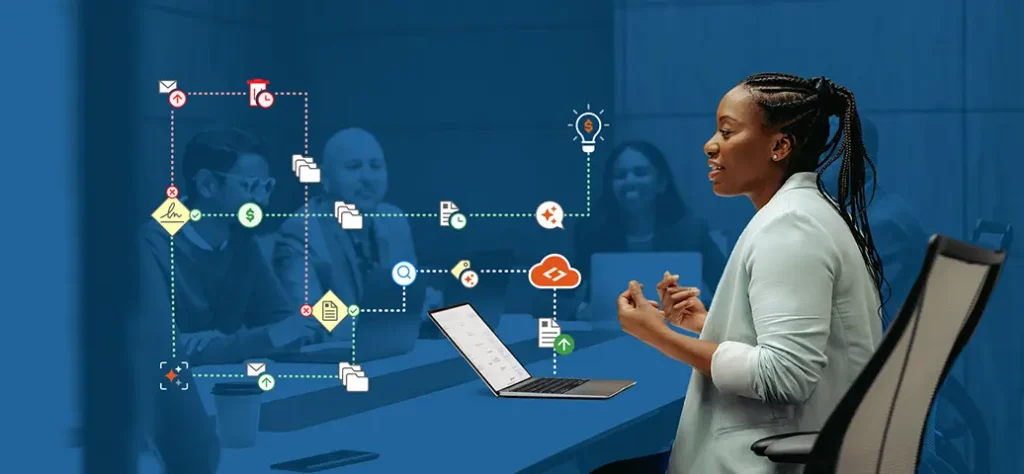
Learn how forward-thinking leaders are deploying AI Agents across their organizations to securely scale daily operations and drive lasting digital transformation.
Additional Resources
Contact Us for Your ECM Needs
Whether you have product questions, support needs or want to partner with us, we’re here to help you on your digital transformation journey. Fill out the form and a Laserfiche team member will be in touch as soon as possible.