GMX Seguros Increases Claims Capacity by 75%

As one of Mexico’s leading insurance companies specializing in property, casualty and civil liability insurance, GMX Seguros has prioritized operational excellence and customer experience. Facing the perennial challenges of paper-intensive processes, escalating compliance demands, and the critical need for rapid claims resolution, the insurer sought to replace a legacy document management system with a more robust solution.

Three people at a computer.
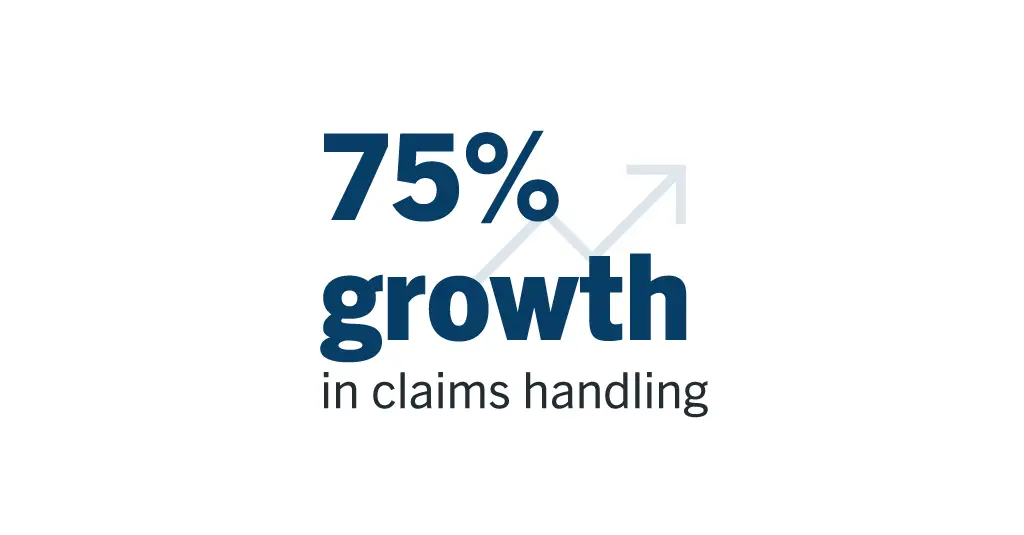
75% growth in claims handling

The insurer found a solution in Laserfiche, embarking on a journey that has dramatically streamlined operations, cut processing times, and fortified GMX’s position as a market leader. Through the organization’s automation initiatives, the insurer achieved an impressive 75% growth in claims handling capacity and a 20-30% increase in other business areas.

Reimagining Manual Processes and Costly Bottlenecks

Before adopting Laserfiche, the GMX grappled with a complex web of manual processes and physical documentation. Policy issuance, regulatory compliance and claims handling were bottlenecks that hindered efficiency and customer satisfaction.

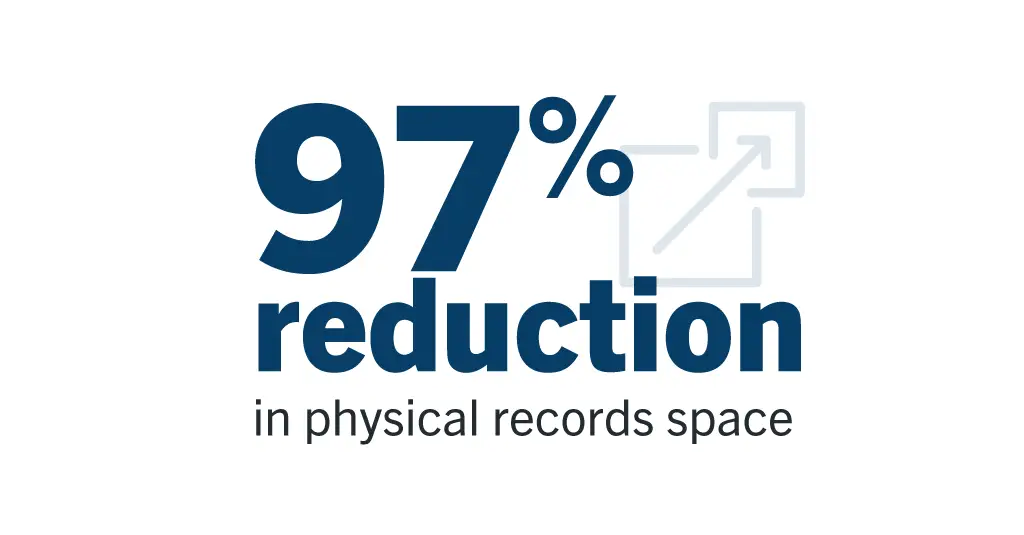
“We were generating a lot of paper in different ways,” said Oscar Salgado, CIO at GMX Seguros, describing the sheer volume of paper as about the size of a two-bedroom apartment. This physical footprint wasn’t just about space; it translated into slow, laborious workflows. The claims process, a cornerstone of customer trust, was particularly impacted.

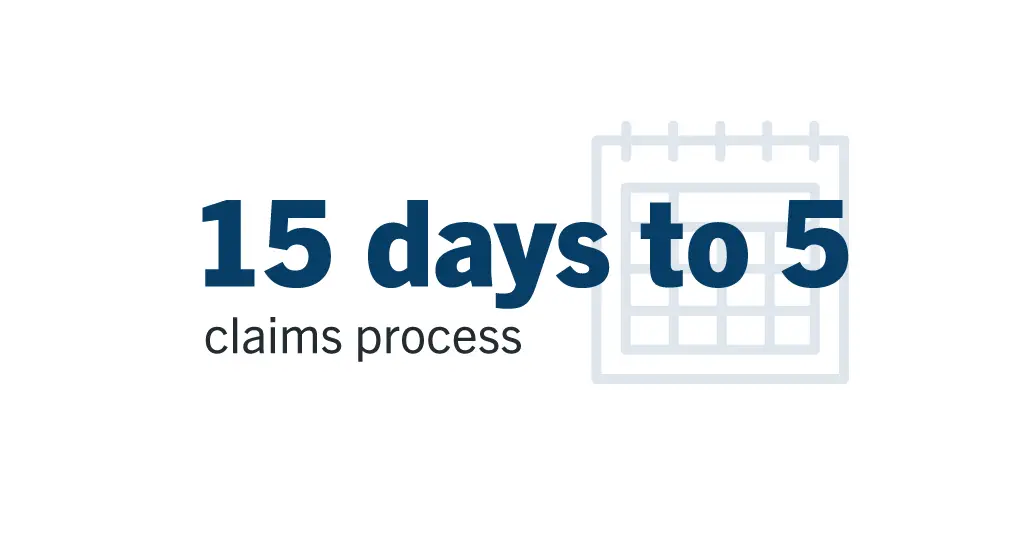
“Claims processing used to take more than 15 days,” Salgado said. Longer timelines in claims processing, however, test customer patience in their time of need.

Beyond operational inefficiencies, the company faced stringent regulatory requirements, such as those from the Comision de Seguros, demanding meticulous collection and secure storage of sensitive customer documents (IDs, proofs of address, financial statements) to comply with anti-money laundering regulations. Managing these crucial personal documents across disparate systems was a significant hurdle.

Laserfiche as a Digital Backbone

The insurer began implementing Laserfiche with a focus on policy management, digitally archiving all issued policies and integrating them with a customer portal for easy download. This initial success paved the way for more expansive applications.

A key area of transformation was regulatory compliance. “We need to collect IDs, address, proofs of address, statements — all these documents are personal and sensitive data,” Salgado said. “We store them in Laserfiche, and this helps us organize all the documents within our customer folders.” The centralized, secure repository became indispensable for managing sensitive data and demonstrating compliance.

The most significant impact, however, was felt in claims. The company developed a digital claims solution, which collects all necessary documents from customer and automatically builds a digital file. The GMX team built an integration between Laserfiche and the company’s claims system via Laserfiche API which links every claim document to its corresponding policy and customer file, creating a comprehensive digital record.

The insurer’s use of Laserfiche extends to other departments and critical processes including:

  • Legal: Manages contracts with providers and agents, from initial petition through revisions and final signatures.
  • Policy services: Supports legal compliance by digitally capturing customer signatures on policies, verifying their awareness of terms and conditions, and securely storing these signed documents.
  • Human resources: Streamlines the collection, review and storage of numerous legal and personal documents required for new agents.
  • Finance: Connects with the ERP system for processes like purchase orders, further unifying the digital ecosystem.

Dramatic Time Savings and Efficiency Gains

The implementation of Laserfiche yielded immediate and profound benefits, most notably in time savings and operational efficiency.

15 days to 5 claims process

“The time that we are saving is tremendous,” Salgado explained. The most striking improvement was in claims processing: “Claims that used to take more than 15 days now less than five. In some cases, we can process a claim within the same day.”

This strategic advantage became especially evident during a crisis, when GMX experienced an influx of claims in a short period of time. In 2023, Hurricane Otis made landfall near Acapulco and became the costliest tropical cyclone to strike Mexico on record.

“We had the best turnaround time for claims related to Hurricane Otis,” Salgado said. While competitors struggled to process claims for months, the GMX Seguros’ Laserfiche-powered processes allowed the insurer to pay customers in less than a month. “With this efficiency, we can process more claims in less time.” This increased capacity, he added, amounts to 75% growth in claims handling.

Handling 50,000 – 60,000 claims per year and issuing more than 300 policies per day, GMX employees use Laserfiche on a daily basis to support critical service delivery. Beyond claims, the insurer has experienced 20% – 30% growth in other business areas.

GMX has also implemented Laserfiche to increase efficiency in:

  • Purchase orders
  • Travel expense reports
  • Contract management
  • Invoices
  • Supplier management
  • Compliance related to Article 492 of the National Insurance and Bonding Commission

The importance of the company’s standardized document management and automated processes is further magnified by audits, which are done internally as well as by regulatory entities. “We use Laserfiche to review and compile all documentation needed for audits, which used to be a very time consuming process,” Salgado said.

The paper reduction has also liberated valuable physical resources, freeing up office space and allowing for better utilization of facilities.

Building a Resilient Digital Future

GMX Seguros has not only automated critical processes like claims, compliance, and policy management but has also built a resilient, highly efficient digital ecosystem. The ability to dramatically reduce claims processing times has translated directly into enhanced customer satisfaction, particularly when responding to high-volume events like natural disasters.

“We have some of the best response times in Mexico,” Salgado said. “Laserfiche is not just a document storage system for us. It’s a competitive advantage.”

Overcome Data Challenges with AI tools in Insurance

In today’s rapidly changing insurance landscape, insurers face mounting pressures from economic and environmental uncertainty, coupled with rising policyholder expectations. Navigating these challenges means they need to improve how they operate, enhance customer experience and manage compliance costs. A recent industry survey, however, revealed a problem: Many insurers aren’t set up to tackle these strategies effectively. In fact, over half of them cited data fragmentation as their top operational hurdle.

Insurance companies continue to rely on inefficient data collection such as paper-based forms and static PDFs, forcing policyholders into tedious, error-prone data submissions. These outdated processes lead to manual data entry, repeated follow-ups, and inconsistent service. As a result, customers churn and bring down net promoter scores (NPS). Meanwhile, policyholder data is scattered across line-of-business applications, forcing staff into a “swivel chair” routine as they search for crucial data. This disconnected approach not only delays decision-making but also creates significant operational inefficiencies.

At the same time, insurers are grappling with increasing volumes of data from connected devices like telematics, smart home systems, and wearables. While this influx of data represents a tremendous opportunity to tailor policies and set accurate premiums, many insurers lack the capabilities to capture business-critical metadata efficiently.

Harness Your Data: From Overwhelmed to Supercharged

So, what can insurers do to turn data into business intelligence? The answer lies in embracing an enterprise content management (ECM) system as a unified source of truth and data orchestration engine.

With an ECM as the data backbone, insurers can:

  • Deliver a superior customer experience through intuitive forms for policyholders that automate and standardize data intake for staff, ultimately speeding up service delivery.
  • Harness the power of data by breaking down silos and integrating data across core systems to gain a complete view of policyholders.
  • Navigate a complex regulatory landscape using records retention schedules and security tools that strengthen the organization’s information governance practices.

Leading ECM systems also incorporate generative AI features with the potential to revolutionize the way insurers intake claims, policy updates, and service requests from multiple channels.

These strategies not only improve productivity and cut costs but also elevate the overall policyholder experience – a vital factor in today’s competitive market.

Ready to learn how to turn data into strategic actions with an ECM platform? Download our free whitepaper, “Connect the Dots and Unlock the Power of Data in Insurance,” to discover how AI-powered data management can unlock the full potential of your data and lead your organization into a more efficient, customer-centric, data-driven future.

Download the Free Whitepaper Now

5 Steps to Boost Supply-Chain Operations

From data to compliance, strategies for improving supply-chain efficiency.

Amid a prolonged workforce shortage, increasing order volume, SKU proliferation, pressure to speed up delivery times and lingering economic uncertainty, factories and warehouses are turning to AI-powered technologies to automate time-consuming tasks. But for all their investments in digital transformation, many supply-chain organizations are still performing essential tasks manually, leading to a high volume of paperwork, frequent data silos, manual approval processes and a lack of visibility. All those manual tasks tap the brakes on production countless times each day.

As generative AI (GenAI) rapidly gains a foothold in supply chain operations, leaders in the manufacturing and distribution industries are recognizing the power of automation and GenAI to drive process improvements, according to the 2025 MHI Annual Industry Report. With strategic digital implementation of GenAI, supply-chain companies can streamline laborious processes, automate data extraction and eliminate bottlenecks, driving significant operational gains across the organization. This eBook will explore how enterprise content management (ECM) solutions—such as Long Beach, Calif.-based SaaS provider Laserfiche®—can help manufacturers and distributors become more agile, efficient and responsive to the ever-changing dynamics of supply-chain operations.

The current state of data sources

The 2025 MHI Annual Industry Report shows that supply-chain executives understand the value of ECM solutions such as Laserfiche. The survey found that 51% of organizations are working to accelerate their digital transformation by harnessing the power of data, but without an ECM solution, that task is daunting. MHI’s report found that 44% of manufacturing leaders say the amount of data their companies collect has doubled in just the past two years, and they expect it to triple by 2030.

Spreadsheets remain ubiquitous, with 70% of manufacturers entering data manually and 68% still using spreadsheets to analyze data, according to the MHI report. The tedious nature of data entry is just one of the factors contributing to the manufacturing industry’s labor shortage, which is expected to reach 2.1 million unfilled jobs by 2030, according to the report.

The amount of data associated with supply-chain operations is growing exponentially, and managing that data is essential, empowering manufacturing leaders to identify bottlenecks and make strategic decisions more quickly. Manual data management and data silos lead not only to wasted time and increased costs but also to complicated processes and frustration for workers and customers.

Through automated data structures, streamlined data extractions and data uniformity across documents, executives can make informed decisions as challenges arise, supporting critical business processes and driving ROI for their organizations. Clean data starts with evaluating how well existing software systems and business processes are integrated. The next step is to bridge the process gaps between applications such as enterprise resource planning, manufacturing execution and customer relationship management. A centralized repository platform such as Laserfiche can serve as the single trusted source for up-to-date information, and that accuracy improves strategic planning and decision-making.

Data silos make it all but impossible to drive efficiency and streamline business processes across multiple applications and business units. That lack of transparency also makes it harder to measure ROIs and improve margins over time. By eliminating fragmentation across information systems, organizations can work and communicate seamlessly across diverse functions such as sales, engineering and finance.

Low-code integrations with Laserfiche’s platform enable companies to bridge technology gaps between legacy systems and the latest cloud applications while extending the functionality of existing ERP and supply-chain management solutions. Integrating content through a middleware platform like Laserfiche allows for standardized data formats and metadata types, enabling people and systems to access accurate information consistently.

With reliable data available across the entire company, manufacturers and warehouses can move products faster and grow their margins. Supply-chain companies will gain visibility and control over their factory or warehouse floor, and they’ll harness the power of AI and predictive modeling to establish an edge over their competitors.

Supervisors can create customizable dashboards to monitor operations, and Laserfiche’s generative AI tools, Smart Fields and Smart Chat, can speed-up real-time data extraction from multiple document types with less manual effort, and improved accuracy and compliance.

Here are five ways Laserfiche’s ECM platform can optimize operations for supply-chain companies:

  • Step 1: Streamlining supplier management and procurement cycles
  • Step 2: Increasing efficiency in quality control
  • Step 3: Establishing a culture of compliance
  • Step 4: Improving the accuracy of maintenance reports
  • Step 5: Streamlining the onboarding of new hires

Want to read more? Get the full ebook, 5 Steps to Boost Supply-Chain Operations, here.

Coppell Independent School District

eBook: 5 Steps to Boost Supply-Chain Operations

Laserfiche Named a Leader in Nucleus Research Content Services and Collaboration Value Matrix 2025

Laserfiche is a Leader for the 10th consecutive year, ranks highest in usability.

LONG BEACH, CALIFORNIA, JULY 23, 2025 — Laserfiche — the leading SaaS provider of intelligent content management and business process automation — is a Leader in the Nucleus Research Technology Value Matrix for Content Services and Collaboration for the 10th year in a row. Among the vendors evaluated, Laserfiche ranks highest overall in usability. Download a copy of the report here.

“As a leader in this year’s Value Matrix, Laserfiche was rated highest in usability for its AI productivity tools, new administration hub, process automation and integration capabilities,” said Evelyn McMullen, research manager at Nucleus Research and author of the report.

Nucelus Research CSC Technology Value Matrix™ 2025.

CSC as a Strategic Advantage: AI-powered Information Management

Recently released Laserfiche AI-powered features are aimed at boosting productivity even further and enabling automation at scale. Smart Fields, an out-of-the-box intelligent capture tool, allows customers to extract data automatically using natural language instructions, no matter the source or format. Smart Chat provides an intuitive chat interface that enables users to quickly gain insights from their repository content.

“As AI matures at an accelerated pace, vendors in the CSC market have the unique advantage of managing both structured and unstructured data from across the entirety of an organization,” the report’s Market Overview states.

Laserfiche AI features alongside powerful workflow automation, information governance and records management tools create new opportunities for organizational efficiency. Customers across industries use Laserfiche to increase productivity, create competitive advantage and drive growth.

“Laserfiche gives us the forms and workflow processes as well as data integration that enable efficiency at scale,” said Airline Hydraulics Chief Technology Officer Todd Schnirel. “Our Laserfiche-powered process improvements have supported us in achieving a significant increase in net revenue while adding very little operating expense.” 

“Being ranked a leader for 10 consecutive years is a testament to our product innovation,” said Thomas Phelps, senior vice president of corporate strategy and CIO at Laserfiche. “Our top ranking in usability reflects our core value of putting people first and our commitment to delivering intuitive solutions that empower users.”

To learn more about Laserfiche’s position in the Content Services and Collaboration market, download the report here.

About Laserfiche

Laserfiche is a leading enterprise platform that helps organizations digitally transform operations and manage their content with AI-powered solutions. Through scalable workflows, customizable forms, no-code templates and AI-enabled capabilities, the Laserfiche® document management platform accelerates how business gets done. Trusted by organizations of all sizes — from startups to Fortune 500 enterprises — Laserfiche empowers teams to boost productivity, foster collaboration, and deliver a superior customer experience at scale. Headquartered in Long Beach, California, Laserfiche operates globally, with offices across North America, Europe, and Asia. 

Beyond Efficiency: How Generative AI from Laserfiche Unlocks Strategic Value for the Public Sector

In recent months, the conversation around generative AI (Gen AI) has moved beyond productivity and hype. While early use cases in the public sector focused on time-saving and process efficiency, the broader narrative is evolving toward the transformational potential of AI to unlock insights, improve public services, and anticipate citizen needs. As public sector leaders confront rising service expectations, tight budgets, and growing data complexity, the strategic deployment of Gen AI particularly through enterprise content management (ECM) and process automation presents a powerful path forward.

Laserfiche is at the forefront of this evolution. By embedding Gen AI capabilities such as Smart Fields into our platform, we enable agencies, municipalities, and educational institutions to move beyond automating tasks and begin unlocking institutional knowledge at scale. This article explores the forces shaping Gen AI adoption in the public sector and the unique value Laserfiche brings to this new chapter.

Technological Innovation: From Automation to Insight

Across the public sector, Gen AI is transitioning from a tactical tool to a strategic enabler. Initial use cases centered on automating repetitive work summarizing documents, generating email drafts, or assisting with data entry. But the technology’s next wave is defined by its ability to reveal patterns, surface actionable insights, and synthesize complex information across siloed systems.

Laserfiche’s Smart Fields exemplify this shift. By using AI to detect and understand content in real time, Smart Fields reduce manual data tagging and improve metadata accuracy. This goes far beyond convenience. It allows public sector organizations to create more intelligent content repositories, where relevant information is surfaced proactively and used to inform decisions from public health trends to policy implementation to citizen engagement strategies.

Moreover, the Laserfiche platform integrates Gen AI into core business processes, enabling more responsive workflows. For instance, natural language processing (NLP) capabilities can be used to classify incoming service requests, assign priority based on urgency, and trigger automated routing ensuring faster and more consistent delivery of services.

Changing Customer Behavior: From Task Automation to Data Stewardship

To fully realize the benefits of Gen AI, public sector organizations must rethink how they manage data and measure outcomes. The old model of digitizing for the sake of efficiency is giving way to a new imperative: leveraging digital assets for continuous learning and improvement.

This shift demands a cultural change. Agencies need to embrace their role as stewards of public data not just curators of records but strategic users of information to drive policy and operational excellence. In this context, Laserfiche acts as a connective tissue between structured processes and unstructured data, enabling agencies to treat every document, form, or communication as a potential source of insight.

Equally important is the need for responsible innovation. Citizens and students expect transparency in how AI is used, especially in areas like eligibility determination, grading, or benefits administration. Public sector leaders must pair Gen AI adoption with robust governance, including audit trails, consent tracking, and AI explainability features. Laserfiche’s commitment to compliance and transparency ensures that agencies can adopt AI with confidence.

Navigating Regulatory Change: Building Trust and Alignment

Governments around the world are moving quickly to regulate AI, with a growing emphasis on fairness, accountability, and data protection. In the United States, executive orders and state-level legislation are beginning to shape expectations for the use of AI in public services. The European Union’s AI Act, although not directly binding on U.S. institutions, is setting the tone globally by categorizing AI use cases by risk and imposing strict obligations for public sector applications.

Laserfiche is designed with these realities in mind. Our platform includes role-based access controls, automated retention policies, and end-to-end encryption to help organizations align with privacy and data management requirements. More critically, the platform’s explainable AI capabilities provide clarity into how decisions are made an essential safeguard in regulated environments.

As regulations mature, public sector leaders will need technology partners that offer more than just AI features. They will need systems that are auditable, secure, and aligned with emerging compliance frameworks.

Growth Opportunities: Serving Citizens and Students More Intelligently

The greatest untapped opportunity for Gen AI in the public sector lies in its potential to personalize and improve the citizen and student experience. Today’s constituents expect the same responsiveness from government that they receive from the private sector yet many agencies are hampered by legacy systems and data silos.

With Laserfiche, organizations can unify disparate data sources and automate multi-step interactions, allowing for intelligent service delivery. Imagine a student applying for financial aid who is guided through the process via an AI assistant that understands eligibility rules, validates documentation in real time, and tracks application status all integrated with a secure ECM backbone. Or a constituent filing a complaint about street repairs who receives proactive updates based on workflow progress, without ever needing to make a follow-up call.

These scenarios are not science fiction. They are being implemented today by forward-looking agencies using Laserfiche to reimagine how the government and education serves its stakeholders.

Conclusion: The Strategic Role of Gen AI in Public Service

As the Wired article suggests, the real value of Gen AI is not just in how fast it operates but in how deeply it can transform how organizations think and act. For the public sector, this means using AI not simply to accelerate processes, but to deliver on the promise of better governance, equity, and trust.

Laserfiche’s AI-powered platform, including capabilities like Smart Fields, helps agencies shift from reacting to anticipating, from managing data to unlocking insight, and from compliance to transformation. For leaders seeking to modernize operations, improve service delivery, and embrace the future of digital governance, the time to act is now.

The opportunity is no longer just to do more with less. It is to do better with more, more intelligence, more context, and more strategic value from every interaction.

See More on how Laserfiche is unlocking a new era in productivity and insight.

A New Era of Productivity with Smart Fields and Smart Chat

Use natural language to get the data you need, no coding required. Smart Fields and Smart Chat — two powerful Laserfiche AI capabilities — are available on Laserfiche Cloud.

Smart Fields revolutionizes document processing by using natural language descriptions to intelligently extract information, regardless of the document’s source or format. Smart Fields can be reused across diverse document types, enabling creative, custom solutions that can scale effectively, all while minimizing maintenance and setup costs. You can now apply Smart Fields to your most frequently used document types including:

  • Financial Services: Streamline the processing of purchase orders and invoices by automatically capturing line-item details and multi-value fields such as amounts, dates and vendors.
  • Human Resources: Simplify onboarding and support employee development by extracting key information like employee IDs, job titles and hire dates from employment contracts or performance reviews.
  • Information Technology: Enhance security management and accelerate incident response by automatically recording change logs and access permissions.
  • Legal: Improve contract management by identifying contract types, calculating expiration dates and automatically scheduling contract renegotiation reminders.

Smart Chat fundamentally changes how our customers interact with their documents. Information and insights can now be delivered directly through conversation using Smart Chat’s intuitive interface that delivers instant, tailored responses to user queries. By using natural language, you can ask questions about documents and receive concise answers, complete with reference links.

Smart Chat empowers Laserfiche users to engage in fruitful conversations about their documents, opening up possibilities across various industries:

  • Education: Enhance access to specific student records, faculty information and administrative documents.
  • Financial Services: Improve risk mitigation through the analysis of regulatory documents and internal policies.
  • Government: Optimize the retrieval of crucial information within public records or legal documents.
  • Healthcare: Facilitate more personalized health information and support.
  • Manufacturing: Quickly locate essential details regarding suppliers, parts or logistical data.

Smart Chat can also access all Laserfiche support documentation, allowing admins and users to receive support without having to leave their current workspace. 

We invite you to experience a heightened level of efficiency and insight in how you work with your documents. If you are a self-hosted customer, Smart Fields is available with a Laserfiche 12 Subscription license. If you’re interested in learning more and booking a demo, visit laserfiche.com/products/ai

Overview of Laserfiche Records Management

Overview of Laserfiche Records Management

White Paper: Connect the Dots and Unlock the Power of Data in Insurance