The Harris Center for Mental Health and IDD serves tens of thousands of people in need of mental health services across all socioeconomic levels in Harris County, Texas. As the third-largest organization serving such needs in the United States, the center prides itself on providing high-quality, efficient and cost-effective services that impact every corner of the county.
The Harris Center previously relied on manual processes to handle administrative and operational workflows. This method led to inefficiencies: Documents were frequently misplaced; there was no visibility into process status, and the lack of trackable data created challenges in securing funding.

The IT team at the Harris Center leveraged Laserfiche to replace manual processes with Laserfiche Forms and process automation. “After evaluating several collaboration and content management platforms, we selected Laserfiche as our solution of choice due to its flexibility, scalability, user-friendly interface, and robust security features,” said Chief Information Officer Mustafa Cochinwala. “Laserfiche offers powerful workflow automation, seamless integration capabilities with our existing systems, and a strong compliance framework that aligns with our organizational and regulatory requirements.”
The Harris Center has since automated 90 tasks, with 171,267 submissions using Laserfiche Forms, significantly reducing the time it takes to complete processes by up to 99%. Additionally, the center consolidated data, enhanced executive reports, improved decision making, and strengthened document security.
Tackling Manual Tasks
The Harris Center aimed to significantly reduce manual, repetitive tasks with Laserfiche, addressing inefficiencies including inaccurate data, security, and resource allocation.
A game-changer for the center was the digitization of the low-level offender intake form. Previously, the organization required police officers to fill out paper forms on clipboards. This approach — fraught with handwritten notes and misplaced documents — compromised the accuracy and security of sensitive patient information.
The Information Technology team created a Laserfiche workflow to relieve staff from having to interpret handwriting, chase down information and re-enter data. As part of the solution, an intuitive digital intake form collects complete, consistent information — such as patient health background and situation — from law enforcement partners.
The Harris Center staff have since seen a dramatic improvement in their ability to quantify these services and measure their impact.
“The shift has enhanced operational efficiency and elevated the quality and reliability of our reporting — empowering us to serve our community with greater precision and accountability,” said Anthony Jones, director of information technology applications and development for The Harris Center.
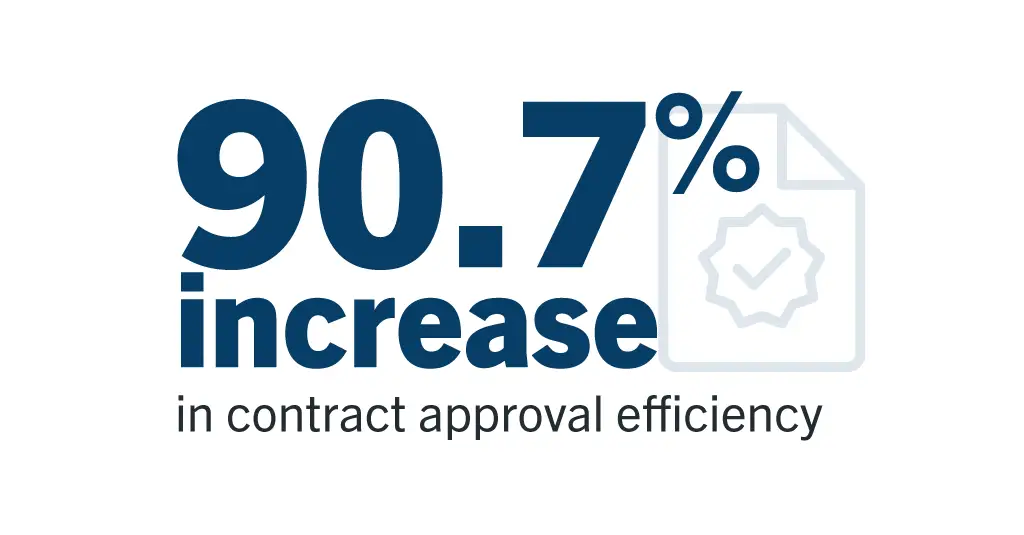
This efficiency can also be seen in the center’s contract approval process. Previously, it took 30 to 90 days to gather vendor information for contract approval from Leadership. The approval timeframe was reduced to an hour by using a Laserfiche Form for gathering information and approvals. The center saved approximately 479 working hours in this process, a 90.7% increase in efficiency.
“Overall, the adoption of Laserfiche has not only improved efficiency but also provided a strong financial return on investment for our organization,” said Jones.
Secure and Seamless Legal Processes
Beyond patient intake and contracts, The Harris Center has also implemented Laserfiche for legal processes. When courts send magistrate orders to the center, they expect responses within 24 to 48 hours.
The legacy process relied on manual routing, either through email or hand delivery. Staff had to print out, scan, sign, scan again, and return paper forms. And because of the strict deadlines, these orders often felt like an unwelcome fire drill. Now, an automated process delivers magistrate orders to the relevant staff members in Laserfiche, so staff can provide the necessary information digitally. To satisfy a legal requirement for signatures, staff use a signature pad to sign the form, which is then sent back to the court through an SFTP folder.
“The process was a mess before. Using a Laserfiche form — the difference is night and day,” said Jones. “Laserfiche has improved our court order handling, moving from a clunky email system to a seamless electronic process integrated with Epic.”
The solution is one of many examples of how optimized data management has greatly enhanced productivity across the organization.
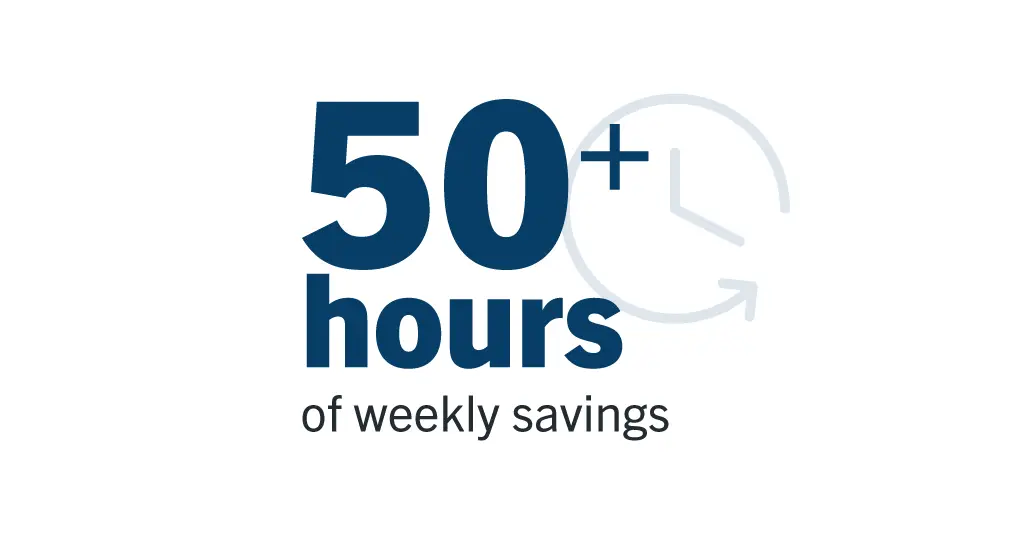
“Laserfiche has delivered significant cost savings through reductions in manual processing time, operational inefficiencies, and paper-related expenses,” explained Jones. “By automating workflows and replacing outdated manual processes, the organization has realized over 50 hours of weekly savings.”
Easier Processes Enhance the User Experience
While forms have enabled faster processes, Laserfiche has also supported The Harris Center’s budget goals. The State of Texas requires health staff across the state to participate quarterly in the Medicaid Administrative Claims (MAC) survey. The MAC survey is critical in assisting states to secure federal reimbursement for certain Medicaid administrative activities. For The Harris Center, the survey aids in recovering costs for behind-the-scenes work, not related to medical services, that support Medicaid.
Before Laserfiche, the survey was conducted through SharePoint, which required staff to enter their employee ID and lacked tracking capabilities. Consequently, only 55-60% of staff completed the survey.
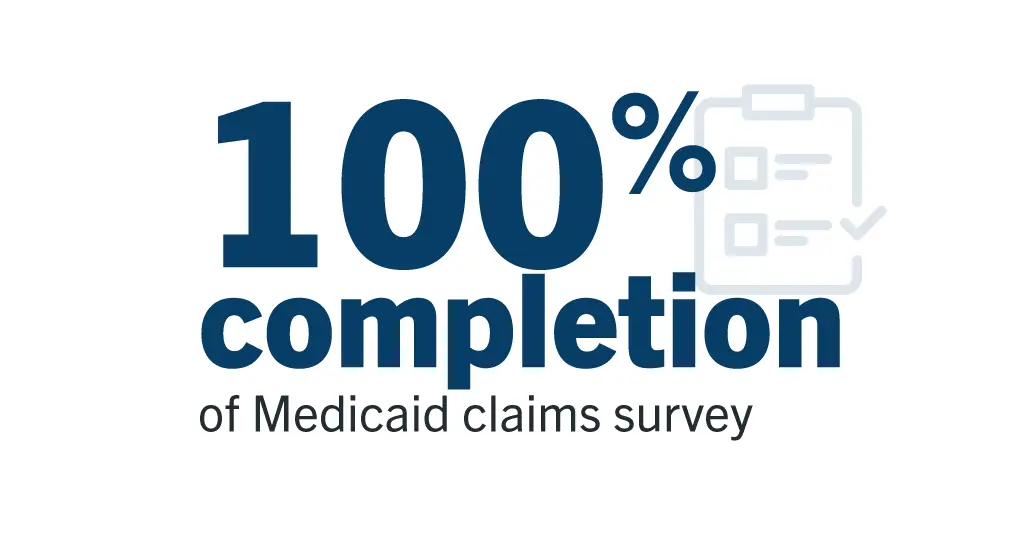
Using a Laserfiche Form, staff no longer need to waste time searching through their notes for their ID: Laserfiche auto-populates the information and tracks all submissions. As a result, the center increased the completion rate to 100%.
The center also uses Laserfiche Forms to consolidate previously scattered information and enhance the organization’s reporting. With Laserfiche Forms and supplemental Power BI reports, the organization now has a full overview of its processes in one secure location. “These reports allow us to have all the comprehensive information in one place and to make operational decisions from that data,” explains Jones. “We use these reports in an operational capacity daily. From top to bottom, dealing with patient care, employee care and daily operations.” Clinical activity, for example, is tracked by combining Laserfiche and EHR data to support the patient census and enable better resource allocation.
The Hunt for Manual Processes Continues
The center continues to redefine organizational workflows and transform outdated manual tasks into streamlined systems with Laserfiche. The team has seen dramatic improvements in their daily workflows and strategic planning. Task delegation ensures departmental accountability. Process automation expedites services. Data tracking enables meticulous documentation for enhanced reporting. Laserfiche repository security controls support compliance with industry standards and regulatory requirements.
The organization’s vision for Laserfiche is to drive further enhancements in operational processes. “We’ve done a lot of good things with Laserfiche forms since we went live with Laserfiche,” said Jones. “I’ve asked my team, if there’s any manual processes out there, let’s address it and automate it. Laserfiche allows employees to help people behind the scenes. If we did not support the people that help people, they would not be as successful as they are.”