
There was a time when the role of the municipal clerk was viewed primarily through the lens of records management and meeting administration. That world is gone.
Today’s clerks are operating at the center of some of the most important challenges facing local government: transparency, accountability, cybersecurity, governance, citizen engagement and now AI-driven transformation. The pace of change is accelerating, and the expectations placed on municipal offices are changing just as quickly.
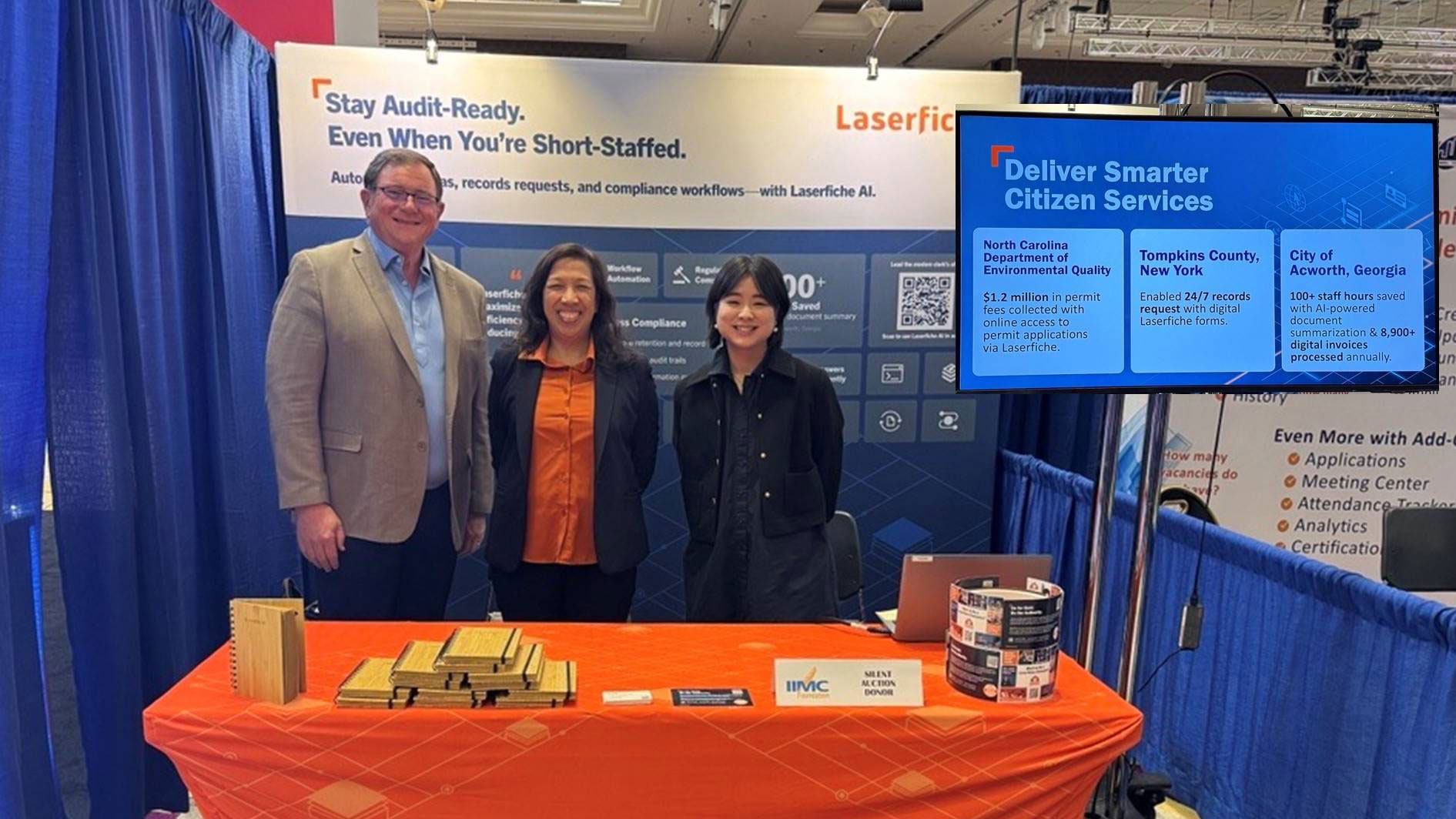
To help professionals navigate these shifting tides, the International Institute of Municipal Clerks (IIMC) Annual Conference brings together leaders from across the globe for intensive professional development and peer collaboration. Capturing the essence of this evolution, keynote speaker Michelle Ray presented “Real-Time Leadership: How to be Ready, Responsive and Relevant in a Radically Changing World.” As an expert in helping organizations embrace accountability amidst disruption, Ray opened the event urging clerks to advocate for their vital roles and reframing them not just as administrators, but as the true “guardians of local democracy.”
“Real-time leadership” is no longer just a leadership concept for municipal clerks; it is becoming an operational requirement.
Legacy Hurdles of Municipal Records Management
Municipalities are under increasing pressure to modernize services while maintaining public trust. Clerks are now expected to respond to public records requests faster, manage growing volumes of digital information, support hybrid and digital-first council operations, and navigate increasingly complex governance requirements often with limited staff and shrinking resources.

While citizens expect private-sector efficiency and instant digital access, the reality on the ground is often defined by operational friction. Many municipalities are still held back by fragmented systems and institutional knowledge trapped in siloed emails or legacy paper files. When information is buried, compliance risks spike, staff burnout skyrockets and leadership inevitably becomes reactive instead of proactive.
This digital disconnect was the defining theme of the conversations our team had with attendees on the IIMC expo floor. Clerks from across the country shared a common frustration: massive amounts of strategic time are consumed by manual records management and meeting prep. One attendee highlighted the staggering reality of tackling a literal “basement of documents”—historical paper files requiring a grueling cycle of scanning, digitizing, and indexing just to maintain public access.
Ultimately, when public servants are bogged down by the weight of these legacy processes, finding the room to step into the strategic leadership Michelle Ray championed can be an uphill battle.
From Strategy to Reality: Deploying a Government Document Management System
This is where the conversation around real-time city leadership becomes deeply practical. For municipal clerks, leading in real time isn’t an abstract concept—it means building the operational capacity to respond quickly and confidently in a constantly shifting environment. It means having visibility into information when it matters, reducing operational bottlenecks and enabling transparent and resilient governance processes.
And increasingly, it means embracing automation, strong data governance and AI responsibly through intelligent content management systems like Laserfiche.
AI in Local Government: From Digital Filing to Intelligent Operations
AI may dominate today’s technology conversations, but for municipal government, the foundation starts with governance.AI is only as effective as the information environment behind it. If records are scattered across systems, metadata is inconsistent, retention policies are unmanaged, or information access is unclear, AI simply amplifies those problems.
That is why content management has become a top strategic priority.
Modern content management platforms are no longer just digital filing cabinets. They are becoming operational systems that help municipalities manage information intelligently, automate repetitive work, strengthen governance and improve organizational responsiveness.
This is where Laserfiche bridges the gap between Michelle Ray’s leadership philosophy and the day-to-day operations event attendees are struggling with. By helping municipalities centralize and govern their content, Laserfiche ensures that information is secure, accessible, and actionable.
Instead of relying on manual processes and fragmented repositories, clerks can automate workflows, streamline records management and improve visibility across departments.
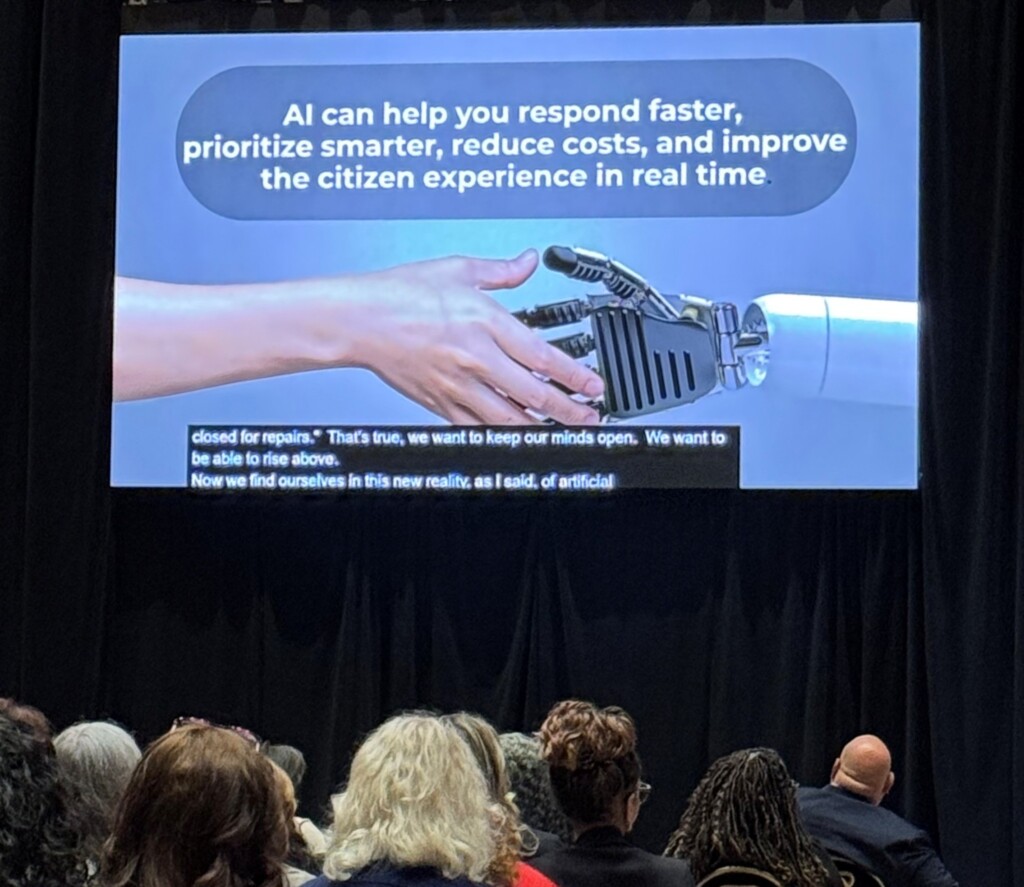
Ultimately, true responsiveness depends on access to trusted data. When public records requests can be fulfilled quickly, when agenda processes are automated, when retention policies are enforced consistently, and when staff can locate the right information without searching across disconnected systems, municipal offices gain the operational agility needed to lead in real time.
Reimagining Efficiency with Automation and Agentic AI
Automation plays a critical role in unlocking capacity. Municipal clerks are often overwhelmed with repetitive administrative work that drains valuable time and institutional bandwidth. By utilizing Laserfiche to automate workflows for records processing, approvals, notifications and document routing, municipalities can dramatically reduce this manual burden.
The goal here is not simply efficiency for efficiency’s sake. Rather, automation creates space for clerks to focus on higher-value leadership responsibilities such as governance, policy coordination, public engagement and strategic modernization initiatives.
And now the conversation is evolving again with agentic AI.
The next phase of AI inside Laserfiche goes beyond generating document summaries or answering simple questions. Laserfiche AI Agents introduce the possibility of systems that can proactively assist users by understanding context, identifying actions, surfacing relevant information, and supporting decision making.
In a municipal environment, which could mean helping staff:
- Identify records tied to retention schedules.
- Surface documents related to public inquiries
- Automate classification and metadata tagging.
- Assist with agenda preparation.
- Accelerate policy research.
- Reduce time spent navigating large information repositories.
Grounding AI in Local Government with Strict Data Governance
Without strong governance, even the most sophisticated AI tools fail. This is why municipal clerks are the natural leaders for this digital transformation. Their role as stewards of transparency, accountability and records integrity is exactly what local governments need as AI adoption accelerates. Real-time leadership in the AI era is not just about moving faster. It is about ensuring municipalities can modernize responsibly while maintaining trust, compliance and transparency.
That requires more than technology implementation. It requires operational readiness.
The municipalities that succeed over the next several years will be the ones that treat information as strategic infrastructure, not just archived content.
And that shift elevates the role of the municipal clerk even further.
The future clerk’s office will not simply manage records; it will drive intelligent government operations. That is why Michelle Ray’s message matters right now. Moving beyond traditional, reactive administration isn’t just about professional growth—it is quickly becoming the definitive blueprint for running an efficient, modern municipal office.
Ready to transform your municipal operations? Laserfiche can help your office eliminate manual bottlenecks, secure your data infrastructure and empower your team with next-generation AI and automation. Explore how public agencies like the City of Acworth are deploying these tools safely and effectively, or take the next step toward real-time leadership by scheduling a custom demo with the Laserfiche team today.
Published: June 18, 2026