The school district used Laserfiche to process payroll without any delays during Hurricane Harvey, when employees needed it most.
Dedicated to the care of children with autism, Learning ARTS shares data about patients with their parents and behavior specialists in real-time to enhance care and programming, thanks to Laserfiche.
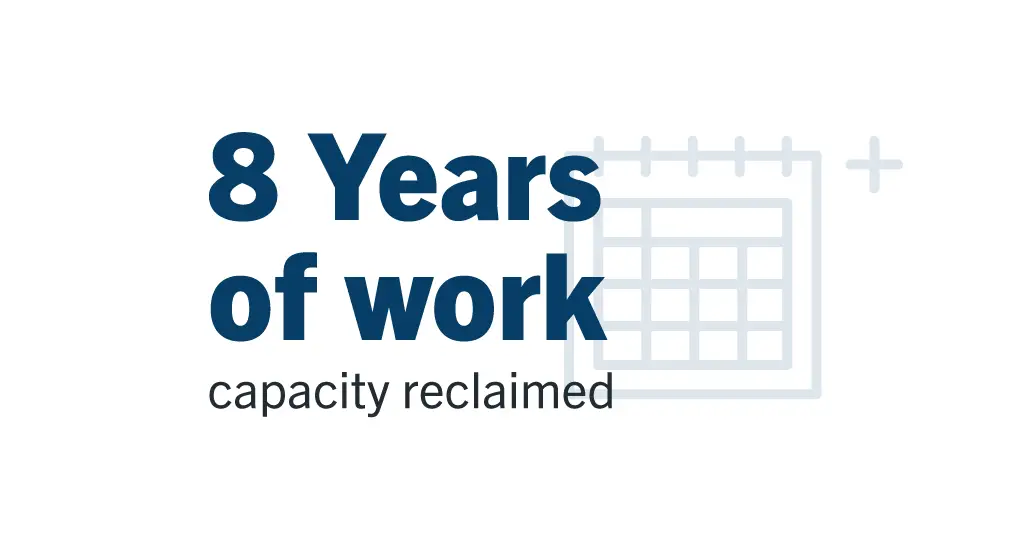
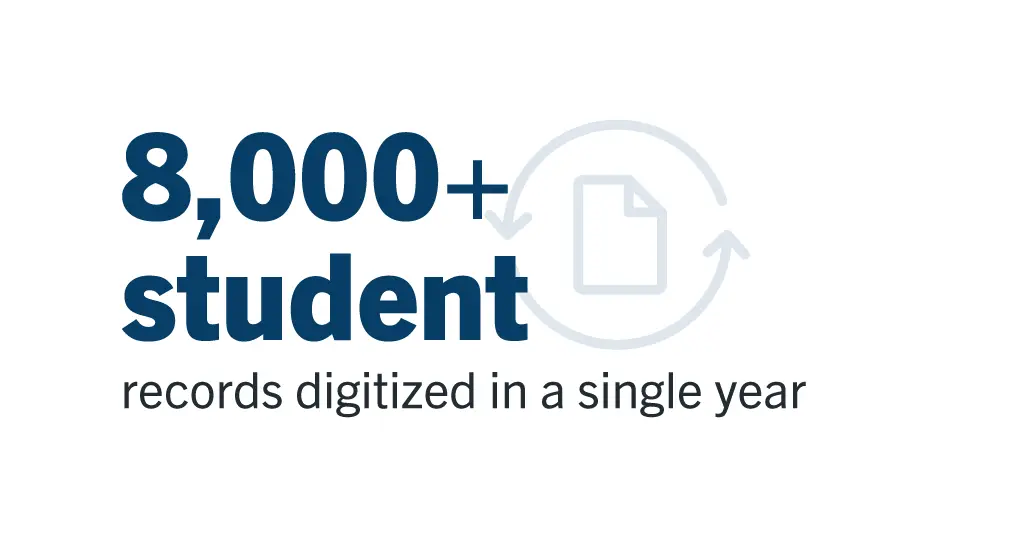
Oakwood University transformed student services by replacing its legacy document imaging system with Laserfiche to increase efficiency, reduce paper use and eliminate ineffective manual processes. By automating rudimentary processes with Laserfiche, the university has reclaimed staff and student time and redirected it toward student success.
Adopting a Culture of Automation on Campus
Oakwood University is a private, historically black university located in Huntsville, Alabama. The university, which services nearly 1,800 students, aims to provide the kind of education that will prepare students for the workplace. In order to achieve its mission, the university made it a priority to adopt a culture of automation to meet the expectations of today’s tech-savvy students.
“One of the strategic goals that the Oakwood University leadership team has been working toward is developing a culture of automation on campus,” says Oakwood University interim CIO Anthony Walker. “We are actively working to update manual, paper-driven processes. These updates will enable us to operate as efficiently as possible, ensuring the best possible experience for current and prospective students.”
In order to transform into a modern campus, Oakwood University assessed its technology and determined that it would need to replace a legacy document imaging system since it lacked the ability to automate processes. The university then turned to Laserfiche to improve efficiency, reduce paper use and eliminate ineffective manual processes.
Streamlining the Graduations Clearance Process
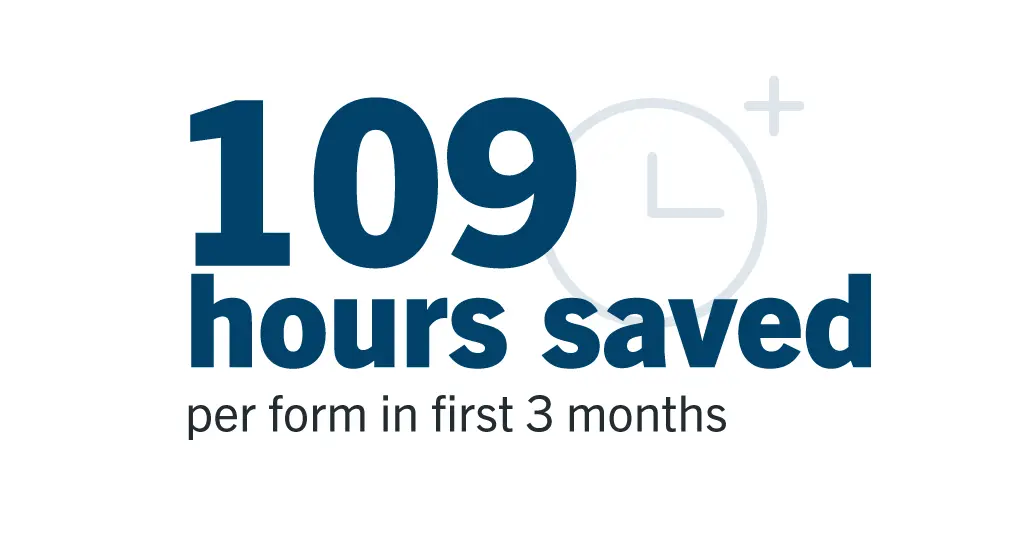
One of the first processes automated with Laserfiche was the graduation clearance process. Like many universities, in order to graduate from Oakwood, students need to obtain graduation clearance. This involves obtaining signatures from their advisor, the registrar and other university staff which previously took months. Students had to carry a paper form to multiple locations around campus to obtain all the necessary signatures. Students would have to start this process months in advance in order to graduate on time.
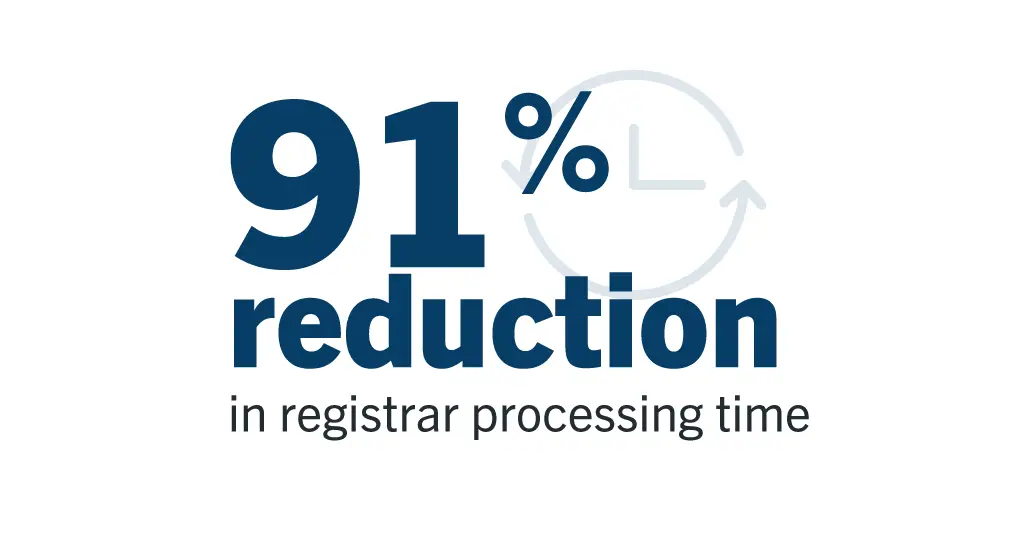
By redesigning the process using Laserfiche Forms instead of paper forms, Oakwood University reduced processing time from months to just a few weeks and increased transparency throughout the entire process. Additional benefits include:
Servicing Students at the Highest Level
Since adopting Laserfiche, Oakwood University has capitalized on an automated approach to student services.
“By leveraging process automation, the university has automated rudimentary tasks, allowing staff members to serve students in a quicker and more efficient manner,” Walker explains.
Some of the student-facing processes that have been enhanced through automation include:
“Oakwood University now has a holistic view of each student’s academic history, allowing professors to create a plan of action based on data if a student starts to fall behind,” says Walker. “This is a critical component in ensuring student success.”
In addition, Oakwood University also provides an opportunity for students to become gold certified in the Laserfiche technology. This training—that would typically cost thousands of dollars for future employers—give students a leg-up in the competitive job market, as well as higher paid work opportunities on campus to support the Laserfiche system.
“Not only is Laserfiche enabling us to provide personalized support and guidance for each individual student, but it’s also allowing us to help students achieve tangible, professional success,” says Walker. “Our mission is to prepare students for their professional future, and Laserfiche is helping us achieve this.”
Lebanese American University (LAU) is an accredited American university operating in the Middle East with two main campuses in Beirut and Byblos, hospital facilities and an academic center in New York. The university consists of seven major schools and 800 faculty and staff serving approximately 10,000 students each year.
To maintain LAU’s status as a leading institution, the organization’s leadership is always looking for new ways to align its administrative services with student preferences, and reduce bottlenecks during busy enrollment and graduation periods.
“Students these days are digital natives, and they like to transact with us on their preferred devices, which are their phones,” says Camille Abou-Nasr, Assistant Vice President for Information Technology at LAU. “We needed really to automate all the processes that students carry out with the Registrar’s Office, and to do it in a manner that is plausible and really encourages them to do these kinds of transactions with us.”
Starting with the Admissions and Registrar’s Offices, the university used Laserfiche Forms to provide students with online access to transcripts and academic records. With on-demand digital access, academic advisors across student enrollment, recruitment, advising, student retention, outreach and student aid programs can now immediately review, approve or follow up with students in days instead of weeks.
Due to Laserfiche’s ease of use and open integrative capabilities with core systems like Banner and SharePoint, the university quickly expanded its initial mobile forms solution to other campus departments such as Student Development, Legal and Facilities Management. With a campus-wide solution, the university can truly enable students to submit any academic or administrative form online and get their results quickly.
Mobility has also benefited busy executives in the Facilities Management department, who oversee the numerous campus facilities. They can now use iPads to access and approve budget allocations in Laserfiche while traveling abroad.
“There is one platform where you can do document management, you can do forms, and you can do business process automation,” said Abou-Nasr. “It’s scalable.”
“Through mobility and document management, we were able to achieve our goal to go green, to make our services more accessible and deliver our services in a faster manner,” says Abou-Nasr.
Click here to learn more about using Laserfiche to enhance student services.
Contributed By: Kathy Koren, Technology and Software Coordinator, Educational Service District 112
Located in Vancouver, WA, Educational Service District 112 (ESD 112) is an agency that provides support services to school districts throughout the state of Washington and eight other western states.
One type of service provided by ESD 112 is purchasing contact negotiation. If a school needs to purchase furniture or projectors, for example, ESD 112 sends out an RFP to vendors and manages the bidding process. This allows school districts to simply purchase from one of the approved vendors rather than manage the bidding process independently.
For this to happen, a school district must sign an interlocal purchasing agreement with ESD 112. Prior to Laserfiche, managing these agreements was quite burdensome. Agreements must be renewed regularly, which requires additional processing. With 296 school districts in the state of Washington alone, and eight other states using this service, ESD 112 processed a high volume of agreements on a weekly basis. As many as 750 agreements were awaiting renewal, and new school districts request agreements regularly.
ESD 112 streamlined the submission, review and signing of interlocal purchasing agreements with Laserfiche Forms, Workflow and an integration with Signix e-signatures. Traditionally, staff spent approximately 45 minutes per contract. Time spent per contract was reduced by over 90%.
“What used to take a minimum of a week can now be done in minutes,” says Kathy Koren, Technology and Software Coordinator. “We had 25 signed contracts in the first 2 days of introducing this process, with about 1 hour of staff time to process all of them.”
To submit an interlocal purchasing agreement, a district fills out and submits a simple Laserfiche form.

Once this form is submitted, it is automatically routed to the accounting department for review. Accounting staff reviews the submission to ensure that it is valid, and verifies that there is no existing interlocal purchasing agreement on file. If the form is filled out correctly and the request is valid, accounting staff approves the request.
Laserfiche Workflow populates a PDF interlocal purchasing agreement template with the data from the form. It then adds fields to the PDF to turn it into a fillable PDF form. Workflow sends an email to the district representative with a link to this agreement document in Signix. This is done using a custom Workflow activity developed for ESD 112 by Cities Digital. A notification email is also sent to the purchasing coordinator, alerting them to be on the lookout for the signed contract.
Workflow files the unsigned contract in the repository and applies metadata.

The representative signs this agreement in Signix and sends it back to ESD 112. Once the signed contract is returned, Workflow replaces the unsigned copy with the signed copy. It then sends a notification to the purchasing department.

The purchasing department can run a report in Laserfiche Forms at any time to see the contact information for interlocal purchasing agreements.

All agreements are available for viewing by ESD 112 employees using the Laserfiche public portal. An employee can select one of three options in the public portal:

If the employee chooses to create a contract report, he is prompted to fill out a Laserfiche form to select what contracts he wants to see.
A simple Laserfiche form streamlines contract report requests
When he clicks submit, information from the form is passed to Workflow, which automatically generates a report and emails it to the requestor.

Streamlining the interlocal purchasing agreement process with Laserfiche and Signix has resulted in the following benefits for ESD 112:

With over 22,000 students, Linn-Benton Community College is one of the largest community college systems in Oregon.
A growing student population placed increased demands on the college’s Enrollment Services division, which processes around 15,000 applications each year. In order to keep up with the demand, the college needed to expedite transcript review and find an efficient way to inform students about their course options and graduation goals.
“Before Laserfiche, it took us about six to eight weeks to complete a transcript evaluation,” says Amy Sikora, Assistant Director of Enrollment Services. “We would get transcripts in from the students, and then they would just sit there unless the student filled out an online request form asking us to evaluate them.
“We had students calling us all the time asking if we received their transcript or if we evaluated their transcript,” Sikora adds. “It was a really clunky process.”
The college worked with Laserfiche solution provider CDI to implement a Laserfiche solution for an online transcript evaluation service that:
By applying this process to class petitions, transfer credits, course refunds and more, staff can stay in constant communication with students about their options.
“Students are communicated with every step of the way, which is great because it saves us a ton of phone calls,” says Sikora. “Staff like it because it just does everything for them. It helps in many different ways—for students going into special admissions programs, and even bypassing placement testing can be really beneficial for students.”
Benefits include:
“The goals were to reduce the time that it takes to evaluate transcripts, keep everybody notified and just have the process flow better,” said Sikora. “Laserfiche solved all those things for us.”
As one of the largest urban school districts in Missouri, the St. Louis Public School District oversees 70 schools and 4,700 employees. For the district’s HR office, transparency and quick communication between hiring and budgeting teams is critical for efficiently allocating staffing resources to classrooms throughout the year.
The district maintains over 4.5 million documents dating back to the early 1900s. To find files, staff previously had travel to a storage facility 10 miles away. This paper-intensive search and retrieval could often delay hiring decisions that require multi-department reviews.
“If the request for a new position involved funds outside of what the district was allocated, the information could really go a million different places,” says Clarissa Buckley, Coordinator for Human Resources Information Systems. “We had almost eight levels of approval built into the previous process that made having a paper form extremely difficult and cumbersome. And we never want to reach a point where we’re asking, ‘Do we let this classroom go without a teacher because we’re waiting on this paper form to get approved?’ ”
The district began using Laserfiche to digitally organize its archived and active paper storage, and quickly moved on to automate new hiring, benefits enrollment and other core HR services.
Staff requisitions are now completed in hours, with all involved parties able to share information and collaborate on decisions. “Laserfiche helps everyone stay on track,” Buckley says. “We can always see and monitor where our requisitions are caught up in the process.” Instant information access also means the HR department can better service teachers and staff with timely W2s, emergency information, student transcripts and more.
Benefits include:
“Our teachers are beginning to see when they bring other records to us, not only are we able to receive that information and quickly digitize it, but we’re also able to retrieve it for them if needed in the future,” Buckley says.

Texas A&M University System is one of the largest university systems in the United States. Coordinating, managing and archiving documentation is an intensive task for such an organization—yet the university system has found an efficient way by offering Laserfiche enterprise content management (ECM) as a shared service through its central IT office.
One of the university system’s members, Texas A&M AgriLife, adopted Laserfiche in 2008. Texas A&M Health Science Center (TAMHSC) followed shortly after. While the individual deployments cut paper-related costs, saved filing cabinet space and secured content in repositories, the university system as a whole was not leveraging those benefits across the entire institution.
Texas A&M University System’s central IT office was determined to break down silos through implementing a shared services model, so that all schools and departments could efficiently leverage ECM knowledge and resources, and eliminate the need for individual departments or schools to purchase their own software.

Implementing a Shared Service
While individual schools and departments within Texas A&M University System had implemented Laserfiche for various reasons (AgriLife sought secure storage for records after enduring a flood, fire, collapsed roof and hurricane; TAMHSC wanted to combat costly contract management inefficiencies and eliminate file cabinets), users experienced similar benefits: increased efficiency and accuracy, improved records management, reduced costs and business continuity.
Texas A&M University System’s procurement office provides shared services so that schools and departments can share documents, file structures and workflows, building on each other’s efforts. Shared services also consolidate IT functions from several system members to one location, reducing costs and time spent on maintenance.
To that end, in 2010 a committee selected Laserfiche as the preferred vendor for a new shared ECM system to avoid hardware and software purchases at the department level, reduce costs by eliminating redundant systems and make it easier to share data, file structures and workflows between schools and departments.

“By providing a feature-rich implementation at an affordable price point, Texas A&M is able to make available economies of scale and document sharing that individual departments could not approach by themselves,” explains Judith Lewis, Senior IT Manager at Texas A&M. “This is value delivery at its best.”
In addition to accomplishing the original goals, the shared system provides:
Two other campus-wide communities in addition to central IT are intimately involved with the Laserfiche shared services offering: a steering committee of senior management representatives who evaluate and promote best practices and appropriate conventions for Laserfiche; and a user community of practice that provides input and training for the end-user community.
Other customers of Laserfiche shared services include the Texas A&M University Office of the President, Prairie View A&M University and Texas A&M University – Kingsville.
Laserfiche automatically classifies reports and their contents, facilitating easy file management and the ability to search through keywords to retrieve information. Account processing and purchase processing are faster and records management is more efficient and secure, allowing Texas A&M to adhere more closely to state compliance requirements and institutional procedures.

“In addition to the Laserfiche talent, our IT department brings a broad skill base to support a shared services offering,” Lewis adds. “From application development and administration, risk and policy assessment and project management to networking and infrastructure services, our IT department is able to provide the level of support that an enterprise shared service demands.”
Texas A&M University’s College of Engineering is consistently ranked among the nation’s best public programs. Amid a constantly changing marketplace, the college remains rooted in its mission to provide the world with top engineering graduates.
Texas A&M University’s College of Engineering’s “25 by 25” initiative prompted the school to examine many of its processes so that it could handle an influx of students.
The school has more than 15,000 enrolled students and is currently working on an initiative deemed “25 by 25,” in which it aims to increase enrollment to 25,000 students by the year 2025.
“Our dean looked at the current economic and employment conditions and determined that we must grow our enrollment numbers to meet the large demand for engineering graduates,” explains Ed Pierson, the college’s CIO. “The goal is to increase accessibility to engineering education at all levels and deliver that education in a cost-effective manner. Educational institutions’ budgets are always tight, so doubling our staff along with the enrollment growth wasn’t an option.”
This meant that the school needed to hire additional staff to handle the growth, but also needed to ensure efficient business processes such as those surrounding employee onboarding were in place to keep costs down. To do so, the school deployed Laserfiche ECM to reengineer some longstanding HR processes, encourage new ways of thinking and increase efficiency.

Texas A&M University System offers Laserfiche ECM as a shared service through its centralized IT office, so the College of Engineering implemented it to reengineer paper-driven processes such as employee onboarding.
Onboarding new employees used to require an in-person meeting between the potential employee and a business administrator, the completion of paper documents and physical routing of those documents to relevant departments. Christopher Huff, Network Systems Administrator for the college, and the IT team, department representatives, and the HR and payroll offices gathered to reengineer the process with Laserfiche, which pushed everyone involved to acknowledge all the parts of onboarding that they found cumbersome, that were taking too long, or that were unnecessary.

The HR department has automated employee onboarding with Laserfiche Forms and Laserfiche Workflow, eliminating the need for an in-person meeting, paper documents and physical routing. This has shortened the amount of time the process takes by about 45 minutes per employee and enables staff to easily search and retrieve employee records.
HR automation has additional implications beyond onboarding, as the Department of Public Safety (DPS) occasionally audits the college to make sure it keeps proper documentation of criminal background checks.
“We create shortcuts to the requested documents and place them in a special folder that the DPS has access to,” Huff says. “We don’t want to show the auditors all confidential information about employees, which is why we use folders with shortcuts. After the audit is concluded, we simply delete the shortcuts folder. The original documents are never actually touched.”

The school also integrated Laserfiche Forms with a database of the college’s departments, which enables departments to automate and create forms for a variety of other processes ranging from course approvals to leave requests.
The Texas A&M University’s College of Engineering demonstrates how a longstanding institution can leverage Laserfiche ECM to reengineer processes and create a culture of efficiency. In collaboration with business units, Huff and the IT team help identify inefficiencies and reimagine how a process could work better and an on-campus Laserfiche user group meets frequently to share and showcase solution designs.
IT has worked with select employees, deemed “superstars,” to reengineer their own processes with IT guidance and oversight.
Huff has also taken note of significant measurable results. “IT is usually seen as a spender of money, but dollars invested in information technology can have a positive return on investment,” Huff says. “The reengineered onboarding process saved about 45 minutes per new employee. Because we’ve hired over 3,400 employees in a little under a year, we equate this time savings to be about 2,600 working hours, or slightly over $100,000 in soft savings. This allows our employees to invest the time saved into other job duties.”
Enhancing Student Success by Digitizing Enrollment and Financial Aid Forms
College of the Desert in Palm Desert is one of the 112 institutions in the community college system of California. With an enrollment of 13,000 students, as many as 20,000 to 30,000 documents are processed annually at the college. Using a paper-based application and filing system, the college was servicing a high volume of commuter students with inconvenient and inconsistent enrollment processes.
“With paper forms, students had to travel up to three hours to submit documents or complete their student files,” says Dr. Annebelle Nery, Executive Dean, Enrollment Services. “Student lines at the counter were very long. Once students got to the front of the line, they were extremely frustrated because we’d either lost their documents or the documents were stuck in processing—but where exactly, we weren’t sure.
Information requests were funneled through as many as five departments in order to compile a complete and accurate student file. Records systems were siloed from the college’s student information system (SIS), and staff members had to search multiple locations to find a complete student file.
To improve operational efficiency, the college replaced 20 different paper forms with Laserfiche electronic forms that are instantly accessible through a student’s online portal.
Students can now view, complete, sign and submit degree applications, change of major requests and other student forms all from one online portal. Once a form is submitted, Laserfiche automatically:

Today, every student form at College of the Desert is received electronically through Laserfiche. The college also automated more than 50 business processes, including:
All departments now access and use a centrally managed document management system, reducing overall costs for maintenance and IT support. Staff members aren’t just sharing information more efficiently with students—they’re collaborating across departments to reduce excessive paper volume and needless filing efforts.
With Laserfiche, the admissions and records and financial services departments now require 40% less time to process applications and petitions. Inquiries from students and lines at the service counters have decreased significantly now that students receive email notifications about their applications.
“The frustrated phone calls from students are down and now we’re getting calls from other departments that want to use Laserfiche,” says Dr. Nery.
These improvements have not gone unnoticed: