


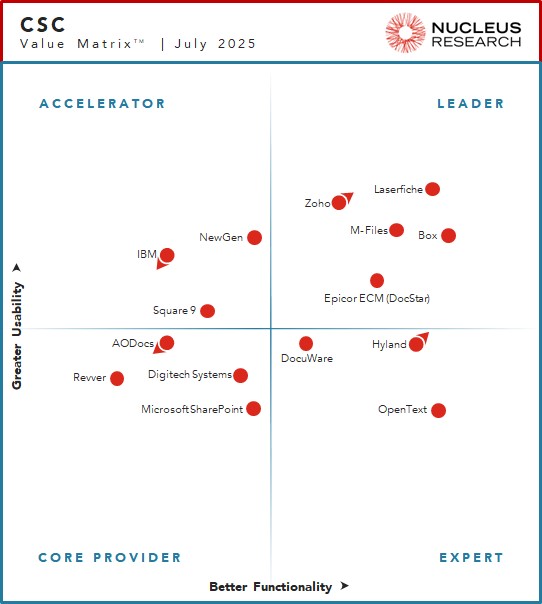
Laserfiche is a Leader for the 10th consecutive year, ranks highest in usability.
LONG BEACH, CALIFORNIA, JULY 23, 2025 — Laserfiche — the leading SaaS provider of intelligent content management and business process automation — is a Leader in the Nucleus Research Technology Value Matrix for Content Services and Collaboration for the 10th year in a row. Among the vendors evaluated, Laserfiche ranks highest overall in usability. Download a copy of the report here.
“As a leader in this year’s Value Matrix, Laserfiche was rated highest in usability for its AI productivity tools, new administration hub, process automation and integration capabilities,” said Evelyn McMullen, research manager at Nucleus Research and author of the report.
CSC as a Strategic Advantage: AI-powered Information Management
Recently released Laserfiche AI-powered features are aimed at boosting productivity even further and enabling automation at scale. Smart Fields, an out-of-the-box intelligent capture tool, allows customers to extract data automatically using natural language instructions, no matter the source or format. Smart Chat provides an intuitive chat interface that enables users to quickly gain insights from their repository content.
“As AI matures at an accelerated pace, vendors in the CSC market have the unique advantage of managing both structured and unstructured data from across the entirety of an organization,” the report’s Market Overview states.
Laserfiche AI features alongside powerful workflow automation, information governance and records management tools create new opportunities for organizational efficiency. Customers across industries use Laserfiche to increase productivity, create competitive advantage and drive growth.
“Laserfiche gives us the forms and workflow processes as well as data integration that enable efficiency at scale,” said Airline Hydraulics Chief Technology Officer Todd Schnirel. “Our Laserfiche-powered process improvements have supported us in achieving a significant increase in net revenue while adding very little operating expense.”
“Being ranked a leader for 10 consecutive years is a testament to our product innovation,” said Thomas Phelps, senior vice president of corporate strategy and CIO at Laserfiche. “Our top ranking in usability reflects our core value of putting people first and our commitment to delivering intuitive solutions that empower users.”
To learn more about Laserfiche’s position in the Content Services and Collaboration market, download the report here.
About Laserfiche
Laserfiche is a leading enterprise platform that helps organizations digitally transform operations and manage their content with AI-powered solutions. Through scalable workflows, customizable forms, no-code templates and AI-enabled capabilities, the Laserfiche® document management platform accelerates how business gets done. Trusted by organizations of all sizes — from startups to Fortune 500 enterprises — Laserfiche empowers teams to boost productivity, foster collaboration, and deliver a superior customer experience at scale. Headquartered in Long Beach, California, Laserfiche operates globally, with offices across North America, Europe, and Asia.
The K-12 Leaders Forum
Addressing A Priority for Higher Education
A recent Chronicle of Higher Education article highlights a major challenge for colleges and universities. They must update millions of web pages and digital assets to meet new accessibility rules. The U.S. Department of Justice (DOJ) has updated Title II of the Americans with Disabilities Act (ADA). These changes set clear rules for web content. Public colleges and universities must now act to make their digital platforms accessible to everyone.
As the Chronicle states, “Colleges must update existing digital content, including course materials, to meet these standards. They must also follow these standards for any new content they create or use.”
Many schools use a decentralized system for content creation. Websites, learning platforms, and marketing teams all produce content separately. Now, they must change their approach. Schools need to shift from fixing issues when they arise to making content accessible from the start.
Understanding the Challenge
Colleges and universities create a vast amount of digital content. Many struggle to track:
- The number of web pages they have.
- Who creates and manages content.
- How accessible their content is for people with disabilities.
The new rules require a structured approach. Schools must improve content management, workflows, and compliance tracking. This is a big change for institutions that have operated without central control.
Steps to Improve Web Accessibility with Content Management
To meet these requirements, colleges and universities should use better document, content, and process management systems. Here’s a simple plan to get started:
1. Centralize Accessibility Resources in Managed Repository
- Audit Documentation: Store accessibility guidelines, reports, and WCAG (Web Content Accessibility Guidelines) standards in one place.
- Version Control: Keep track of content updates to avoid confusion.
- Training Hub: Provide tutorials and best practices to help faculty and staff create accessible content.
2. Automate Workflows
- Task Management: Assign and track responsibilities for reviewing and updating digital content.
- Approval Process: Ensure all new content meets accessibility standards before publishing.
3. Improve Collaboration and Tracking
- Real-Time Monitoring: Use collaboration tools to track progress on accessibility work.
- Team Coordination: Connect content creators, web developers, designers, and accessibility experts.
- User Feedback: Gather input from students, faculty, and staff with disabilities to find and fix accessibility issues.
- Issue Tracking: Create a system for reporting and solving accessibility problems.
4. Monitor Compliance
- Audit Trails: Keep records of content edits to show compliance.
- Reporting Tools: Generate reports to track progress and identify areas needing improvement.
5. Integrate with Existing Systems
- CMS Integration: Make sure accessibility tools work with the school’s content management system (CMS).
- IT Compatibility: Connect new tools with existing IT systems to simplify management.
6. Make Accessibility Easy for Everyone
- User-Friendly Tools: Choose simple, intuitive tools so faculty, staff, and students can easily follow accessibility guidelines.
The Future of Accessibility in Higher Education
The DOJ’s new rules are a turning point. Schools must see accessibility as more than a legal requirement. It is an essential part of creating an inclusive learning environment. By improving content management, automating workflows, and encouraging teamwork, colleges and universities can:
- Reduce the risk of legal issues.
- Improve digital experiences for everyone.
- Create an inclusive space for students, faculty, and staff.
This challenge is also an opportunity. Schools that act now will build a strong, accessible digital system for the future and improve engagement for all.
Accessibility is not just a rule—it is a responsibility. By focusing on inclusive design and content management, colleges and universities can lead the way in providing equal access to education in the digital age.
How Laserfiche Can Help
Laserfiche provides a comprehensive solution for colleges and universities tackling web accessibility challenges. With powerful document management, workflow automation, and compliance tracking, Laserfiche helps institutions:
- Centralize and manage digital content efficiently.
- Automate workflows to ensure accessibility compliance.
- Improve collaboration across departments.
- Maintain clear audit trails for accountability.
By leveraging Laserfiche, institutions can transform their approach to digital accessibility, ensuring compliance while creating a more inclusive and equitable learning environment.
Get started today and build a stronger, more accessible digital experience with Laserfiche.
Download our eBook: Guide to Creating a Fully Integrated Digital Campus
Palo Alto Unified School District (PAUSD) is ranked among the top school districts in America with over 10,000 students. These high standards extend throughout all of the district’s operations, from enrollment and academics to hiring and IT processes.
“We’re in the heart of Silicon Valley, and with that comes some high expectations,” said Derek Moore, chief technology officer (CTO) at PAUSD. “With the improvements that we’ve made in our technology and processes, we’ve also raised the bar for ourselves.”

This constant evolution led the district to assess legacy systems and processes, to ensure the highest level of efficiency in operations, with the lowest amount of friction to users. Key to the district’s continuous improvement has been Laserfiche, with which PAUSD replaced a legacy enterprise content management (ECM) system. Laserfiche’s ease of use, adaptability to the district’s Mac OS environment, and advanced integration and automation capabilities were the major differentiators that drove PAUSD’s decision.
Today, with support from PAUSD’s Laserfiche solution provider ECS Imaging (now MCCi), Laserfiche has become a core component of the district’s tech stack, helping to integrate and orchestrate data and processes across the organization and support the district’s mission to keep the focus on students and student outcomes.
Using Laserfiche as a Multi-Purpose Tool
“Laserfiche is our Swiss Army knife,” said Moore. “If one of our business systems doesn’t have a solution that meets one of our needs, we fill that gap with an integration with Laserfiche. Whether we need to do a form to augment some other process or figure out how to input data — Laserfiche is our answer.”
Since implementing Laserfiche, PAUSD has integrated it with core pieces of the district’s technology infrastructure to enable more seamless process and information flow. Key integrations include Infinite Campus, the district’s student information system (SIS), as well as ERP, active directory, and single sign-on integrations.
“Laserfiche is the automation engine behind a lot of the tools or applications that we’re using which don’t have a good user interface to do the things we need to do,” said Joshua Hung, business systems analyst at PAUSD.
In addition to connecting formerly disparate sources of information and enabling automation of key workflows, Laserfiche has helped to create a culture of continuous improvement and process automation at the district.
“Laserfiche has facilitated better communication between departments and between people,” Moore said. Mapping out processes to validate or question each step has strengthened teams’ understanding of how or why actions are taken. “It’s really helped define our organizational processes in a way that I don’t think anyone in the organization understood. We’ve got a whole list of departments and processes that touch Laserfiche, from our student services to human resources, to our business office and our educational services. Laserfiche has been the backbone.”
Banishing Busywork to Focus on What Matters
One critical process that helped to get teams excited about Laserfiche-driven improvements was the Head Injury Protocol. Because head injuries — from minor bumps to serious blows — can have serious health implications, the process of reporting them requires significant documentation and multiple notifications to be distributed internally and externally.
Transforming the legacy, paper-driven process with a Laserfiche solution meant that documenting these events were now a lot less manual and less time-intensive, but also reported with more accuracy and accountability.
Because of the integration between Laserfiche and Infinite Campus, a staff member can now enter a student number into the Laserfiche form and the necessary information populates the form — parents’ contact information, parents’ email addresses, etc. From there, the staff member simply answers the required questions and submits the form. The principal then approves it, and the information is distributed to the nurse’s office, risk management, legal services, and the child’s parents.
Transformation of the Head Injury Protocol inspired various teams to realize the power of Laserfiche solutions. “It’s a really fun place to be,” Moore said. “Our users are bringing ideas to us, and we’re able to evaluate and prioritize projects. We’re thinking about our pain points as an organization and how we can create Laserfiche Forms processes to solve them.”
Building on the initial success, PAUSD began creating more standardization around other processes that require the alignment of multiple departments, approvals and systems.
“Our entire organization’s staff is very competent and wants to be empowered to do the job themselves,” Moore said. “That’s where Laserfiche fits in. We help by building small pieces for them or helping to standardize a process. Laserfiche empowers them to complete the tasks that they’re charged with without requiring a lot of tech team intervention.”
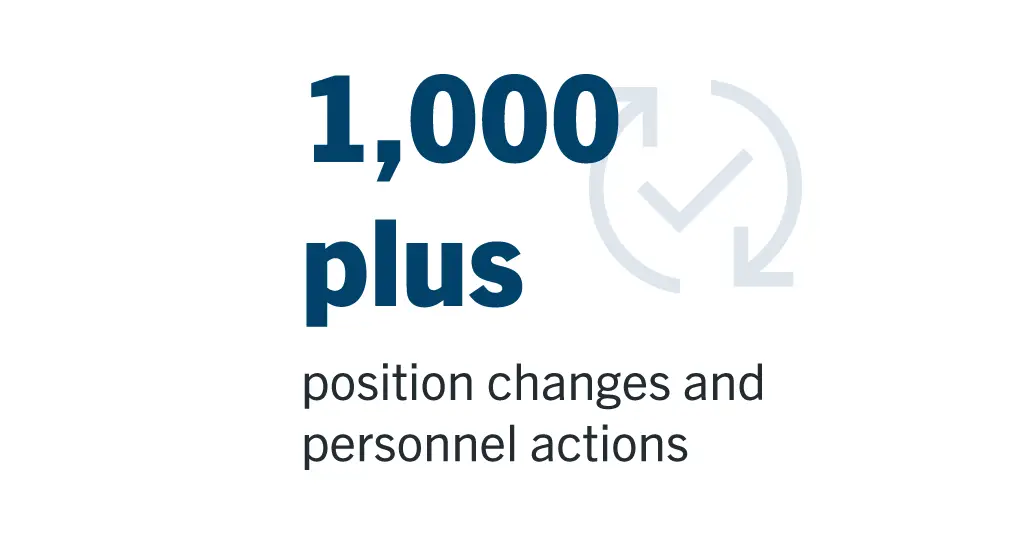
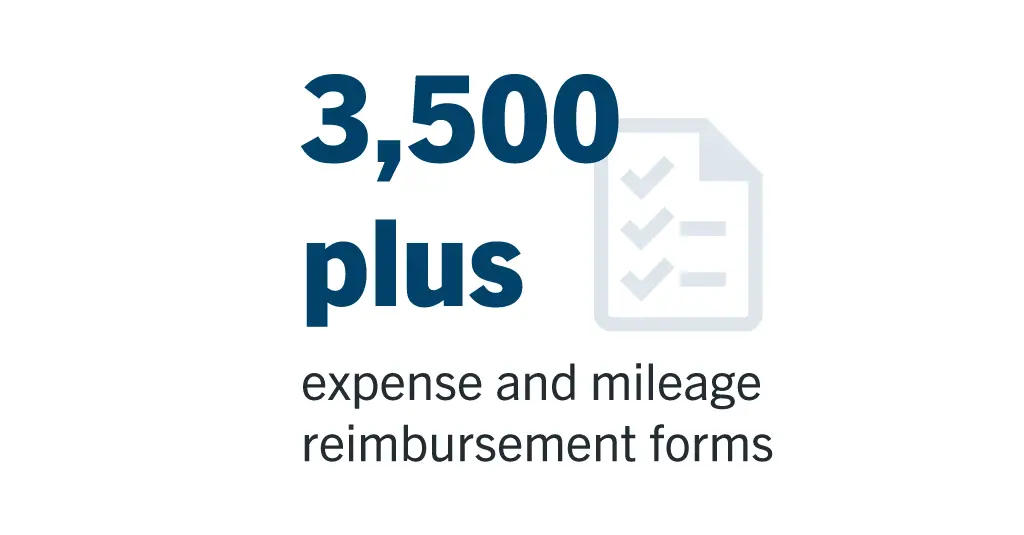
A complex yet critical process at the school district, Position Control is one such process which enables the district to track hiring and monitor costs related to various positions. Previously a paper form that was physically passed from stakeholder to stakeholder, the process is now digital and automatically routed in Laserfiche, leveraging an integration with the district’s ERP system. “The Laserfiche process ensures that we are fulfilling the necessary roles from an HR hiring perspective, to the business fiscal department, making sure there’s budget allocated for it,” Moore added.
The updated, expedited process extends to the IT team, which is now automatically notified when people are hired so that accounts and access can be set up immediately. “We want to make the new employee feel welcome,” Moore explained. “We’re onboarding them with a good experience and making sure they have everything they need so they’re ready to go on day one.”
The Future is Digital-First
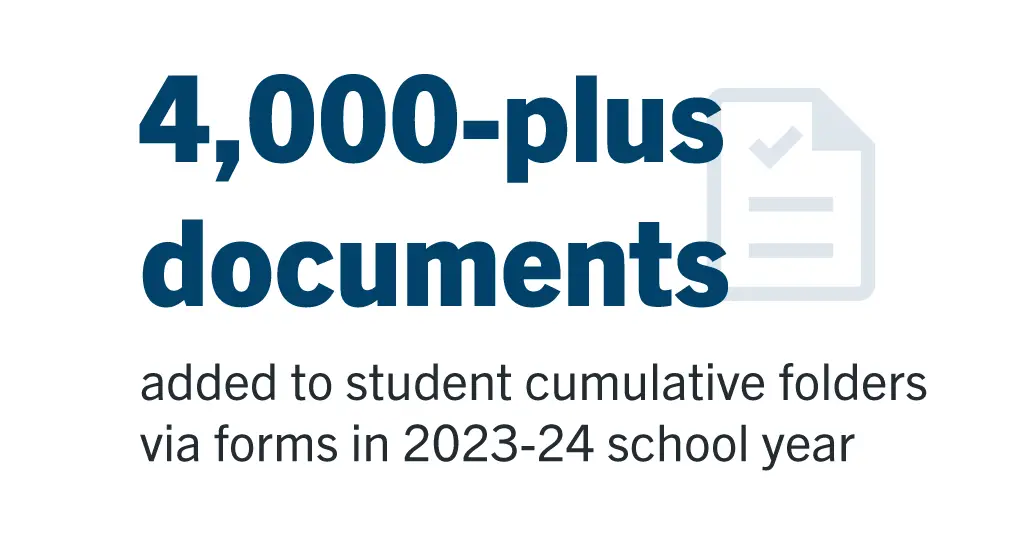
As PAUSD builds a more automated future, Moore and his team understand the importance of being digital-first. One large step the district took toward this goal was to digitize all student cumulative folders, which contain students’ permanent records, including personal information, enrollment, academic records, and other relevant information. The IT team built a Laserfiche form and workflow to input, tag and sort all student documents into the correct places.
“We can say at this point that all of our active files are electronic,” Moore said. “Some information comes in as paper if it starts in another district, for instance, or it may be a doctor’s note that needs to be scanned in. But it’s scanned in via a Laserfiche form.”
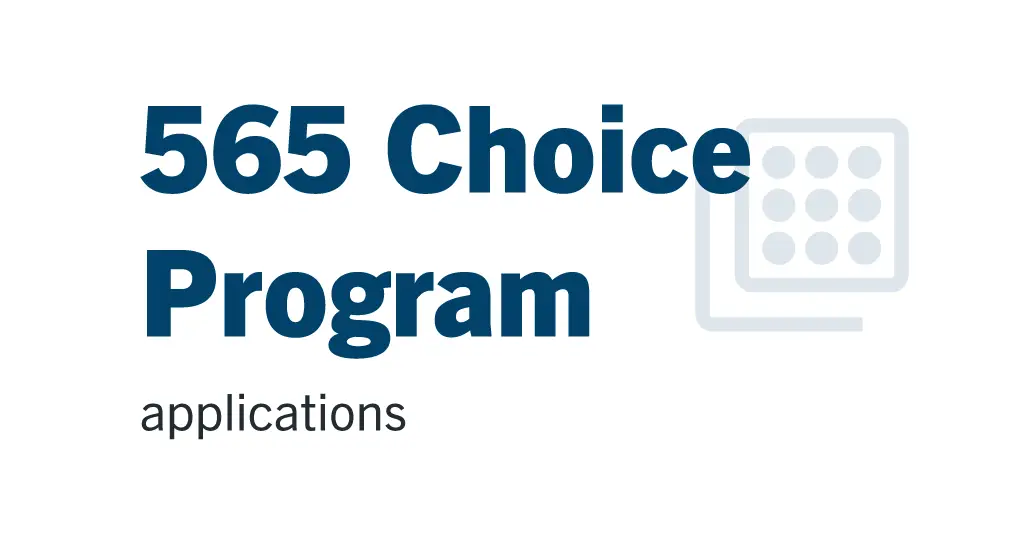
This digital-first approach is also evident in the processes that collect information externally, as in PAUSD’s Choice Programs process. PAUSD Choice Programs offer parents and students options beyond their assigned neighborhood school, providing diverse learning environments for different interests and needs.
The district enables parents to fill out a public Laserfiche form, which is routed to staff members who validate the information through an integration with the SIS. The workflow also pulls additional data into the form that needs to be evaluated.
“These lookups save reviewers a lot of time, because instead of clicking to five different pages where the information exists, it’s all there on that one page,” said Hung. Additionally, the Laserfiche form enables the district to collect accurate data from the outset, eliminating the time-consuming data cleaning that used to be inevitable in the legacy process. “We also created a notification process with Laserfiche, to make sure that parents and students receive the right notifications for the specific lottery programs they are being accepted to. Our staff can just click a button that sends out notifications as part of the business process; it’s made it a lot less stressful.”
Innovating with Intent
The IT team continues to innovate the organization’s many processes and procedures that make up PAUSD’s operations. One of the best parts of using Laserfiche for this innovation, the team says, is that they know they are not alone.
“We go to the community events to connect with other Laserfiche users, and we communicate about what challenges they’ve run into, or what new processes they are trying,” Hung added. “We learn from them, and we can pass on what we’re doing, too.”
As the district grows, the technology team is confident in its ability to support the student-centric mission of the organization. Through digital solutions, PAUSD can prioritize the programs and budget items that are going to have a positive impact on student outcomes.

“We’re still adding people and adding positions, but what we’re not talking about adding is people to simply process paperwork or process data,” said Moore. “We’re more focused on how we can better use people and budget to serve students.”
Situation: Grand Prairie Independent School District (GP ISD) struggled with a slow, paper-based process for managing student documents. Students accessed documents in one system, while the district needed to retain documents in a secure repository. Staff were printing files, then manually scanning them into the repository, leading to substantial labor costs and delays.
Solution: GP ISD implemented Laserfiche to digitize and streamline information handling workflows. Special education diagnosticians instantly capture and upload files into the Laserfiche repository, without manual scanning.
Results: The solution streamlined student services, saving the district over 12,000 hours and thousands of dollars annually.
It has been extremely helpful in moving processes along — business processes, absolutely, but also student services processes.
— Dianna Drew, Executive Director of Technical and Digital Solutions
Generative AI is revolutionising higher education institutions. Creating a better connected and intelligent campus is a top priority as further education institutions are exploring technologies that offer solutions that will empower staff and students.
Today’s students don’t just desire a digital campus, they require it. Having grown up in the digital age, Gen Z university prospects are accustomed to accessing resources and hyper-speed responses to questions 24/7 at their fingertips. While technology has always played an essential role in higher education, the Covid-19 pandemic drove colleges and universities to step up their digital transformation games much sooner than projected.
This widespread adoption of streamlined technology continues to demonstrate its value as campuses return to in-person learning yet face the next wave of administrative challenges: enrollment declines combined with amplified student service demands. If these obstacles sound all too familiar, you’re not alone. Universities across the globe are racing to update decades-old processes and eliminate administrative drudgery that can strain budgets and negatively impact student and staff success. In this new era of higher education, low-cost business process automation is the gold standard for more efficient, streamlined, and effective approaches to decode multi-departmental collaboration puzzles.
Empowering Your Workforce through Automation
In every chapter of your digital campus transformation tale, business process automation is the protagonist – a technology hero that can turn tiresome tasks into a seamless data workflow. Envision transcripts processed in the blink of an eye, student data updated effortlessly, and access to sensitive information safeguarded with precision. Alongside your university digital transformation journey, Laserfiche’s content management and process automation solutions emerge as your team’s north star, empowering students and staff with transparent portals that deliver the right information at the right time.
Process automation, synonymous with business process management, harnesses technology to automate the mundane. But this digital tool isn’t just about relieving humans of repetitive chores; it’s about unleashing their potential. It’s the spark that ignites innovation, propelling institutions forward.
Survey Reveals Substantial Growth Potential for Innovations in Higher Education Automation Processes
Though the extraordinary potential for cost savings and efficiency is a clear win for higher education, low-cost business process automation is still an under-utilized resource for many universities. A recent Laserfiche survey revealed that only 10% of schools embrace fully digital processes – an untapped opportunity for the remaining 90%.
Today’s higher education process automation platforms use novel technologies to perform increasingly complicated tasks, such as capturing, categorizing, interpreting and sharing student data from a wide variety of original document formats and across multiple campus departments. Still, humans are the ones who drive this change and innovation. Automation simply allows them to do more as they work to keep student and staff performance moving forward.
Your Fully Integrated Digital Campus Awaits
So, what’s your next step? Get ready to enter a new era in higher education with Laserfiche’s innovations in enterprise content management and make the most of the outstanding potential that automation, integration, and advanced AI technologies provides.
Harness the full spectrum of strategies, insights, success stories and best practices in higher education content management by downloading Laserfiche’s free white paper – “Your Guide to Creating a Fully Integrated Digital Campus.”
I Want to Learn More about Higher Education Content Management
Popular concepts of artificial intelligence (AI) and machine learning (ML) are often associated with futuristic applications and cutting-edge innovations. However, the use of AI in higher education today is already amplifying real-world applications in campuses across the globe, subtly revolutionizing back-office operations, empowering staff with previously unattainable efficiency and accuracy, and freeing them to focus on higher-value tasks.
Recent fluctuations in enrollment rates and financial pressures have required higher education institutions and their staff to do more with less. As challenges intensify, institutions are recognizing the need for more sophisticated technology solutions that can simplify complex tasks, optimize shared resources, and streamline budgets.
The Power of Generative AI in Higher Education Admissions
One area where the potential use of AI in higher education shines bright is admissions. Traditional admissions processes often involve repetitive tasks that can be time consuming. Generative AI has the power to reshape this landscape by making initial applicant screening more efficient.
Laserfiche’s recent partnerships with higher education institutions demonstrate how generative AI can automate information extraction from transcripts, simplifying the admissions process and allowing staff to bypass repetitive, time-consuming tasks.
Picture this: Generative AI can autonomously make preliminary decisions about student acceptance. Though human involvement will still be necessary at higher approval levels, AI can review the quantitative aspects of admissions, such as high-school courses and grades, thereby eliminating a major portion of the upfront workload with admissions staff. This means faster, more consistent decision-making and fewer bottlenecks.
Real-Life Success: SUNY Empire State College’s Use of AI in Admissions Reduces Response Times from a Week to Less than an Hour
Witness the impact of AI at work. Laserfiche partnered with SUNY Empire State College, implementing AI-powered transcript processing. The results? Response times slashed from a week to under an hour, significantly refining student engagement and boosting their staff’s ability to process higher volumes of applications and requests.
Discover the Full Potential of AI + Automation and Data Integration
Curious to explore how the use of AI in higher education can reshape your back-office staff’s workflow? Dive into Laserfiche’s comprehensive white paper, “Your Guide to Creating a Fully Integrated Digital Campus,” and witness the extraordinarily impact of AI in higher education. Plus, explore how low-cost business process automation creates high returns at universities, get tips on remediating data silos, and mobilize best practices in change management to set your digital transformation up for success.