



Coined the “Elektropolis” for its foundation of modern-day electrical engineering and industrialization, Berlin has been a hub for technological innovation in Europe for the past century. Given the history, it’s no surprise why it was chosen as the meeting place for over 30,000 tech and AI leaders at GITEX AI Europe 2026 this summer.
From the public sector to startups, investors and enterprise leaders, I had the opportunity to connect with the top minds and businesses pioneering Europe’s leading technology and innovation. Unsurprisingly, AI, particularly agentic AI, was at the forefront of every conversation at the event. But amidst the AI hype, a new buzzword quickly emerged: governance.
Unleashing Organizational Growth with Agentic AI
Agentic AI took center stage across the expo floor and numerous sessions, introducing a new meaning to AI assistance. Moving past LLM and chat models, AI agents are designed to act on your behalf.
The introduction of autonomous execution opens a new realm of possibilities for businesses to supercharge their operations. Processes that once took hours of human intervention can now be done by agents, saving valuable employee bandwidth, cutting costs, increasing efficiency and elevating data quality. Across Europe, leaders from every sector are now looking toward agentic solutions to not only accelerate core business functions, but to make meaningful impact at scale.
But with that massive potential comes a new layer of responsibility. Conversations around agentic technology quickly turned the spotlight onto security risks and the urgent need to comply with looming legislative mandates.
The AI Act: Europe’s Governance Mandates
Created to meet the rapid explosion of AI technologies, the AI Act was put into place in 2024 by Europe’s governing bodies to ensure the responsible adoption of AI across all 27 countries in the European Union (EU).
An official press release from the Commission describes the goal of the act stating:
“The EU aspires to be the global leader in safe AI. By developing a strong regulatory framework based on human rights and fundamental values, the EU can develop an AI ecosystem that benefits everyone.”
The act approaches AI governance with a four-tiered risk assessment and sets timelines for implementation. Deadlines for “High Risk” AI are quickly approaching on August 6, 2026, with extensions allowed until December 2, 2027. According to the European Parliament, High Risk refers to any system that could threaten people’s safety or basic rights, especially when used in critical areas like healthcare, transportation, law enforcement, education or hiring.
To navigate this landscape, businesses at GITEX must track two critical milestones:
- August 6, 2026: Strict transparency and audit rules take effect. Companies must clearly label conversational chatbots, emotion-recognition tools and deepfakes. Additionally, every EU country must launch a simulated “AI Regulatory Sandbox” to give startups a safe place to test models.
- December 2, 2027: Standalone high-risk systems must be fully compliant. Any AI used to score exams, filter job applicants, manage critical infrastructure or assist law enforcement must be thoroughly audited, logged and registered in the EU database.
Failure to meet the deadline requirements can cost organizations up to €15 million in penalty fees.
How Can EU Leaders Safely Compete?
With the impending AI Act deadlines and the rise of agentic AI, numerous sessions and roundtables at the event centered around practical measures for businesses to safely compete with the leaders of tomorrow.
Presentations by session experts repeatedly surfaced one vital concept: information and data management. Before AI agents can make an impact, they need access to the right information. Without a clear and governed data infrastructure, agents lack the context they need to correctly perform business actions, opening the door for compounding compliance and security risks.
In addition to connected data infrastructures, agent actions must be transparent and auditable to meet the EU AI Act demands and maintain security. Combining information management and transparency is a key component to fostering trust, especially within the essential services, public sector and other critical industries outlined in Parliament’s legislation.
Navigating the Agentic Era at GITEX AI Europe 2026
Europe’s businesses, startups and public organizations stand at a pivotal crossroad. While AI agents offer unprecedented opportunities for growth, this autonomous technology also introduces complex new compliance and security risks.
As the conversations at GITEX AI Europe 2026 made clear, transparency, information management and strict governance are no longer optional—they are imperatives for successful AI adoption. Far from holding innovation back, robust governance is the very catalyst that allows agentic technology to scale safely.
When implemented securely, AI agents liberate human ingenuity and drive true digital transformation.
Your future success starts now. Learn how AI-powered content management can help your organization navigate the agentic era with confidence, mitigate compliance risks and reach your goals faster than ever before.
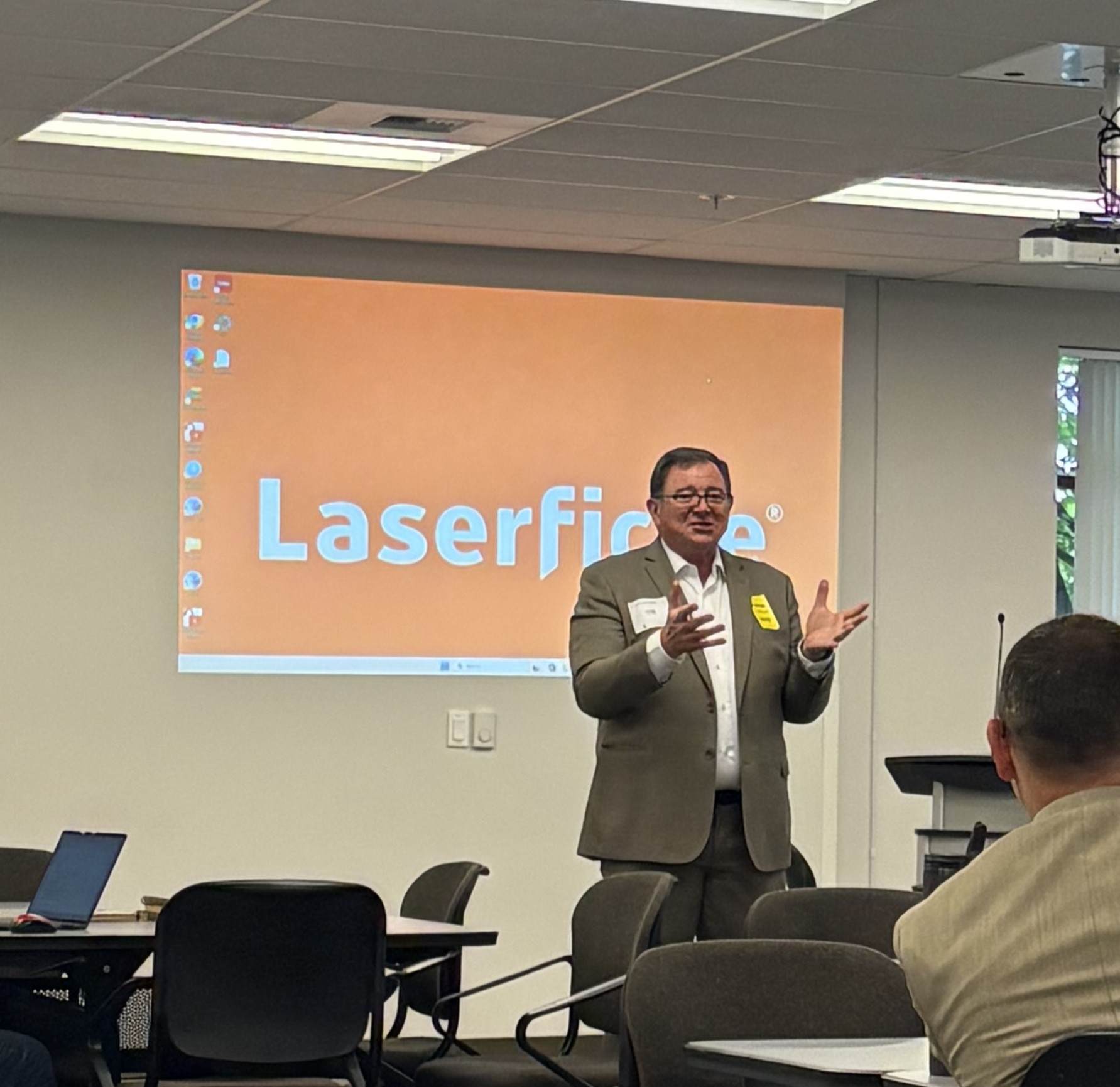
In 2026, AI expansion across government is accelerating at an unprecedented pace. This year’s Washington State Information Professional Management Association (IPMA) Forum brought together technology, business and management leaders to help public agencies navigate this landscape and map out the future of operational resilience and technical innovation.
Conversations with public sector leaders made one thing clear: artificial intelligence (AI) is no longer a concept for the future—it is actively shaping everyday government operations. The defining question is no longer if agencies will adopt AI or even Agentic AI, but whether they are prepared to govern it responsibly.
This marks a critical shift for state and local agencies navigating an environment defined by rising expectations, compounding information complexity and growing pressure to accelerate service delivery without compromising public trust.
Why Governance Matters More Than Ever
Across IMPA sessions focused on modernization, records management, automation and digital transformation, three core themes emerged:
- The Explosion of Unstructured Content: Documents, emails, forms, contracts, and case files continue to grow across disconnected systems. Much of this information lacks consistent metadata, making it difficult to find, govern or use effectively.
- The Scalability Crisis: Manual processes no longer scale. Staff shortages, increasing compliance obligations and growing transparency demands are forcing organizations to rethink how work gets done.
- The Governance Mandate: Leaders increasingly understand that AI only delivers value when it operates within trusted governance frameworks.
These priorities closely align with a broader shift happening across government: moving from managing content as static records to treating information as a strategic operational asset.
That is where content management is being reimagined.
Leveraging AI in Document Management
Traditionally, enterprise content management focused on storing, organizing, and retrieving documents. While those capabilities remain essential, they are no longer sufficient on their own. With the rapid growth of AI in local and state government, agencies today need systems that can help classify information automatically, surface insights quickly and support faster, more informed decisions.
AI-drive document management is accelerating that evolution.
At the forum, discussions around automation and AI repeatedly returned to practical use cases that agencies are actively exploring. Intelligent document classification, automated metadata extraction, AI-assisted records retrieval, and conversational access to information are no longer mere luxuries. They are becoming operational necessities.
But what stood out most was the emphasis on responsible AI.
Government leaders are understandably cautious. Public trust depends on transparency, accountability, and defensible decision-making. Agencies cannot afford black-box systems that operate without oversight or explainability. As AI capabilities expand, governance becomes more important, not less.
Innovation Done Safely: Washington’s Framework for AI Governance
Government leaders in Washington state are already establishing formal frameworks for responsible AI adoption. In 2024, Governor Jay Inslee issued Executive Order 24-01 directing agencies to develop guidance for the ethical, transparent, and accountable use of generative AI across state government. The order emphasized that agencies must balance innovation with safeguards around privacy, bias mitigation, security, and public trust.
More recently, Washington Technology Solutions (WaTech) expanded those efforts through the state’s Artificial Intelligence Policy, which requires agencies to identify AI-enabled systems, conduct AI risk assessments and ensure human oversight remains part of decision-making processes. The policy specifically calls for governance frameworks that are transparent, auditable and aligned with Washington state’s AI Principles.
That direction closely mirrors what many attendees at the IPMA Forum discussed throughout the event. Agencies are not simply asking how to deploy AI faster. They are asking how to operationalize AI responsibly within environments that already contain decades of sensitive records, fragmented systems and complex compliance obligations.
This is why governance is emerging as the true foundation of AI readiness.
Rather than treating governance as a compliance exercise that slows innovation, agencies are beginning to view governance as the foundation that enables innovation safely. When information is properly classified, secured and governed, AI becomes significantly more effective and far more trustworthy.
Deploying Intelligent Document Automation in the Public Sector
Early AI adoption often focused on assistance: summarizing documents, extracting data, or helping staff locate information more efficiently. Increasingly, however, agencies are shifting from simple assistance to intelligent document automation, evaluating systems capable of taking independent action within workflows. AI can now recommend next steps, identify exceptions, trigger processes, and support decision-making in real time.
That progression raises the stakes.
AI systems depend on context. Context depends on well-governed information. If data is fragmented, outdated, or inconsistently managed, automation compounds risk.
That reality became evident in conversations at the IPMA Forum. Agencies are recognizing that modernization is no longer just about digitizing records. It is about creating an information environment where data can be trusted, processes can be audited and AI can operate responsibly within defined guardrails.
Core Priorities for AI in Data Governance
To navigate this paradigm shift safely, state and local agencies will need to map out future strategies that move away from manual oversight and toward automated workflows that embed compliance directly into daily operations. To prepare for this transition, public sector IT and business leaders should prioritize these key areas:
- Strategic Data Governance Frameworks: Apply consistent retention, security, and access policies dynamically across increasingly complex information environments.
- Foundational Workflow Automation: Create workflows to continuously classify, route, and govern information the moment it enters a system, reducing reliance on manual indexing.
- Secure Interoperability Standards: Design systems that enable governance policies to travel with the data itself, ensuring security rules remain completely consistent regardless of where content resides.
And perhaps most importantly, agencies are approaching AI as a tool to augment human expertise, not replace it.
That distinction matters.
The most successful government AI initiatives are not removing people from the process. They are reducing repetitive work, accelerating information access, and allowing public servants to focus on higher-value decisions. Human oversight remains essential because accountability cannot be delegated to an algorithm.
This is why responsible AI and modern content management are becoming inseparable conversations.
Turning Trusted Information into Intelligent Action
The agencies making the most progress are not necessarily the ones moving fastest to deploy AI. They are the ones investing in trusted information foundations first. They are aligning governance, automation and AI into a unified strategy designed to improve service delivery while protecting transparency and public confidence.
That is ultimately the opportunity ahead of government leaders.
AI has the potential to transform how agencies manage information, respond to citizens, and operate at scale. But the long-term value of AI will not be determined by the sophistication of technology alone. It will be determined by whether agencies can build environments where information is structured, governed and trusted enough for AI to operate responsibly.
Washington State’s evolving AI policies make one thing increasingly clear: the future of government AI will not be defined by how aggressively agencies automate, but by how effectively they govern the information that powers those systems.
At the Washington State IPMA Forum, that message was impossible to miss.
The future of content management is no longer about storing information.
It is about turning trusted information into intelligent action.
Build Your Foundation for Responsible AI
Successfully navigating the ongoing expansion of government AI requires an information foundation you can trust. Laserfiche helps state and local agencies bridge the gap between innovation and compliance with secure intelligent document automation and AI-driven solutions.
See how Laserfiche accelerates secure government transformation.
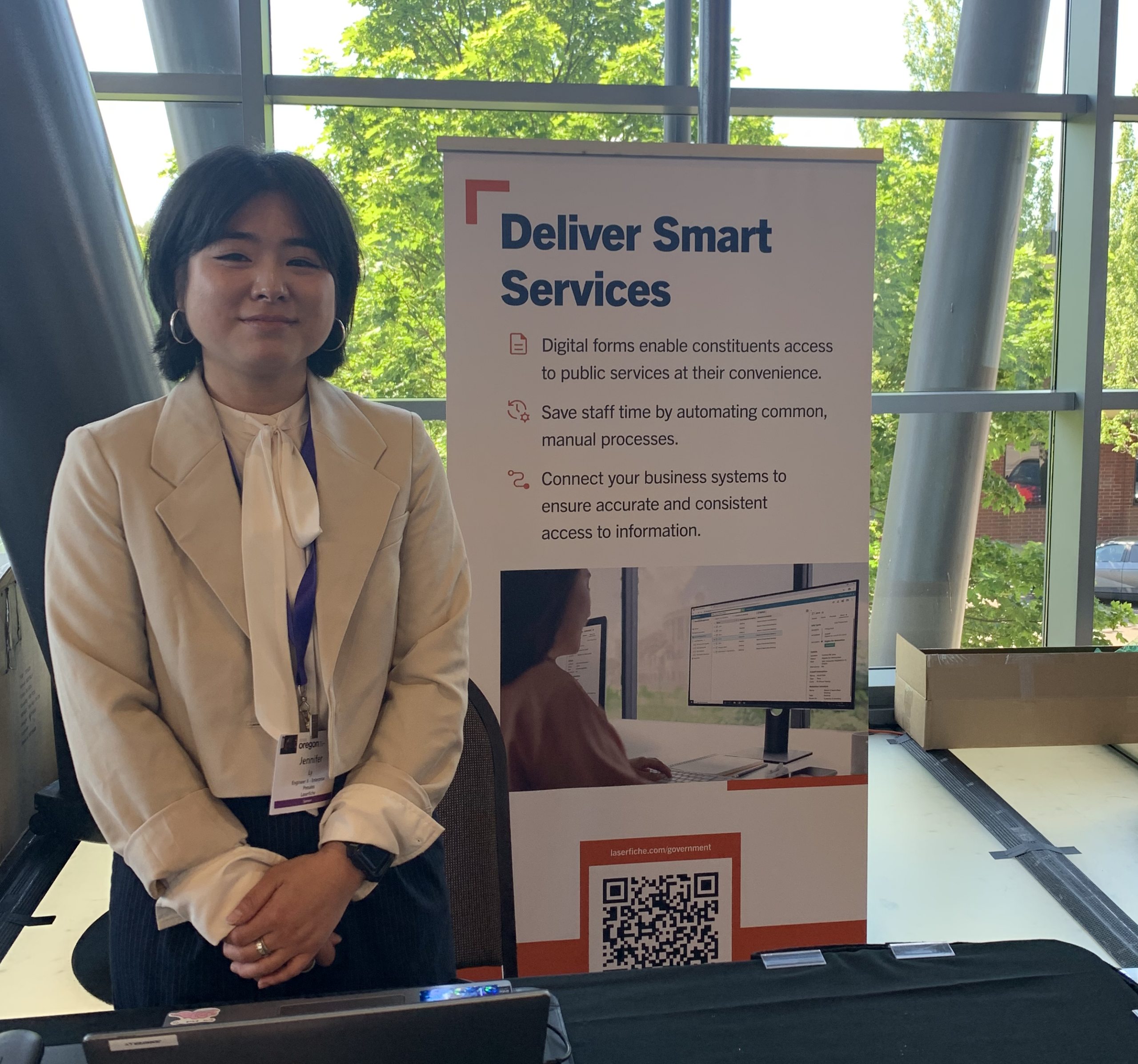
At this year’s Oregon Digital Government Summit in Salem, state and local IT and governance leaders gathered to set the strategy for the future of the state’s public infrastructure. The conversations at the event focused on driving digital transformation to address common public sector challenges through practical AI utilization to provide modernized constituent services — all while maintaining trust.
Oregon’s Chief Information Officer, Terrence Woods, echoed this sentiment, “Digital transformation isn’t about systems — it’s about belief. When leaders trust their platforms, innovation accelerates. I look forward to the 16th annual Oregon Digital Government Summit where we can continue collaborating on digital transformation strategies.”
This focus on trust and innovation aligns directly with the expanding AI governance policies and questions public sector leaders are increasingly facing from their teams and the communities they serve.
Laying the Groundwork: Oregon’s AI Governance Framework
Government modernization has evolved from merely digitizing data and cloud migration to turning massive volumes of information into trusted intelligence. To bridge that gap, agencies are rapidly scaling the use of AI in public sector workflows.
Laying the groundwork for responsible AI adoption, Oregon established the State Government Artificial Intelligence Advisory Council and appointed a Chief Privacy Officer and AI Strategist to guide agency adoption. In early 2025, the council published its Final Recommended Action Plan emphasizing transparency, privacy, security and workforce readiness as prerequisites for scaling AI across state government.
Rather than treating AI as a standalone initiative, Oregon is positioning it as part of a broader effort to modernize how information is governed, shared and used to improve outcomes for Oregonians.
Oregon’s Vision for AI in Public Sector Work
In many ways, Oregon’s vision reflects a broader shift occurring across state government: technology is an asset to humans only when deployed responsibly.
During his summit keynote, “How Public Sector Leaders Unlock Collective Genius and Fuel Breakthroughs in the Age of AI,” author Frankie Russo challenged attendees to view AI not as a replacement, but as a “copilot” to unlock human intelligence and impact. This theme echoed throughout the event, shifting the conversation from treating AI as a mere technical tool to leveraging it as a catalyst for collaborative, human-centric innovation.
But as many leaders at the conference agreed, AI requires strong guardrails to remain effective and maintain public trust.
Guiding AI Transformation Through Strategic Governance
State and local leaders in Oregon are recognizing that AI transformation is founded in governance, not just adoption. Compliance is not a barrier to innovation—it is the mechanism that makes it safe and sustainable.
Translating the “copilot” vision from Russo’s keynote into real-world results demands a foundation rooted in integrity. Summit conversations converged on four critical capabilities required to achieve this:
- Trustworthy data: Agencies must ensure the content informing AI systems is accurate, current, and securely governed.
- Operationalized governance: Policies regarding privacy, retention, and security must be embedded directly into technology platforms, not just written in documents.
- Discoverable information: AI cannot generate insights from data it cannot find, analyze, or contextualize.
- Transparency and accountability: To protect public trust, AI-assisted decisions must remain explainable, auditable, and subject to human oversight.
As Oregon advances its enterprise AI strategy, long-term success will hinge on these core practices. By establishing a disciplined data foundation today, public sector organizations will find it drastically easier to drive digital innovation responsibly while maintaining public confidence.
Moving Toward Agentic AI and Autonomous Workflows
Strong data governance becomes even more important in the advent of agentic AI and autonomous workflows.
While generative AI focuses primarily on creating content and summarizing information, agentic AI introduces the ability to act, coordinate processes, and execute tasks. As these capabilities mature, the importance of structured, governed and well-managed information environments increases dramatically. Organizations that lack information governance may find themselves automating inefficiency or creating new compliance risks. Conversely, those that secure their data foundations will be well positioned to innovate public services and even strengthen trust.
Empowering Public Servants with Human-Centric AI
Ultimately, the Oregon Digital Government Summit proved that the future of AI in government will not be determined solely by the sophistication of the technology, but by the quality of the governance supporting it.
Oregon’s vision is firmly grounded in a human-centric reality: The goal is not to replace public servants, but to empower them with better tools and sharper insights to improve constituent outcomes.
From cybersecurity and data governance to AI-driven digital service delivery, this year’s summit delivered the peer connections and actionable guidance needed to move your agency’s mission forward.
Continue the work started in Salem by downloading our executive guide to managing organizational change and scaling responsible AI adoption.
There was a time when the role of the municipal clerk was viewed primarily through the lens of records management and meeting administration. That world is gone.
Today’s clerks are operating at the center of some of the most important challenges facing local government: transparency, accountability, cybersecurity, governance, citizen engagement and now AI-driven transformation. The pace of change is accelerating, and the expectations placed on municipal offices are changing just as quickly.

To help professionals navigate these shifting tides, the International Institute of Municipal Clerks (IIMC) Annual Conference brings together leaders from across the globe for intensive professional development and peer collaboration. Capturing the essence of this evolution, keynote speaker Michelle Ray presented “Real-Time Leadership: How to be Ready, Responsive and Relevant in a Radically Changing World.” As an expert in helping organizations embrace accountability amidst disruption, Ray opened the event urging clerks to advocate for their vital roles and reframing them not just as administrators, but as the true “guardians of local democracy.”
“Real-time leadership” is no longer just a leadership concept for municipal clerks; it is becoming an operational requirement.
Legacy Hurdles of Municipal Records Management
Municipalities are under increasing pressure to modernize services while maintaining public trust. Clerks are now expected to respond to public records requests faster, manage growing volumes of digital information, support hybrid and digital-first council operations, and navigate increasingly complex governance requirements often with limited staff and shrinking resources.

While citizens expect private-sector efficiency and instant digital access, the reality on the ground is often defined by operational friction. Many municipalities are still held back by fragmented systems and institutional knowledge trapped in siloed emails or legacy paper files. When information is buried, compliance risks spike, staff burnout skyrockets and leadership inevitably becomes reactive instead of proactive.
This digital disconnect was the defining theme of the conversations our team had with attendees on the IIMC expo floor. Clerks from across the country shared a common frustration: massive amounts of strategic time are consumed by manual records management and meeting prep. One attendee highlighted the staggering reality of tackling a literal “basement of documents”—historical paper files requiring a grueling cycle of scanning, digitizing, and indexing just to maintain public access.
Ultimately, when public servants are bogged down by the weight of these legacy processes, finding the room to step into the strategic leadership Michelle Ray championed can be an uphill battle.
From Strategy to Reality: Deploying a Government Document Management System
This is where the conversation around real-time city leadership becomes deeply practical. For municipal clerks, leading in real time isn’t an abstract concept—it means building the operational capacity to respond quickly and confidently in a constantly shifting environment. It means having visibility into information when it matters, reducing operational bottlenecks and enabling transparent and resilient governance processes.
And increasingly, it means embracing automation, strong data governance and AI responsibly through intelligent content management systems like Laserfiche.
AI in Local Government: From Digital Filing to Intelligent Operations
AI may dominate today’s technology conversations, but for municipal government, the foundation starts with governance.AI is only as effective as the information environment behind it. If records are scattered across systems, metadata is inconsistent, retention policies are unmanaged, or information access is unclear, AI simply amplifies those problems.
That is why content management has become a top strategic priority.
Modern content management platforms are no longer just digital filing cabinets. They are becoming operational systems that help municipalities manage information intelligently, automate repetitive work, strengthen governance and improve organizational responsiveness.
This is where Laserfiche bridges the gap between Michelle Ray’s leadership philosophy and the day-to-day operations event attendees are struggling with. By helping municipalities centralize and govern their content, Laserfiche ensures that information is secure, accessible, and actionable.
Instead of relying on manual processes and fragmented repositories, clerks can automate workflows, streamline records management and improve visibility across departments.
Ultimately, true responsiveness depends on access to trusted data. When public records requests can be fulfilled quickly, when agenda processes are automated, when retention policies are enforced consistently, and when staff can locate the right information without searching across disconnected systems, municipal offices gain the operational agility needed to lead in real time.
Reimagining Efficiency with Automation and Agentic AI
Automation plays a critical role in unlocking capacity. Municipal clerks are often overwhelmed with repetitive administrative work that drains valuable time and institutional bandwidth. By utilizing Laserfiche to automate workflows for records processing, approvals, notifications and document routing, municipalities can dramatically reduce this manual burden.
The goal here is not simply efficiency for efficiency’s sake. Rather, automation creates space for clerks to focus on higher-value leadership responsibilities such as governance, policy coordination, public engagement and strategic modernization initiatives.
And now the conversation is evolving again with agentic AI.
The next phase of AI inside Laserfiche goes beyond generating document summaries or answering simple questions. Laserfiche AI Agents introduce the possibility of systems that can proactively assist users by understanding context, identifying actions, surfacing relevant information, and supporting decision making.
In a municipal environment, which could mean helping staff:
- Identify records tied to retention schedules.
- Surface documents related to public inquiries
- Automate classification and metadata tagging.
- Assist with agenda preparation.
- Accelerate policy research.
- Reduce time spent navigating large information repositories.
Grounding AI in Local Government with Strict Data Governance
Without strong governance, even the most sophisticated AI tools fail. This is why municipal clerks are the natural leaders for this digital transformation. Their role as stewards of transparency, accountability and records integrity is exactly what local governments need as AI adoption accelerates. Real-time leadership in the AI era is not just about moving faster. It is about ensuring municipalities can modernize responsibly while maintaining trust, compliance and transparency.
That requires more than technology implementation. It requires operational readiness.
The municipalities that succeed over the next several years will be the ones that treat information as strategic infrastructure, not just archived content.
And that shift elevates the role of the municipal clerk even further.
The future clerk’s office will not simply manage records; it will drive intelligent government operations. That is why Michelle Ray’s message matters right now. Moving beyond traditional, reactive administration isn’t just about professional growth—it is quickly becoming the definitive blueprint for running an efficient, modern municipal office.
Ready to transform your municipal operations? Laserfiche can help your office eliminate manual bottlenecks, secure your data infrastructure and empower your team with next-generation AI and automation. Explore how public agencies like the City of Acworth are deploying these tools safely and effectively, or take the next step toward real-time leadership by scheduling a custom demo with the Laserfiche team today.
Operational Efficiency is a Public Safety Imperative: What I Heard at the IACP Technology Conference

In an era of on-demand digital services and deep public scrutiny, law enforcement agencies are under immense pressure to modernize. Yet, at this year’s International Association of Chiefs of Police (IACP) Technology Conference in Charlotte — the premier forum for law enforcement innovation — the conversations weren’t about chasing futuristic tech trends. Instead, the core takeaway from the expo floor was refreshingly grounded. Leaders widely agree AI and emerging technologies should be used to reduce administrative burden and free personnel to focus on public safety instead of paperwork.
While modernization once focused strictly on basic digitization and compliance, today’s leaders recognize cutting administrative friction is directly tied to an agency’s ability to protect and serve. This highlights a massive industry shift: operational efficiency is no longer just a back-office goal — it is a public safety imperative.
The Daily Strain on Police Operations
Agencies are dealing with staffing shortages, disconnected systems, growing records demands and increasing pressure to respond faster while maintaining accountability and public trust. The challenge is no longer simply storing information. The challenge is making information easy to access, trustworthy and usable when it matters most.
Throughout the conference, agencies consistently described the same operational pain points:
- Duplicate data entry across multiple systems
- Information trapped in departmental silos
- Administrative work pulling officers off the street
- Difficulty finding trusted information quickly
- Growing concerns around AI governance and accountability
These are not isolated technology problems, rather operational problems which directly affect investigations, officer effectiveness and service delivery.
The staffing pressure facing agencies today is also well documented. As the National Policing Institute recently noted:
“Law enforcement agencies today face a difficult challenge: meeting growing public safety expectations while operating within tight budget constraints and with fewer officers amid declining recruitment and retention.”
That pressure is forcing agencies to rethink both how information moves across the organization and the growing role of law enforcement automation
Fragmented Systems Increase Governance Complexity
One of the strongest themes at IACP was that agencies are not looking for another standalone system and instead are seeking integrations to systems they already have. All topics discussed were focused on interoperability, governance, and law enforcement workflow automation. Today’s law enforcement environment is increasingly complex. Records management systems, CAD platforms, evidence systems, body camera platforms, drone technologies and CJIS-related repositories often operate independently from one another. As agencies add more technology, operational complexity increases.
One example discussed heavily at the conference was Drone as First Responder (DFR) programs. While drones themselves may not directly connect to content management, they are driving a growing number of integrations and governance challenges around operational data. The real issue is not collecting more information. It is governing and operationalizing information effectively.
Elevate Public Service with Intelligent Document Management
All my discussions at the conference resulted in one theme: the need to reduce operational friction to serve the community. They want officers spending less time searching for records, re-entering information and navigating disconnected systems — and more time serving the community.
Operational efficiency is no longer just an internal administrative goal but directly connected to officer safety, service delivery and public trust.
Working in the governance-driven information management space, what I heard at IACP reinforced how critical a unified approach has become. Modern intelligent document management platforms connect departments and systems securely, creating a unified data foundation without forcing agencies to replace existing applications.
Building a Foundation for Law Enforcement Automation
Data governance becomes even more important as agencies begin adopting AI-enabled workflows. At IACP, AI discussions focused far less on hype and far more on accountability, explainability and governance. Agencies expressed real concern about how sensitive information is managed, how decisions are documented and how public trust is maintained as automation increases. With fragmented systems and unstructured data, those concerns are justified. Modernization isn’t simply access to digital records, but building an environment where information is trusted, governed, accessible, securely shareable and actionable in real time. This foundation improves more than compliance; it improves operational efficiency.
Automation in Action: Long Beach Police Department
The Long Beach Police Department (LBPD) clearly showcases the power of law enforcement automation. The department streamlined its Law Enforcement Assisted Diversion (LEAD) program, which redirects individuals to social services instead of the justice system.
To reduce manual data bottlenecks between officers, clinicians and prosecutors, the LBPD automated its intake and referral workflows into a mobile app called GUIDES (Government User Integrated Diversion Enhancement System). Powered by enterprise content management technology, this secure framework lets officers input field data and route sensitive information across city departments with strict compliance. The resulting automated system cuts administrative friction, allowing personnel to focus on community care and public safety.
Learn more about how the LBPD transformed their operations to improve public service.
The New Era of Modern Policing
Operational efficiency is quickly becoming one of the defining public safety challenges of modern policing. This reality was reflected in the dominant message from IACP: agencies do not need more standalone technology, but rather systems that work together to reduce daily friction and help personnel do their jobs more effectively.
When agencies can securely connect information across systems, automate routine processes and provide officers with faster access to trusted records, they gain real operational advantages. Investigations move faster. Administrative bottlenecks decrease. Public records requests become easier to manage. Officers spend less time navigating systems and more time focused on public safety. Most importantly, agencies strengthen public trust through better transparency, accountability and governance.
Bring your agency into the new era of policing. Download our eBook on intelligent automation to learn how our AI-powered tools can help connect your systems and reduce operational friction for your officers.
Join over 400 IT professionals to explore how exponential technologies are transforming organizations.
Hong Kong’s status as a premier international financial hub is anchored by a foundation of transparency and a robust regulatory framework. However, in the ever-evolving digital landscape of 2026, that foundation is being tested. According to the recent ALB Hong Kong Regulatory & Compliance Summit, rising global geopolitical tensions and a surge in AI-enabled fraud are creating a new breed of cross-border compliance challenges.
At the summit this March, financial experts and cybersecurity leaders gathered to analyze how shifting sanctions and digital crimes are straining institutional protocols. Their consensus was clear: traditional compliance is no longer enough.
The Governance Imperative
With the commencement of the Protection of Critical Infrastructure Ordinance in January 2026, Hong Kong has entered a new era of active enforcement. Compliance is no longer a compliance-by-mandate; it is a critical boardroom priority. With data from the Hong Kong Police Force showing a steady rise in deception cases, regulators are increasingly focused on how AI can be both a weapon for financial crime and a shield for defense.
For businesses in this dynamic digital hub, the conversation has shifted from whether to adopt AI to how to build the tech-driven defenses necessary to withstand this complex regulatory environment. To ensure long-term stability, organizations must transcend traditional advisory roles and embed AI governance as a fundamental pillar of security.
Securing Your Organization
While the advent of AI has led to the rapid sophistication of cybercrime and fraud, organizations can take definitive steps to secure themselves. Following the insights from the 2026 Summit, the priority is to move beyond passive monitoring toward an active defense model.
Key Defense Strategies
1. Combating AI-Enabled Fraud and Financial Crime
As criminals leverage AI for money laundering and cyberattacks, taking the following measures can significantly mitigate your risk:
- Establish Smart Policing and Cybersecurity Centers: Move beyond basic IT support by embedding dedicated security hubs within your corporate infrastructure to centralize threat intelligence.
- Deploy “AI-to-Catch-AI”: Your compliance framework must utilize machine learning for real-time monitoring of transnational telecom and internet fraud, identifying patterns that are invisible to the human eye.
- Prioritize Digital Forensics: Invest in advanced forensic tools to ensure that if a breach occurs, your team can rapidly trace the source and mitigate the imp
2. Privacy by Design: The PDPO and Beyond
While the Personal Data (Privacy) Ordinance (PDPO) —Hong Kong’s primary legal statute for safeguarding individual privacy— remains the bedrock of data protection, the Office of the Privacy Commissioner for Personal Data (PCPD) now emphasizes Ethics-by-Design. This approach mandates embedding ethical considerations and privacy protections into the earliest stages of technological development. Key pillars of this strategy include:
- Transparency and Explainability: Organizations are urged to move toward “Explainable AI” (XAI). In sectors like banking and insurance, being able to explain why an algorithm made a specific decision is now a regulatory expectation, not a luxury.
- Data Mapping and the GBA: As cross-border data transfers within the Greater Bay Area (GBA)—linking Hong Kong with mainland China—become more frequent, businesses must conduct rigorous data mapping. This creates a detailed inventory of where data originates and how it flows across different legal jurisdictions.
- Supplier Due Diligence: Compliance must extend to your partners. Organizations must perform supplier data protection due diligence to ensure that third-party vendors adhere to the same rigorous security standards required by the PDPO.
3. Bridging the Governance Gap: The Evolving Role of the GC
In recent years, the role of the General Counsel (GC) has transitioned from a purely legal function to that of a strategic partner. GCs are now tasked with aligning AI operations with rapidly changing business requirements. To bridge the gap between innovation and oversight, organizations should implement:
- Cross-Functional Committees: Establish an AI ethics committee that includes legal, compliance, and technology innovators.
- Human Checkpoints: Even the most advanced AI requires “human oversight.” Ensure that high-stakes decisions—especially those involving credit scoring, employment, or legal outcomes—are reviewed by qualified professionals.
4. Navigating Risk and Sustainability Directives
AI does not operate in a vacuum. The 2026 Summit leaders noted that intricate sanctions regimes and trade tensions —particularly between the U.S. and China— are impacting how technology is deployed. Interestingly, AI compliance in 2026 is becoming inextricably linked to ESG (Environmental, Social, and Governance) mandates specifically in these areas:
- Algorithmic Fairness: Preventing bias in AI is no longer just a technical goal; it is a social responsibility. Ensuring algorithms do not discriminate is now a key metric in corporate social performance.
- Corporate Governance: Boards are expected to translate “responsible AI” from a theory into clear governance standards, ensuring that technological research and development support long-term organizational sustainability.
- Resilient Operations: Compliance programs must be recalibrated to handle global volatility. This requires sector fluency—the ability to understand local regulatory nuances while navigating geopolitical shifts.
Beyond Compliance: Shaping the Future of 2026
As Hong Kong accelerates its digital economy ambitions, the winners will be those who view compliance as a “proactive risk management system.” By pioneering legal tech adoption and redesigning service delivery models, firms can turn regulatory hurdles into competitive advantages.
In the words of the industry leaders at the ALB Summit, staying ahead of the curve requires a “comprehensive understanding of both technological advancements and the methods utilized by financial criminals.” By embedding these best practices into your organizational DNA, you do more than adapt to the changes of 2026—you will actively shape it.
For more information on governed-AI, download the eBook now: