New to working with documents in Laserfiche? In this hands-on lab, follow along with our expert instructors to learn how to use the Laserfiche repository. Follow the day in a life of an average user as you add new documents to Laserfiche, efficiently locate files, and configure options to get the most out of your Laserfiche system. Perfect for anyone brand new to the Laserfiche repository or looking to refresh their skills! Plus, you’ll see brand-new usability features in Laserfiche 12 that can enhance your day-to-day repository activities! In this course, you’ll learn how to:
Navigate the repository, import and work with documents
Apply metadata to streamline searching and reporting
Leverage robust search features to find documents quickly
Configure the repository interface to meet your needs
This is a beginner class! The target audience does not have any knowledge of the topic being presented. This course will be slower paced to allow attendees time to familiarize themselves with the interfaces. Attendees will configure most elements from scratch and repeat tasks to further cement the knowledge.
The materials presented in this course are applicable to both Laserfiche self-hosted and Laserfiche Cloud.
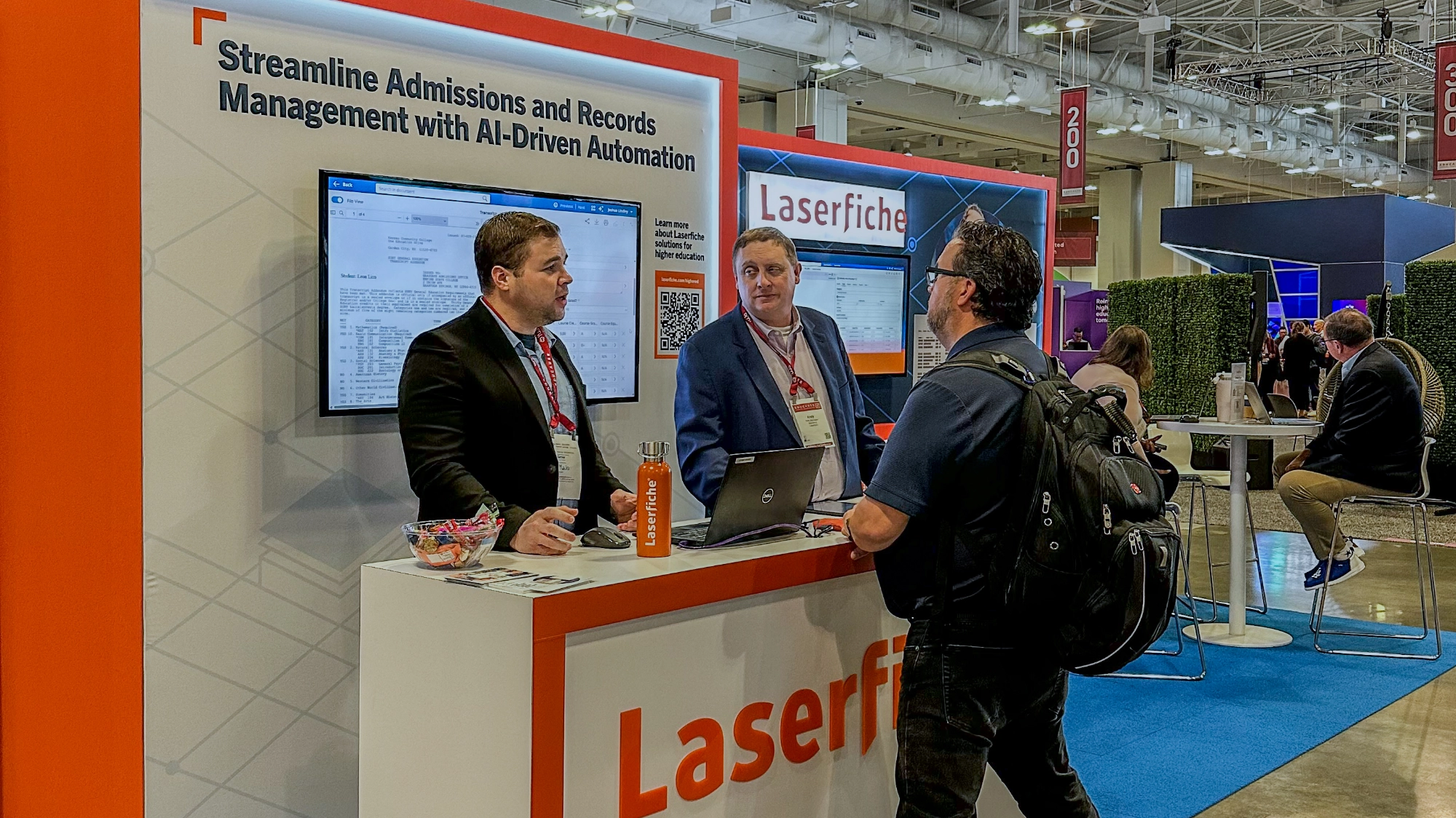
Each year at the annual EDUCAUSE conference, hosted in Nashville this year, the Laserfiche team gets the chance to connect with the higher education technology professionals driving campus innovation. It’s an enriching experience and an opportunity to discuss how content management can help higher ed teams drive student success. It’s also a forum to explore upcoming challenges higher education will face in the year ahead, and discuss potential solutions to those upcoming challenges.
Based on our conversations with technology leaders at EDUCAUSE, we’ve identified three upcoming challenges and how to face them head on.
Meeting the Looming Enrollment Cliff with Modern Services
With demographic shifts already driving persistent enrollment declines, higher education institutions must pivot from simply attracting applicants to actively fostering an environment that makes students want to stay at their schools which makes administrative efficiency a key value driver.
Students today are digital natives; they expect their university to provide technology and services as accessible and intuitive as the leading consumer apps they use every day.
Institutions can no longer rely on paper-based or clunky legacy digital processes. Successfully navigating enrollment requires a full embrace of modern, technology-driven processes, including:
Easy-to-use digital student forms
Seamless self-service portals
Quick resolution of administrative tasks
When core processes like registration, financial aid applications or petitioning are streamlined and effortless, the institution itself stands out in the eyes of applicants.
Using AI For Back-Office Efficiency
The impact of AI when it comes to modernization continues to grow and is quickly becoming an advantage to higher education institutions. By implementing AI tools for intelligent data capture, automated records routing and document processing, institutions can dramatically reduce the time and cost for back-office tasks like invoice processing or records management. This newfound efficiency and savings can then be strategically reallocated to high-touch student services.
AI can add value across campus departments, including:
Admissions: Speed up reviews with automatic data capture for all admissions documents.
Financial Aid: Accelerate awards timing by automatically extracting tax and FAFSA data.
Credit: Read transcripts in any format to process course equivalencies faster.
Responding to Financial Retrenchment with Technology Audits
The most pressing theme at this year’s conference was the widespread acknowledgment that financial retrenchment is a permanent reality for many institutions. IT leaders are evaluating their tech stacks and identifying where multiple departments may have purchased tools with overlapping capabilities.
IT teams are looking to optimize digital transformation and adopt tools that have the flexibility to adapt across multiple departments and streamline admissions, student services and back-office operations. These platforms should also seamlessly integrate with other solutions, such as a school’s SIS system, so administrators don’t have to duplicate efforts and data can flow freely between departments and processes.
Strategic Efficiency Drives Success
The key message from EDUCAUSE is clear: success in the coming year depends on strategic efficiency. By addressing financial retrenchment through vendor consolidation, improving recruitment via exceptional digital student experiences and leveraging AI to free up staff resources, institutions can thrive.
Interested in learning more about higher education technology, showcased at EDUCAUSE? Learn more now.
For mental health service professionals, patient care time is often consumed by administrative tasks. Faced with documentation, lengthy processes, and complex regulatory rules, physicians can spend over 15 hours per week on paperwork and administration.
These manual administrative processes are a hindrance for any organization — but in healthcare, they can mean the difference between spending time pushing paper or delivering life-saving patient services.
At the Nueces Center for Mental Health and Intellectual Disabilities (NCMHID), which serves thousands of individuals, response times are everything. The county relies on the organization’s 300 staff for crisis intervention services, youth and adult mental health services, and intellectual and developmental disability services.
Carlos Cavazos, system analyst at NCMHID, believes that by streamlining processes, he can alleviate staff workload to prioritize patient care. His philosophy? “If I can help a person go home without any headaches, I’ve done my job,” said Cavazos. His tool of choice? Laserfiche.
NCMHID has used Laserfiche process automation to systematically reduce wasted time, improve accountability, and eliminate costs associated with paper and manual tasks. This optimization has improved process efficiency by up to 99%, replacing manual workflows with configurable forms and process automation.
Standardizing Incident Reports to Enhance Accountability
Initially, NCMHID used Laserfiche for medical record scanning and storage. After discovering Laserfiche’s powerful process automation capabilities, Cavazos started to automate simple tasks like business card creation. These small projects made a huge impact — relieving HR staff of handwritten forms or typing information into Microsoft Word — leading to more automated processes across the organization.
After the initial success, NCMHID began tackling more complex processes, including streamlining incident reports. As a critical piece of safety and risk management, incident reports are of the utmost importance to NCMHID. The State of Texas Health and Human Services requires staff to submit reports within an hour of the incident.
The legacy process used paper forms that were physically delivered from one person to the next, sometimes between different buildings in different cities. This manual approach led to lost documentation and delayed approvals. Because there was no visibility into the form status, it was challenging to hold staff accountable for punctual completion. There was also no way for the organization to track and identify trends to prevent future incidents. Executive reporting was equally challenging. Gathering incident data for executive review could take up to a month, requiring staff to search through file cabinets for information.
The process was replaced with a tailored Laserfiche form, making reporting more intuitive for case managers. As they fill out the form, dynamic fields enable employees to report when medical attention was necessary. Form submissions kick off an automated workflow that gathers signatures from medical staff.
Laserfiche process automation routes these forms to appropriate supervisors for review and approval. Case managers are expected to complete the form within an hour of the incident. If they do not:
Laserfiche sends an email notification to remind the case manager to complete the form.
Simultaneously, Laserfiche sends a notification to inform the operations officer.
Hourly reminders are sent thereafter until it’s submitted.
Once the form is submitted, incident reports go to service directors and then to a repository where they can be easily referenced for executive reports.
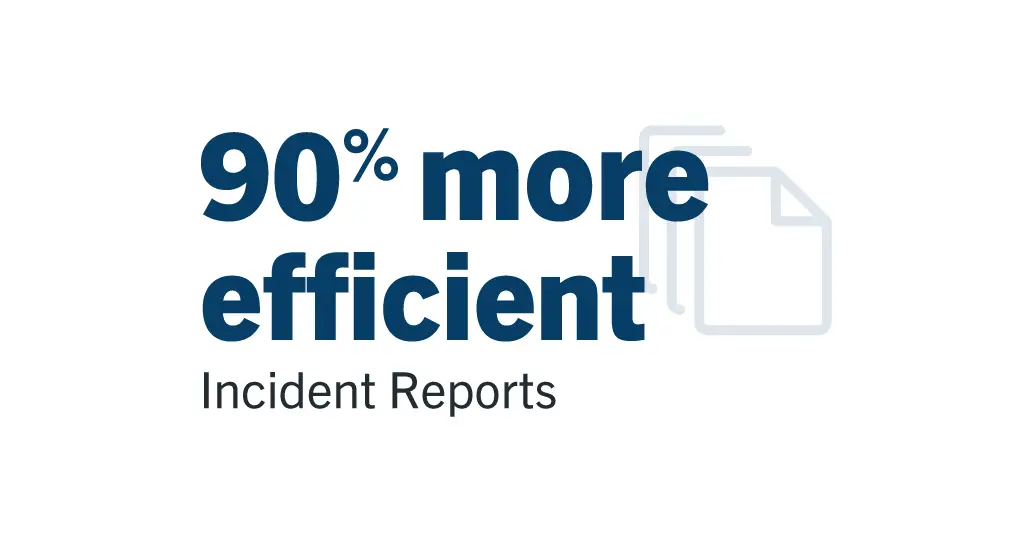
The organization enhanced the efficiency of the incident report process by 90% with Laserfiche Forms and process automation. The automated workflow prevents lost documentation, improves traceability, and saves valuable staff hours digging through filing cabinets. For NCMHID leadership, this process brings real-time visibility into incident trends and supports compliance, ultimately preventing incident recurrences.
Supplementing Electronic Health Records with Secure Long-Term Records Storage
Prior to Laserfiche, NCMHID’s approach to storing business documents and archived medical records relied on paper and disjointed servers. Imagine: a surprise audit requiring archived business records, or a client needing medical proof of care for benefits. For Cavazos and his team, handling these requests meant rummaging through filing cabinets and different servers that could take up to two months.
This system wasn’t just a time drain. Complying with HIPAA regulations without audit tracking and security functions became a headache when storing records across various mediums.
Cavazos recognized an opportunity to enhance the organization’s records management with Laserfiche’s repository and information governance capabilities.
Laserfiche’s central repository transformed how NCMHID managed its records. What was once a time-consuming search for records became a few clicks through the repository. Robust security tools help the organization authorize granular access to sensitive medical records, supporting NCMHID’s HIPAA compliance practices.
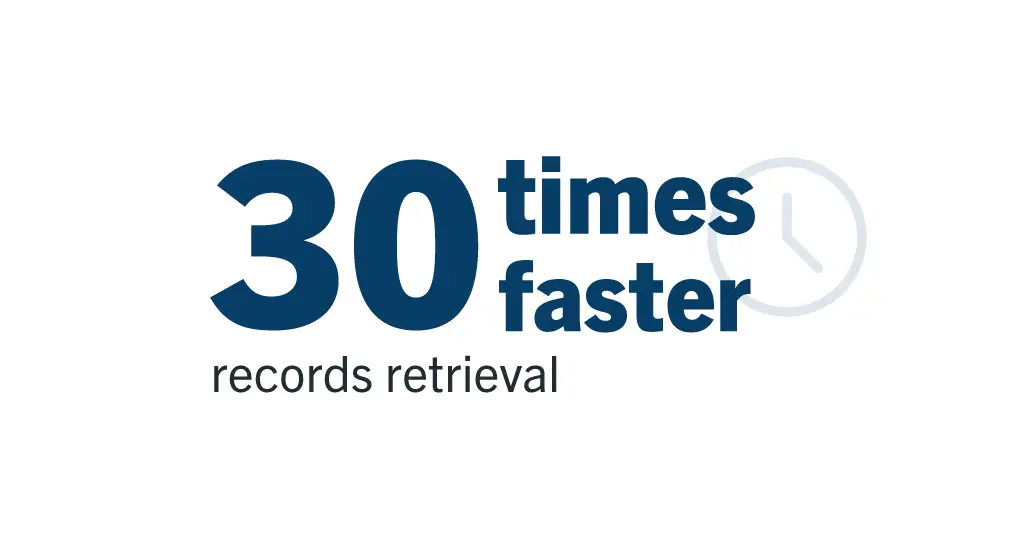
As a result, NCMHID can retrieve records 30 times faster with Laserfiche. When a client was due back pay and needed medical documentation indicating proof of care, “we were able to obtain all their records, stamp them, and present them to the client in no more than a day,” Cavazos described. “It was so easy for us to find them.”
Enhancing Cross-Functional Processes
NCMHID’s use of Laserfiche now extends organization wide. Cavazos has used Laserfiche to automate processes including travel reimbursement, a complex process that requires cross-departmental authorization.
Cavazos automated mileage and travel reimbursement calculations through Laserfiche Forms based on:
Vehicle information
Airfare
Dates of travel
Meals
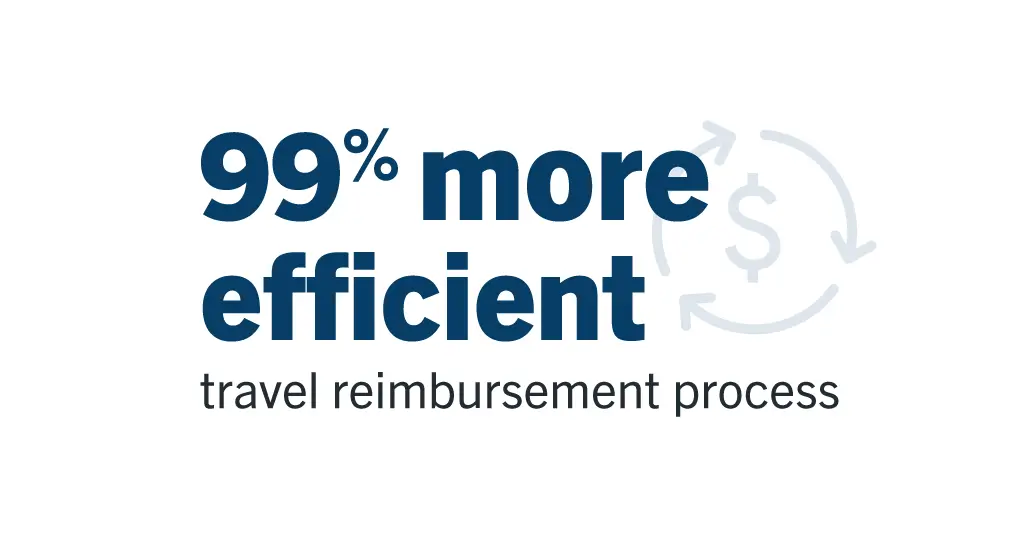
Using a centralized form, staff can submit requests for manager approval and payroll reimbursement within seconds rather than days, making the process 99% more efficient. This streamlined process not only accelerates payout time, but also ensures documentation is consistently organized and accessible. As a result, audits became noticeably quicker, from a day of rummaging through cabinets down to seconds through a search query.
Looking to the future, Cavazos aims to implement new automations including document retention schedules, and a repository integration with Power BI. Cavazos is confident in Laserfiche’s ability to create meaningful change for his coworkers’ workflows.
“I’ve made people’s life easier with Laserfiche,” said Cavazos. “They get to go home without stressing over processes. I tell them, ‘Don’t worry. Laserfiche has it covered.’”