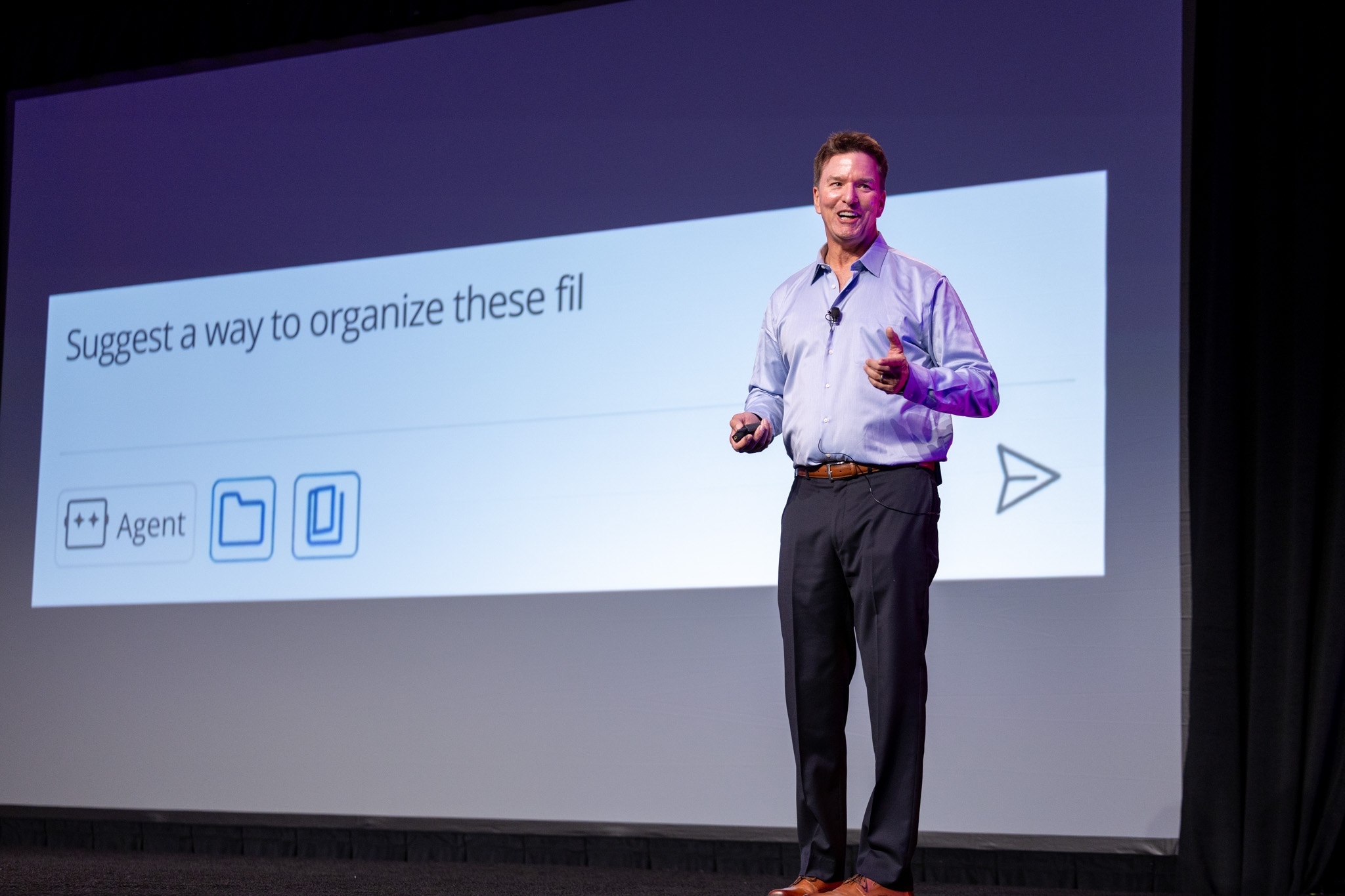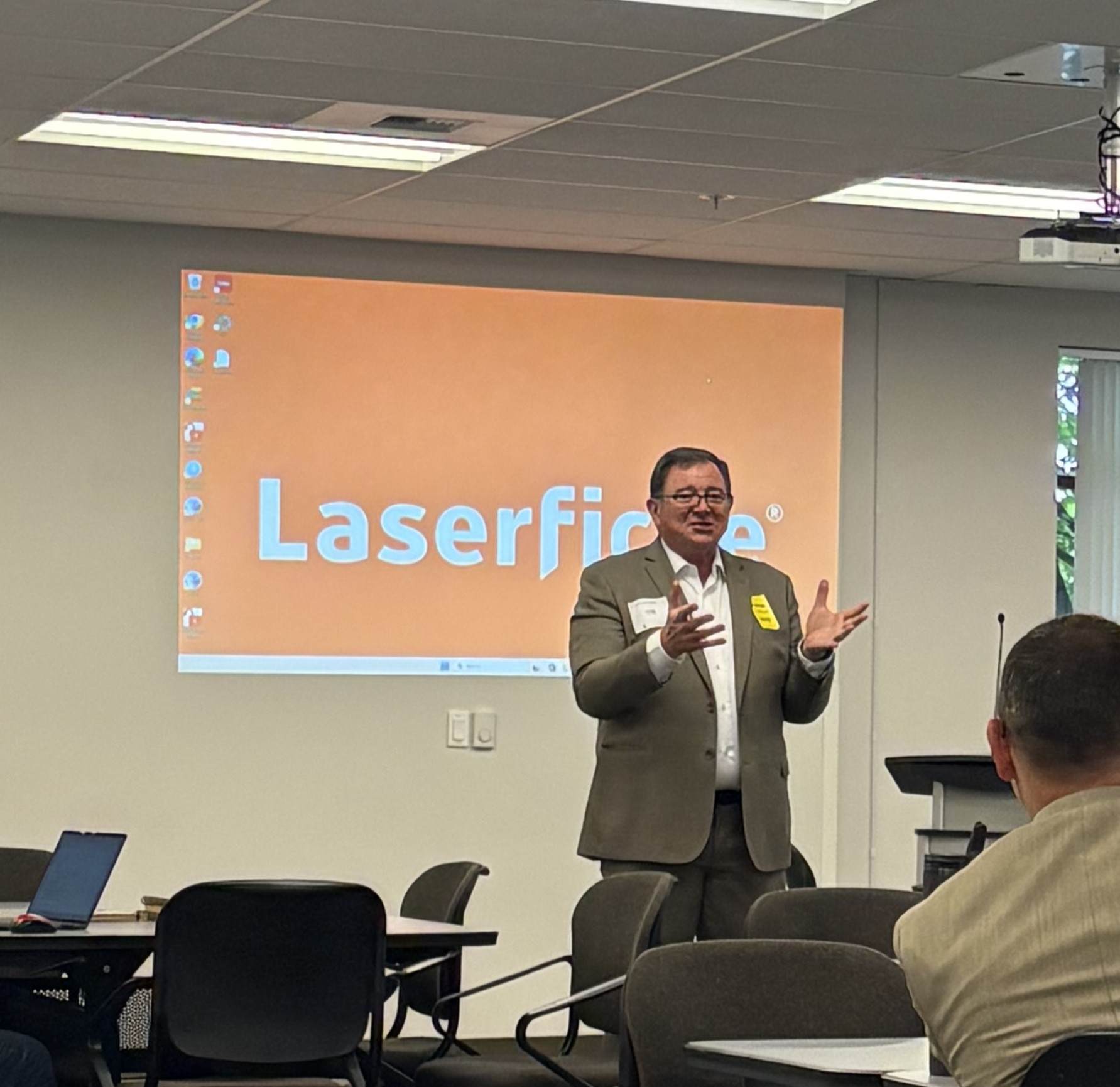
In 2026, AI expansion across government is accelerating at an unprecedented pace. This year’s Washington State Information Professional Management Association (IPMA) Forum brought together technology, business and management leaders to help public agencies navigate this landscape and map out the future of operational resilience and technical innovation.
Conversations with public sector leaders made one thing clear: artificial intelligence (AI) is no longer a concept for the future—it is actively shaping everyday government operations. The defining question is no longer if agencies will adopt AI or even Agentic AI, but whether they are prepared to govern it responsibly.
This marks a critical shift for state and local agencies navigating an environment defined by rising expectations, compounding information complexity and growing pressure to accelerate service delivery without compromising public trust.
Why Governance Matters More Than Ever
Across IMPA sessions focused on modernization, records management, automation and digital transformation, three core themes emerged:
- The Explosion of Unstructured Content: Documents, emails, forms, contracts, and case files continue to grow across disconnected systems. Much of this information lacks consistent metadata, making it difficult to find, govern or use effectively.
- The Scalability Crisis: Manual processes no longer scale. Staff shortages, increasing compliance obligations and growing transparency demands are forcing organizations to rethink how work gets done.
- The Governance Mandate: Leaders increasingly understand that AI only delivers value when it operates within trusted governance frameworks.
These priorities closely align with a broader shift happening across government: moving from managing content as static records to treating information as a strategic operational asset.
That is where content management is being reimagined.
Leveraging AI in Document Management
Traditionally, enterprise content management focused on storing, organizing, and retrieving documents. While those capabilities remain essential, they are no longer sufficient on their own. With the rapid growth of AI in local and state government, agencies today need systems that can help classify information automatically, surface insights quickly and support faster, more informed decisions.
AI-drive document management is accelerating that evolution.
At the forum, discussions around automation and AI repeatedly returned to practical use cases that agencies are actively exploring. Intelligent document classification, automated metadata extraction, AI-assisted records retrieval, and conversational access to information are no longer mere luxuries. They are becoming operational necessities.
But what stood out most was the emphasis on responsible AI.
Government leaders are understandably cautious. Public trust depends on transparency, accountability, and defensible decision-making. Agencies cannot afford black-box systems that operate without oversight or explainability. As AI capabilities expand, governance becomes more important, not less.
Innovation Done Safely: Washington’s Framework for AI Governance
Government leaders in Washington state are already establishing formal frameworks for responsible AI adoption. In 2024, Governor Jay Inslee issued Executive Order 24-01 directing agencies to develop guidance for the ethical, transparent, and accountable use of generative AI across state government. The order emphasized that agencies must balance innovation with safeguards around privacy, bias mitigation, security, and public trust.
More recently, Washington Technology Solutions (WaTech) expanded those efforts through the state’s Artificial Intelligence Policy, which requires agencies to identify AI-enabled systems, conduct AI risk assessments and ensure human oversight remains part of decision-making processes. The policy specifically calls for governance frameworks that are transparent, auditable and aligned with Washington state’s AI Principles.
That direction closely mirrors what many attendees at the IPMA Forum discussed throughout the event. Agencies are not simply asking how to deploy AI faster. They are asking how to operationalize AI responsibly within environments that already contain decades of sensitive records, fragmented systems and complex compliance obligations.
This is why governance is emerging as the true foundation of AI readiness.
Rather than treating governance as a compliance exercise that slows innovation, agencies are beginning to view governance as the foundation that enables innovation safely. When information is properly classified, secured and governed, AI becomes significantly more effective and far more trustworthy.
Deploying Intelligent Document Automation in the Public Sector
Early AI adoption often focused on assistance: summarizing documents, extracting data, or helping staff locate information more efficiently. Increasingly, however, agencies are shifting from simple assistance to intelligent document automation, evaluating systems capable of taking independent action within workflows. AI can now recommend next steps, identify exceptions, trigger processes, and support decision-making in real time.
That progression raises the stakes.
AI systems depend on context. Context depends on well-governed information. If data is fragmented, outdated, or inconsistently managed, automation compounds risk.
That reality became evident in conversations at the IPMA Forum. Agencies are recognizing that modernization is no longer just about digitizing records. It is about creating an information environment where data can be trusted, processes can be audited and AI can operate responsibly within defined guardrails.
Core Priorities for AI in Data Governance
To navigate this paradigm shift safely, state and local agencies will need to map out future strategies that move away from manual oversight and toward automated workflows that embed compliance directly into daily operations. To prepare for this transition, public sector IT and business leaders should prioritize these key areas:
- Strategic Data Governance Frameworks: Apply consistent retention, security, and access policies dynamically across increasingly complex information environments.
- Foundational Workflow Automation: Create workflows to continuously classify, route, and govern information the moment it enters a system, reducing reliance on manual indexing.
- Secure Interoperability Standards: Design systems that enable governance policies to travel with the data itself, ensuring security rules remain completely consistent regardless of where content resides.
And perhaps most importantly, agencies are approaching AI as a tool to augment human expertise, not replace it.
That distinction matters.
The most successful government AI initiatives are not removing people from the process. They are reducing repetitive work, accelerating information access, and allowing public servants to focus on higher-value decisions. Human oversight remains essential because accountability cannot be delegated to an algorithm.
This is why responsible AI and modern content management are becoming inseparable conversations.
Turning Trusted Information into Intelligent Action
The agencies making the most progress are not necessarily the ones moving fastest to deploy AI. They are the ones investing in trusted information foundations first. They are aligning governance, automation and AI into a unified strategy designed to improve service delivery while protecting transparency and public confidence.
That is ultimately the opportunity ahead of government leaders.
AI has the potential to transform how agencies manage information, respond to citizens, and operate at scale. But the long-term value of AI will not be determined by the sophistication of technology alone. It will be determined by whether agencies can build environments where information is structured, governed and trusted enough for AI to operate responsibly.
Washington State’s evolving AI policies make one thing increasingly clear: the future of government AI will not be defined by how aggressively agencies automate, but by how effectively they govern the information that powers those systems.
At the Washington State IPMA Forum, that message was impossible to miss.
The future of content management is no longer about storing information.
It is about turning trusted information into intelligent action.
Build Your Foundation for Responsible AI
Successfully navigating the ongoing expansion of government AI requires an information foundation you can trust. Laserfiche helps state and local agencies bridge the gap between innovation and compliance with secure intelligent document automation and AI-driven solutions.
See how Laserfiche accelerates secure government transformation.