Laserfiche Supports F&M Bank in Growing Assets from $7.6 to $11.7 Billion

With economic uncertainty being the new normal, the demand for reliable financial institutions has risen tremendously. F&M Bank is one institution that has been able to maintain its customer trust for the past century, seeing significant growth particularly in recent years. Now with 25 branches across Los Angeles, Orange, and Santa Barbara counties, F&M’s expansion has led to more information management needs, technology demands and regulatory compliance requirements.

The bank initially implemented Laserfiche as a document management system and quickly expanded its use organization-wide. F&M’s experience using Laserfiche as a document management system was the foundation for the bank’s expanded usage of Laserfiche for process automation.

“What started as a way to scan and search for information is now a fully integrated enterprise content management solution,” said Morgan Wheeler, business intelligence manager and vice president at F&M Bank. “We have roughly 90 different active workflows running to the tune of about 1,500 times per day. We have about 60 different production forms, and nearly every single bank employee uses Laserfiche as part of their job.”

As F&M grew and workplace needs evolved, the bank sought a business process automation solution to create more efficiency and connect with its core banking system for a seamless employee experience.

The bank turned to Laserfiche, and its Laserfiche solution provider CDI for support in leveraging the platform’s business process automation and integration capabilities. F&M integrated Laserfiche with its core banking system and deployed automated workflows that have sped up processes such as financial certification and loan applications, helping the organization to scale. Meanwhile, Laserfiche’s robust governance tools support compliance with regulatory requirements.

“At the close of 2019, the bank had $7.6 billion in assets, and we have now reached $11.7 billion,” said Wheeler, adding that there was a period during the onset of COVID during which F&M’s assets grew more in 100 days than the institution did in its first 95 years of operation (1907-2002). “Laserfiche has been a critical component in our growth.”

“Just storing things digitally isn’t enough. The information we store needs to be functional digital assets within wider business processes, and that assumes not only automation but integration.”

— Morgan Wheeler, Business Intelligence Manager and Vice President at F&M Bank

Increased Efficiency and Accuracy in the Financial Certification Process

One process F&M has reimagined to achieve impressive efficiency is financial certification, which previously required tremendous amounts of manual tasks to coordinate dollar amounts with all of the branches, emailed spreadsheets between managers and departments, and validation against historical information.

“For our branches, it means counting cash, teller drawer amounts, vault and cash center amounts — and we have all these different accounts, cash in transit, night-drops, merchant services … it’s a high-volume, complex activity,” Wheeler explained.

The bank deployed a Laserfiche solution that allows all departments across all branches to enter information about their accounts in a Laserfiche Form, which is prepopulated with information about what their financial position should be. The form calculates the difference and routes it to the bank’s finance and accounting department, and through proper approvals.

“The Laserfiche process has streamlined how we present our financial figures each month,” Wheeler said. “These figures are audited both externally and internally.”

The new process has saved the bank an estimated 700 hours per month of employee time, while providing a more transparent, prescribed procedure for certification. After the solution was deployed, employees were able to better utilize their time on value-added activities.

Overnight Process Deployment With Flexible Forms and Workflow Tools

As a bank deeply embedded in its community, F&M acted quickly during the COVID-19 crisis when information about the Payment Protection Program was released. It was an opportunity to help people when they needed it most — and the team had the tools to deliver with Laserfiche.

“There was very little guidance on how the payroll protection loans were supposed to go out,” Wheeler said.  “When the dust settled, F&M Bank issued more than $1 billion in PPP loans to the local community.”

The executive team assembled to map out how the bank would receive applications and distribute the money, and the F&M team stayed up all night creating a Laserfiche Form and PPP Loan application process.

“Within a matter of days we were funding loans. The nimbleness of Laserfiche Forms and workflow, plus SQL allowed us to build out an application process for those PPP loans literally overnight. I was not only impressed by F&M as an institution, but I was also impressed with our ability to create literally something out of nothing.”

— Morgan Wheeler, Business Intelligence Manager and Vice President at F&M Bank

Applicants began seeing their loans funded in a relatively short time frame, underscoring the bank’s commitment to its community, especially in a time of need.

Today, most of the bank’s loan processes involve Laserfiche, including the Loan Document Draw process: When a client asks for a loan, Laserfiche helps the bank centralize the process and effectively prepare the pieces of content that need to be gathered for the final document draw when the final loan agreement is drawn up for client signature. Having a strong presence in the commercial real estate industry, F&M has streamlined the collection of loan documents — which can be hundreds of pages long — in order to help ensure accuracy and speed.

Delivering on Innovation and Compliance

As an institution regulated by the Consumer Financial Protection Bureau, Federal Reserve Bank, and California Department of Financial Protection and Innovation (DFPI), F&M’s standardized compliance processes continue to pay dividends for the organization and its clients.

In today’s uncertain economic conditions, F&M has also leveraged its technology to build stronger business resilience. The bank’s team worked closely with Cities Digital to build a resilient infrastructure that allows the bank to confidently handle unplanned network events, and gracefully failover for planned upgrades and maintenance. “Due to the cooperative effort of Laserfiche, Cities Digital and our IT team, Laserfiche regularly achieves 99.99% uptime during business hours,” Wheeler said.

F&M’s use of Laserfiche has evolved along with the bank, empowering staff to innovate the way they do business while remaining compliant with industry regulations, and protecting client information and assets.

“Laserfiche is a critical way in which we deliver to our auditors, to our community, to our employees and, most importantly, to our clients.”

— Morgan Wheeler, Business Intelligence Manager and Vice President at F&M Bank

Learn more about how to invest in a Laserfiche solution today.

Automate or Die – The New Reality for Wealth Management Businesses

WEBINAR

Automate or Die – The New Reality for Wealth Management Businesses

It’s no secret that digital transformation is more than underway in wealth management, however, most advisory
firms are way behind the curve, saddled with creaky, manual and paper-based processes. As we know, wealth
management is a client-focused industry, and the client experience is rapidly becoming one of the key
differentiators for advisors and their firms. Currently, advisors are spending a significant amount of time on
paper-based operational processes that negatively affect the client experience. Many firms are looking to deploy
cloud-driven technologies that streamline manual operations using intuitive electronic forms, automated
workflows and quick access to client files in a secured, organized repository.

Join this complimentary webinar to discover how a low-code approach can accelerate digital transformation in
wealth management and enhance client experiences.

You will learn:

  • Trends for implementing technologies using a low-code/no-code approach
  • How to give advisors time back to focus on client engagement by automating operational processes while achieving SEC- and FINRA- compliance
  • How to jumpstart your business processes with pre-built solution templates and workflows
Please join us on
Date: May 9, 2023
Time: 4:15 p.m. – 5:30 p.m. ET (America/New York)
Duration: 1 hour

What Can Financial Services Gain from Process Automation?

Financial Services Firms Are Leveraging Process Automation to Drive Growth

Financial services (FS) organizations of all types, including wealth management firms, insurance firms, credit unions and banks are adopting technologies to stay ahead of the game under economic uncertainty. Customer experience and streamlined internal process efficiency are the major drivers of their digital transformation strategies which are critical accelerators of overall growth. A recent survey conducted by WealthManagement.com and Laserfiche found that 88% of the respondents changed workflows as a response to the COVID-19 pandemic, especially for customer-facing processes such as adoption of virtual meetings, digital signatures, online client onboarding and processing of new accounts.

Challenges Facing Financial Services Firms and Reasons to Adopt Workflow Automation

Today’s customers look for intuitive, seamless and personalized digital engagement with organizations, whether it’s for new account openings, insurance claims, e-signature requests or wire transfer requests. In a recent survey conducted by Digital Insurance and Laserfiche, findings revealed that 77% of insurers prioritize customer experience in the majority or entirety of their digital transformation initiatives. Moreover, organizations that have streamlined their operational workflows are inclined to characterize their digital transformation initiatives as customer-centric. Thus, a customer’s decision to do business with an organization may be dependent on the robustness of a digitized experience.
Despite this change in customer expectations, many organizations are still having manual, error-prone and labor-intensive processes that drag on employees’ productivity and efficiency, including:

  • Re-keying data onto spreadsheets or across line-of-business applications.
  • Inability to retrieve or recall email conversations with customers.
  • Manual review and approval processes.
  • Manual execution of data analytics initiatives.

Due to these inefficiencies, many employees are swamped with tedious administrative tasks, which can increase the turnaround time for customer requests. As a result, customer service delivery is adversely affected. According to a recent survey conducted by Forrester Consulting, more than half of the respondents believe that their company’s tech stack is outdated and restrictive, which prevents employees from working efficiently.

Real-World Examples of Financial Services Firms Benefitting from Process Automation

How are your peers strategizing to get the most out of process automation? Rehmann in Michigan, a wealth management firm, has been designing workflows across professional service lines in a low-code/no-code approach to streamline data collection and reporting. Using Laserfiche forms and integrations with customer relationship management (CRM) software, information can always be automatically populated when a customer fills out an electronic form, e.g., new account opening. It saves customers’ time, provides accurate information to associates and supports compliance. Amy Flourry, wealth management director of operations at Rehmann, shared in a webinar that they opened 400 new accounts and brought in $200 million in new assets in 2022 alone. “Our biggest problem with [Laserfiche forms]…tends to be keeping up with demand for new ones,” said Flourry.

F&M Bank in Long Beach decided to use process automation in order to meet the demands of their rapid growth and evolving workplace. They decided to go beyond a simple document management solution and transform it into a fully integrated enterprise content management system that included process automation solutions and integrations with their core banking system. For example, they leveraged Laserfiche in most of their loan processes, “the nimbleness of Laserfiche Forms and workflow, plus SQL allowed us to build out an application process for those PPP loans literally overnight. I was not only impressed by F&M as an institution, but I was also impressed with our ability to create literally something out of nothing,” said Morgan Wheeler, business intelligence manager and assistant vice president at F&M Bank.

Customer experience was the major focus of Mitsui Sumitomo Insurance Group (MSIG) Hong Kong throughout the design of its process automation strategy. MSIG Hong Kong leverages Laserfiche to develop a widely recognized EASY Claims System that helps manage all claims in a centralized platform. It saves more than 200 workdays a year for the claims processing organization-wide, supports business continuity in case of unprecedented transitions and maintains a high level of customer service at the same time. “Claims is only the beginning of our digital transformation. Since implementing Laserfiche, we are looking at expanding to multiple channels, underwriting teams and core business processes to digitize and automate as well,” said Alan Yue, senior vice president of information technology at MSIG Hong Kong.

Benefits of Digital Process Automation for Financial Services Firms

Financial services organizations must be nimble and innovative to digitally transform how they provide services throughout the customer life cycle. One way to achieve digital transformation in such a way is to utilize digital process automation (DPA), which helps eliminate manual steps and improve user experience for customers, employees and vendors. By leveraging electronic forms, business process management and reporting and analytics, key advantages of DPA include:

Avoiding capturing information through error-prone and inconsistent methods: Operation teams receive customer information and requests digitally with metadata in an audited and tracked approach.

Eliminating manual reviews and approvals, lost documents and unknown statuses: Workflows are triggered once requests come in — for example, reviews are automatically routed to appropriate parties for rounds of approval with due reminders.

Spotting bottlenecks of delayed tasks: Get a clear picture of workflows using dashboards so teams can identify where and when delays are happening.

Integrating with core business applications and systems: Eliminate data silos and improve collaboration.

Improving customer experience: Customers receive notifications at each step of their requests, resulting in increased transparency between them and the organization they’re doing business with.

Freeing up time for employees: Enable employees to spend their time on more value-driven tasks and drive productivity.

Archiving information and supporting documents: Bolster your efforts to stay in compliance with regulations and audits using records retention tools.

Scarce IT resources remain another challenge for financial services organizations even if they are ambitious to evolve. Pre-built solution templates help organizations jumpstart automation with less overhead on these resources. Laserfiche users have the ability to get these kinds of templates from the Laserfiche Solution Marketplace, which provides more than 100 publicly accessible, industry-vetted and departmental solution templates for organizations accelerating digital transformation.

Learn more about how Laserfiche solutions help financial institutions drive business growth and productivity.

Download eBook: The Business Process Automation Buyer’s Guide

Canadian Seed Growers’ Association Pioneers Digital-First Agriculture

The Canadian Seed Growers’ Association (CSGA) is a science-based non-profit organization committed to supporting a competitive Canadian agriculture sector as a respected global leader in seed quality assurance and genetic traceability.

CSGA provides leadership as the only Canadian organization to monitor and certify pedigreed seed for all agricultural crops in Canada except potatoes. CSGA certifies over 1.2 million acres, over 60 different crop kinds of 2,000 varieties for nearly 3,100 seed growers and 2,500 seed-growing businesses annually. Bringing together plant breeders, seed growers and seed sector stakeholders to reliably deliver a national seed certification program through the assurance of genetic identity of pedigreed seed.

Canada’s seed certification system ensures germination and mechanical purity while providing a third-party verified audit trail of the seed’s varietal identity. It ensures that the agricultural supply chain is secure, farmers trust the seed they purchase and plant, and trading partners have the utmost confidence in the seed and food products they import. The system is a globally trusted quality-management system that ensures plant breeding innovation is delivered from the lab to the farmer, producer and end market.

To continue strengthening Canada’s global reputation for producing high-quality seed, CSGA has been at the forefront of seed certification system modernization and digital transformation over the last decade.

Since 2014, CSGA has used Laserfiche as a behind-the-scenes champion for many of its key business processes. Using Laserfiche’s electronic forms and business process automation capabilities, CSGA accelerated the seed certification process for its 3,100-plus members.

Agriculture is an essential sector where relationships are key. The recent push for a more digitally driven CSGA has led to better relationships with growers, sector stakeholders and government. The Association’s “CSGA 2.0” Business Plan includes a focus on digitalization or providing transparent, digitally enabled, enhanced traceability services that reduce administrative burden and add value.

A recent blockchain validation pilot project enabled consumers to see their food’s journey from seed-to-table. Using data gathered from seed crops and the blockchain pilot, CSGA’s model tracked and verified a product’s history, which consumers could access by scanning a QR code on the packaging.

These digital initiatives continue to underscore CSGA’s commitment to its stakeholders, the Canadian agricultural community, and the Canadian public, who consume Canadian seed growers’ products every day.

“In any given year, we receive roughly 16,000 to 20,000 applications. The vast majority of these are processed through Laserfiche. We’ll have over 1,000 workflows running in the background. It essentially runs our business.”

— Doug Miller, CSGA Executive Director and former Managing Director, Certification and Technology Services

Streamlining Key Business Processes

CSGA is the delegated regulatory authority for the Canadian Seed Crop Certification System via a public-private partnership with the Canadian Food Inspection Agency (CFIA). CSGA certifies that a seed crop is produced in compliance with CSGA standards for varietal purity in pedigreed seed crop certification.

In the past, the Canadian government provided inspection services for thousands of fields seeking seed crop certification from annually. In 2012, however, the government announced that it would no longer provide those services. Going digital was the solution to connect CSGA, the CFIA and 23 different inspection companies across the country. The CFIA now oversees private seed crop inspections with ensured coordinated access to information.

CSGA created SeedCert, an online portal and one-stop-shop powered by Laserfiche Forms and business process automation to streamline the inspection and verification processes.

Today, seed growers request certification online by logging into SeedCert and submitting a Laserfiche form routed to staff for review. Approved applications are transmitted to inspectors who access requests through Laserfiche on a computer or mobile device. Those inspectors submit completed inspection reports online, even when they are out in the field.

By removing paper and the manual shipping of information, CSGA took something that once took weeks and created a more user-friendly, standardized, and simplified experience for members, inspectors and CSGA staff. CSGA staff now have access to reports quickly, allowing CSGA to promptly communicate with the grower if issues are identified in the field, allowing the grower to address those issues before harvest and obtain certification

A Data-driven Approach to Decision-making

What initially started as a challenge ultimately drove innovation for CSGA. “Our whole system was paper-based and back-logged. Now, processing takes only days,” says Miller. The new digital processes enabled the Association to scale up. CSGA’s SeedCert platform now helps coordinate 23 different Authorized Seed Crop Inspection Services (ASCIS) organize inspections and their 250 individual inspectors — saving CSGA’s current staff countless hours.

CSGA-certified seed crop information is stored in a database, allowing CSGA staff to dive deeper into the data. They can identify patterns and gather insights that could influence strategic decision-making, improve processes and operations, and strengthen relationships between seed growers and regulators — all to serve CSGA’s members and the sector as effectively and efficiently as possible.

A Digital-First Future for Business

CSGA is finding new ways to leverage technology every day. During the COVID-19 pandemic, the organization used Laserfiche Forms to enable inspectors to report if they were sick, allowing in-field inspections to be reassigned. Electronic forms also allowed the Association to communicate coronavirus-related travel restrictions with inspectors quickly. In a time of worldwide uncertainty, the improved communications facilitated the continuity of essential operations.

The CSGA sees a new, more diverse wave of producers in the future. The younger agricultural professionals expect digital-first, intuitive interfaces, and quick responses to requests. This highlights the need for the agricultural sector to keep pace with new innovations and technology-driven solutions.

With the help of technology like Laserfiche, CSGA has adapted to this new set of expectations and changing business climate. “We’re looking ahead for the next generation of seed growers and the entire pedigreed seed certification system. We’ve already launched our digital crop certificates and taken big strides forward to a digital end-to-end seed crop certification system. Leveraging digital platforms will elevate the seed sector and Canadian Agriculture,” Miller says.

Process automation has made it possible to certify seed faster, and e-forms have made it easier for CSGA to coordinate among its large and growing network of growers, inspectors and government. All these improvements are critical to CSGA’s mandate to deliver a national third-party seed crop certification system for Canada.

“Regulated sectors like agriculture are going to have to adopt digitization technologies as a necessity.”

— Doug Miller, CSGA Executive Director and former Managing Director, Certification and Technology Services

To learn more about how Laserfiche drives digital transformation, schedule a consultation today.

University San Francisco

Bergen Community College Reimagines the Student Experience With Laserfiche

The technology team at Bergen Community College (BCC) began an extensive digital transformation journey when faced with a situation familiar to many IT departments: A legacy system was approaching end-of-life. The college took this seemingly mundane circumstance, however, and embraced it as an opportunity to support organization-wide goals to reimagine core systems, services and processes by implementing Laserfiche. What began as an effort to replace outdated software resulted in staff and faculty gaining new digital tools and improving the student experience, including reimagining the college’s One Stop student services center to be both more efficient and more accessible.

Thinking Outside the Box

Bergen Community College—an accredited, two-year community college—initially began a search to replace a legacy document management system and ultimately found a platform for content management, electronic forms and business process automation in Laserfiche.

“We have a modest-sized IT team, but we don’t have many programmers; we are more business analysts,” says Nishika Gupta, managing director of records and information management at BCC. “So we were looking for an out-of-the-box solution that we could implement without much coding. And it had to integrate with everything else, our student information system, our sign-on system, our ticketing system, all of that. And for record-keeping, we wanted Department of Defense 5015 certification, to know that the system security is robust.”

Since implementing Laserfiche, the college has digitized and automated more than 80 processes in order to enhance the student and staff experience campuswide. And because Laserfiche is a low-code solution, BCC has not had to increase the size of its IT department.

When the college made a multimillion-dollar investment to redesign its student services center, the One Stop, the team also took the opportunity to assess the complete student experience across all One Stop services. “The results yielded a significant number of new automated processes leveraging Laserfiche which reduced student foot traffic upwards of 50%,” says Ron Spaide, BCC’s chief information officer. “This allowed for One Stop staff to focus on high touch student support services, such as student advising and counseling, by redirecting staff resources to these critical areas.”

One student-centric process that was is re-engineered with Laserfiche was in the testing department, which streamlined the process for students to bypass the requirement for a placement exam to enroll in certain classes if they met specific criteria (such as a previously earned degree in that particular field). Rather than require students to physically gather all of the paper documents that prove they have met the criteria, students can now submit documentation in just a matter of seconds from wherever they are.

BCC also used Laserfiche to digitize the grade change process, which now lives online through a digital form. Off-site faculty can easily access and amend students’ grades without delay. In addition, Laserfiche enables staff members to track faculty turnaround time and send reminders as needed, all while simultaneously keeping students updated.

Prior to adopting Laserfiche, “Everything was manual,” explains Lisa DiGaetano, assistant director – One Stop/Enrollment Services. “[There was] constant scanning of documents. With Laserfiche, everything is contained and accessible, for reference, to investigate a problem, or to do anything. It’s just an amazing improvement.”

The dual enrollment program for high schoolers taking BCC courses used to require the aspiring students to gather up and submit a stack of paperwork, including parental and high school counselor permission forms. Now the entire process takes place online, with automatic routing to each party that needs to sign off, and then to the registration department and bursar. Instead of calling to inquire about progress, anxious students or parents can check online at any time.

“As a whole, our organization’s goal is to ‘Reimagine Bergen. This means reimagining how we use technology and reimagining the student experience. To support this, we are dedicated to implementing solutions that our students are comfortable using. Millennials use technology in every aspect of their lives. For that reason, it’s important for us to leverage technology that expedites student-facing processes in order to meet their expectations.”

— Nishika Gupta, Managing Director of Records and Information Management at Bergen Community College

Continuous Innovation

At certain times of the year, BCC receives as many as 6,000 forms per month, which equates to significant time and cost savings for the organization. On the back end, the data that the Laserfiche platform collects allows BCC to keep improving. And a culture of continuous innovation is growing stronger across the campus.

“Student Services is our biggest user of the of Laserfiche,” Gupta adds. “But it’s permeated across almost every area of the school. Our tenure-track faculty members are using it for their submissions. Our foundation department uses it for scholarship applications. Our testing center uses it for registration. IT uses it for requests to access a shared drive or update a mailbox. And we’re currently building an invoice-approval process.”

During the COVID-19 pandemic, the BCC team was responsible for distributing emergency financial aid grants to students as part of the Coronavirus Aid, Relief and Economic Security (CARES) Act Higher Education Emergency Relief Fund (HEERF).

In order to streamline the application process and simplify it for both applicants and the financial aid counselors who were tasked with reviewing applications, the college created a Laserfiche form, which students could access online. It outlined criteria for student needs and enabled students to check the status of their request online, removing hurdles that otherwise may have existed with a more manual, paper-driven process. By the fall of 2021, the college had received 13,000 forms submissions through the electronic process that streamlined the delivery of three rounds of HEERF grant money to students in need.

As part of HEERF, higher education institutions were also granted funds for operational needs. In order to determine how the college would use the operational dollars, BCC also utilized a Laserfiche form to collect feedback and receive proposals from internal stakeholders. As with all financial decisions, the organization aims to ensure that all processes and outcomes are easily reviewed in the case of an audit.

BCC’s work with Laserfiche during the pandemic gave the organization the confidence that its automated processes could be rolled out on a much larger scale. But scaling up did not mean increasing costs — in fact, quite the opposite.

“We’ve saved the college 20,000 hours, at a minimum, just by automating processes that used to be manual. That’s upwards of $750,000, probably approaching $1 million dollars by now, in hard cost savings.”

— Ron Spaide, Chief Information Officer at Bergen Community College

Looking Ahead

BCC continues to pursue the vision to “Reimagine Bergen.” This includes simplifying processes to support a one-stop-shop experience for students, increasing effectiveness of personnel, and retaining the student-centric focus.

“Laserfiche was a great fit for Bergen Community College’s needs since it enabled students to better manage their academic progress,” said Zaheer Master, president of Accelerated Information Systems, the solution provider that implemented Laserfiche at BCC. “Bergen Community College’s innovative use of technology demonstrates a commitment to its students and its vision. The college turned a search for a new system into an opportunity to enhance the student experience.”

“Everyone is happy with our Laserfiche solution, especially our students. The transparency and collaboration that the system provides has been well received, and we look forward to expanding our use throughout the college.”

— Nishika Gupta, Managing Director of Records and Information Management at Bergen Community College

To learn more about how Laserfiche drives digital transformation, schedule a consultation today.

Westbank First Nation Elevates Employee Experience and Safety

Located in south central British Columbia, Westbank First Nation (WFN) is one of eight Okanagan Nation communities representing a portion of the Syilx traditional territories that have inhabited the valley for thousands of years. Today, the First Nation government comprises about 200 staff members who serve a population of 10,000 residents spread across four reserves. In an effort to address silos between departments and reorganize physical documentation in storage, WFN sought to digitize and inventory its existing paper records. After exploring options with its digital workplace solutions provider Ricoh Canada, WFN selected Laserfiche as its electronic records management (ECM) system. Since implementing Laserfiche more than a decade ago, WFN has expanded its digital transformation efforts, introducing Laserfiche Workflow and Forms to automate business processes, and utilizing metadata to improve reporting and turnaround times.

“We grew so fast as an organization, identifying many processes that we could streamline along the way,” said Chad Rota, Records and Information Management Supervisor at Westbank First Nation. “Laserfiche has provided us with an opportunity to assess our processes and improve the organization holistically.”

Laserfiche is now used for numerous internal processes across departments, streamlining approvals and records management through automated document routing. In addition to time savings, benefits have also included investigating the ability to support COVID-19 contact tracing efforts, and the flexibility to continue addressing community health and safety through incident reporting.

Establishing a Digital Foundation

WFN manages over 4,400 properties, which requires intensive property tax documentation processes. From early on, WFN recognized the need for a more efficient records management system. A majority of its vital records management and property tax documents relied on off-site filing, resulting in substantial fuel surcharges to store and retrieve boxes. Seeing an opportunity to improve compliance, transparency and efficiency, WFN explored ways to digitally transform the way the organization managed these documents.

Today, the organization uses Laserfiche to process all documents related to each property tax folio digitally, and automatically store them in a centralized location, eliminating lost files. The system enables metadata to be attached to each document, making them easily searchable. The process now requires less paper, which originally required five floor-to-ceiling shelves containing over 4,000 folders to store. Now, there are only a few small folders for processing documents that either need to be scanned weekly or mailed out to residents, helping to improve responsiveness to members. As the organization grew, file storage rooms were converted into functional workspace.

“The repository grew from managing meeting minutes and policies into managing working documents and case files. We really experienced an organization-wide transformation — department by department.”

— Chad Rota, Records and Information Management Supervisor at Westbank First Nation

Increasing Administrative Efficiency and Elevating the Employee Experience

Following the success digitizing its document management process, the organization recognized that internal requests — such as employee change notifications and staff reports — could also be digitized and automated to reclaim time for employees who were manually managing files being passed between departments.

“We really needed a way to improve monitoring and transparency to streamline these submissions,” said Rota.

WFN implemented Laserfiche Forms, which can be edited digitally without being passed between departments for amendment and approval. This system has been fully adopted and integrated across the organization, including the finance department, legal department and HR. Notably, finalized employee change notification requests are automatically filed in Laserfiche via an automated Laserfiche Workflow, with a notification sent to the payroll team for review and approval. This fully digital process has increased efficiency, as well as boosted employee satisfaction as requests are resolved more rapidly.

Additionally, the request portal is hosted using Laserfiche Forms, which can be easily modified and updated with newly available resources. This has supported the dissemination of information throughout WFN, creating a self-service portal for employees, who now have the independence to navigate forms, pending requests and their associated documents.

“Being able to access everything in one central location has empowered staff to become more independent Laserfiche users.”

— Chad Rota, Records and Information Management Supervisor at Westbank First Nation

Prioritizing Employee Health and Safety

In addition to creating a long-term digital culture, Laserfiche has provided WFN with a high-level view of working conditions for its employees, improving health and safety when it matters most. If an incident occurs on-site, employees can complete a dedicated Laserfiche form which is automatically forwarded to WFN’s occupational health and safety advisor, while notifying the director of the submission. The system generates a corrective action task, prompting a discussion about the cause of the individual incident and preventative measures. In addition to metadata based on the location and department of the incident, WFN can leverage advanced reporting tools to identify health and safety trends and make more informed, data-driven decisions to improve conditions for specific locations.

This system also helps support compliance requirements — in terms of policy development, WFN submits annual reports to regional and national governing entities in Canada. Now, staff can extract relevant information from incident responses and complete these forms more quickly and accurately. Additionally, during the early stages of the pandemic, WFN also used Laserfiche to support contact tracing efforts, developing a dedicated form for staff entering the premises in order to comply with British Columbia’s health reporting requirements, eliminating the need for Health and Safety specific software.

Understanding Organizational Priorities

By using Laserfiche to establish replicable solutions that can be applied to a variety of processes, WFN has optimized its resources while enabling employees to be more independent and less reliant on paper files. Documents can be retrieved in seconds, allowing staff to work far more efficiently and take more ownership over core processes. Achieving such substantial savings in time and resources has translated to reduced operational costs and headcount allocations, allowing the organization to run more efficiently.

In terms of future digital transformation plans, WFN is working to digitize and streamline accounts payable using Laserfiche Forms and process automation. The organization is also exploring Laserfiche Cloud as a storage solution moving forward.

“We are able to go from the troubleshooting and testing phase to launching new processes so rapidly because we have so much at our fingertips with Laserfiche. It’s easy for us to mobilize efforts and prioritize our workload the right way.”

— Chad Rota, Records and Information Management Supervisor at Westbank First Nation

To learn more about how Laserfiche drives digital transformation, schedule a consultation today.

Streamlining Student-Centered Processes at Colegio Alemán

Colegio Alemán Alexander von Humboldt A.C. is a network of three German-language schools based in greater Mexico City. Serving 3,000 students, the organization is one of the largest German educational institutions outside of Germany. In order to serve its growing student body, the organization found the need to reimagine the ways in which it provided core student services, such as enrollment, re-enrollment and scholarships.

The Colegio Alemán team seized the opportunity to digitize and automate key processes using a Laserfiche enterprise content management (ECM) system, which enabled them to create electronic forms to capture student information digitally, and automate workflows to streamline document processing. The team started by creating a better experience for students and their families with the re-enrollment process, and has since built on their success by continuing to optimize and automate other key activities throughout the organization.

“We’ve experienced many benefits from automating our workflows using Laserfiche, we’ve found that what we need to do, we can do in the Laserfiche platform.”

—Victor Valverde López, technology manager at Colegio Alemán

Reimagining Re-enrollment

After managing many time- and resource-intensive re-enrollment cycles, Colegio Alemán Administrative Manager Ema Medina brought a challenge to the organization’s leadership: “We couldn’t continue the way that we were doing the re-enrollment process,” Medina said. “Parents had to come to the school with lots of paperwork, documents that we needed signed, and in the best-case scenario, it would take an hour or more to get through with all of the steps involved.”

The Colegio Alemán team worked with Apoint Mexico, a Laserfiche solution provider, to implement Laserfiche with the goal of reimagining re-enrollment as a digital, automated process that would save time for parents and administrative staff. In the new process, a Laserfiche form collects the necessary information from parents — because this is the re-enrollment process, parents only need to confirm and update information as needed. They can review the contract with the school, provide an e-signature and even pay tuition with the new Laserfiche-powered automated process.

“One of the most important parts of our Laserfiche implementation was the ease of integration,”said Valverde López. “It was easy for us to integrate our Laserfiche process with our ERP, Intelisis, which enabled us to streamline the activities — from inputting student information to payments. And with records management, our documents are organized and classified in such a way that it’s easy for administrative staff to find information.”

When COVID-19 hit Mexico in 2020, the Colegio Alemán team was grateful to have a process in place for parents to re-enroll their students online. Now that the staff has returned to the office, however, parents still prefer the online process. “For me, the biggest benefit has been the improvement in our customer service,” Medina said. “The parents are very happy with this process and they tell us all the time. And having all of our documents in a digital platform — it’s such an important tool.”

“Today, parents don’t have to physically go to the school to re-enroll; they don’t have to print a single page. They can do the entire process from their house, from their offices, wherever they are. It takes about five to 10 minutes — the contract, the payment, everything. It’s saved us time and money, but the most important thing is that our parents are happy because they don’t lose one to three hours doing this process.”

—Victor Briseño Candela, CFO at Colegio Alemán

Building on Digital Transformation Organization-wide

The parents and employees’ satisfaction with the new re-enrollment process led the Colegio Alemán team to continue digitally transforming other student-facing processes. Naturally, the new student enrollment process was a prime candidate for automation. “The new student process is very important,” Briseño Candela explained. “Today, we have an enrollment form for new students, so parents can give us information, all the documentation, and it’s all saved in the Laserfiche repository.”

Additional processes that the Colegio Alemán team have automated include:

  • Scholarship requests: Families can provide financial information, which is automatically routed to the relevant personnel to review and make a determination.
  • Bus transportation process: Colegio Alemán provides bus transportation for nearly 2,000 students per school day. This process streamlines the collection of authorizations from parents that their children can take the bus, and updated addresses to support efficient pick-up and drop-off.
  • Vendor registration: Vendors that work with Colegio Alemán provide legal and fiscal documents through this process, which automates validation and document classification.
  • Employees’ children enrollment: Colegio Alemán employees can enroll their children through a special enrollment and approval process.
  • Teacher benefit discount: School teachers can submit a form to receive discounts for different materials and services.
  • Legal or parent meeting attendance: A simple but important process allows Colegio Alemán staff to keep record of who attended meetings.

“Any school district or network of schools operates with a lot of different systems. Laserfiche has helped us to pull information from all of these systems that normally operate independently, so that we have more visibility into the data that we have.”

—Víctor Valverde López, technology manager at Colegio Alemán

A Digital-First Future

The team at Colegio Alemán continues to automate processes and move toward a digital-first approach to student services. As Colegio Alemán started with more student-facing processes, the organization’s future plans include assessing back-office processes for additional efficiencies.

“Ultimately, we want to implement a dashboard for our process data in Laserfiche,” Briseño Candela said. This will enable even more optimization moving forward, allowing the organization’s leadership to identify process bottlenecks or spot trends that can help them make informed decisions when resource planning.

“A lot of our current Laserfiche processes are communication between the school to our different publics — our parents, our associates, our teachers,” Briseño Candela said. “The next step is to use Laserfiche for our internal processes, to be more efficient in our day-to-day work. It’s our social responsibility not to print so much paper. And it is also our responsibility to be efficient with our time to support the people working in administration, as well as the parents. We want to create a good experience for everyone involved.”

To learn more about how Laserfiche drives digital transformation, schedule a consultation today.

What Is Low Code Automation and What Are the Benefits?

Low-code automation is the use of software to automate a business process, without the need for traditional computer programming.
Compared to building a business process automation solution from scratch, a low-code automation solution offers:

  • The ability to develop, deploy and iterate on your processes quickly as business needs change.
  • A secure foundation that you can clear by IT once and then use to build out multiple processes.
  • An easy-to-use interface that allows non-technical process experts to build powerful solutions.

What is a low-code platform?

A low-code platform is a development environment that enables all types of users, including non-technical ones, to build processes without the need to code much, if at all, compared to building an application for that process from scratch. For both non-career developers and seasoned coders, these platforms are a way for you to build a custom business application or automate a process without the need to code basic functionality or back-end infrastructure elements, such as security and error handling.

By both lowering the barrier to entry to create an app, and speeding up development times, low-code automation platforms enable organizations to be more agile in response to changing needs, regulations and customer expectations.

What is meant by low-code?

Although you may see low-code platform vendors use a variety of terms to describe their offerings, they often share a common thread of digitizing key business operations in a way that’s easy for those without coding experience. This is usually achieved by providing a drag-and-drop interface that lets users design and map out logic for applications, workflows and business processes.

What is an example of low-code?

A low-code automation platform is usually good at gathering information and routing it to the right person or location. More robust platforms, like Laserfiche, with enterprise content management (ECM) technology, can store information as well without the need of a third-party application to support it. Below is an example of a low-code automation platform for a generic request:

Diagram showing a low code process that gathers information, routs information, and stores information.

Gather information: Low-code automation platforms can gather information either directly from a digital form, or a scanned paper form. When dealing with paper, these platforms usually use AI to sort and classify applicable data points from the document and stores them as metadata.

Route information: Using a workflow designer, you can make sure your low-code automation platform routes information based on certain criteria and sets up the logic as you see fit. This example routes a request based on whether it is approved or rejected. However, it’s important to note that you can route information based on a number of criteria and down a variety paths outside of “accept or reject.” This flexibility allows you to create a variety of applications on the same platform.

Store information: At this point, many platforms would integrate with a third-party system to store and archive any information relevant to the automated business process. Although third-party integrations are an important feature of many low-code platforms, they are not always necessary when it comes to storage and archival. If a low-code platform also works as an ECM platform, it can store and archive information in a centralized repository, with added features that enhance an organization’s ability to store and archive information in a way that remains in compliance with industry regulations and organizational policies.

What can you do with low-code platforms?

With the right low-code platform, the possibilities of what you can build are virtually limitless. Some platforms even offer marketplaces for solutions, which allows creators to share what they’ve built and for others to get started faster with pre-built templates. One example is the Laserfiche Solution Marketplace, which has pre-built workflows for many of your everyday processes.


The below infographic “Laserfiche 4 Steps to Innovation” shows how those that use the Laserfiche Solution Marketplace can not only deploy solutions quickly, but get involved with a larger community of innovators.Infographic showing the Laserfiche's four steps to innovation: asking what needs to be automated, seeing how others use Laserfiche, downloading and using solutions and sharing with others.

Below are a few examples of processes you can automate with a low-code platform:

  • HR onboarding: Have new hires fill out and sign paperwork digitally and route the forms to your repository for storage and archival.
  • Expense reimbursement: Streamline expense reimbursement requests by routing them directly to approvers for quick decisions.
  • Accounts payable: Gather relevant information from incoming documents and apply business rules to verify matching POs and invoices.

Which low-code platform is best?

There are a lot of low-code platforms out there, but not all offer the same level of functionality. Here’s a quick list of core features to look for in a low-code platform:

Drag-and-drop: If a low-code platform doesn’t include a drag-and-drop or other visual interface, it may require more coding and other complexities than you expect. See if you can get a demo or product walkthrough that explores how the low-code platform works before making a decision.

Integrations: You want to make sure that any low-code platform you use interacts with the digital ecosystem you already have in place. Check documentation for your desired low-code platform and any applications you plan to integrate it with before investing in a solution.

ECM features: While many low-code platforms can integrate with an ECM system to manage the storage and archival of documents, some of them offer an ECM within the product itself. This allows you to not only build applications around content, but actively manage the content throughout its lifecycle using the same application, making the deployment of these types of solutions more streamlined and centralized.

What is the difference between low-code and no-code?

A no-code platform, as its name suggests, requires no code from the user to program a solution. Low code, on the other hand, involves some level of scripting or manual coding from technical staff.

Solutions made using no-code can come in the form of a reporting dashboard or digital form where you’re putting together prepackaged UI elements. Some no-code platforms may allow you to build content management applications, digital workflows or mobile and web apps without code, although potentially with some limitations — it’s not that you can’t create an app without using code, it’s just that without the potential to add code, a platform may be needlessly limiting its own capabilities.

On the other hand, that little bit of code you add doesn’t have to be incredibly complex either, while still providing a great deal of customizability to your applications. Common use cases for these kinds of platforms, include making calculations based on incoming data and integrating with an application that has an application programming interface (API).

What does low-code have to do with APIs?

An application programming interface (API) works as a means for outside applications to interact with the one that the API is designed around. In the same way that a human needs some sort of an interface to interact with technology, like a graphical user interface (GUI) on an application or simply the buttons on a household appliance, an API gives outside applications a specific set of functions it can ask of the application providing the API.

APIs are useful in that they both give a low-code automation platform the ability to interact with other applications it might not otherwise have been able to, while sticking with the theme of simplicity that no-code provides. APIs are usually designed to just take in simple inputs and provide a simple output, with the rest of the logic inside the application providing the API. This makes most API functions light on code, and thus some of the easiest coding snippets to add to automated processes using a low-code platform.

Why is low-code popular?

Low-code is popular because it makes organizations more efficient. Especially in a business climate that can experience large, seismic shifts in an instant, the ability for organizations to develop and deploy solutions quickly is of upmost importance. There’s also a need to remain flexible and adapt the development or use of an automated process to meet new business needs. Although this era was inevitable given advances in technology and communications, its arrival was accelerated by the harsh realities of the COVID-19 pandemic.

Is low-code really the future?

Although opinions may vary, things seem to be trending toward low-code platforms becoming the norm. Analyst firm Gartner predicts that by 2025, 70% of new applications will be developed using low-code or no-code technology. The most telling sign that low-code is the future, however, is that future is already here.

Although this may not be the case with some enterprise applications, some kinds of low-code applications and platforms have been around for a while now, from game engines that help create interactive digital experiences, to website builders that empower small businesses to create more robust websites.

While the future of low-code is technically uncertain, it’s likely safe to say that building applications and processes from scratch is largely a thing of the past.

Should developers learn low-code?

Software programmers will probably be some of the first people to tell you that there are multiple solutions to a problem, and that the highest effort one is not the best solution. With that in mind, developers would be of sound decision-making to consider developing on a low-code platform. It allows them to develop faster from the start, and more quickly adapt to changes to a business process’s requirements or specifications. It’s also important for those in IT to have knowledge of the platforms and how they work, to ensure that the platform their organization chooses to deploy meets security needs and other requirements.

Further reading

Want to learn more about how you can design low-code processes with Laserfiche? Visit our low code automation product page.

If you’re interested in choosing the right kind of low-code process automation platform your organization, check out our Process Automation Buyer’s Guide.

MSIG Puts Customers First in Claims Processing

The focus on customer experience was one of the core drivers in the process automation strategy for MSIG Hong Kong (MSIG), embracing customer needs in light of a shifting technological landscape and major disruptions. The company sought to phase out legacy systems and increase efficiency for its claims submission service, requiring a highly adaptable content services tool to do so.

Since implementing Laserfiche for claims in 10 different product lines, the MSIG claims team can now manage all claims in a centralized platform, allowing staff to focus on more important claim assessment tasks. By investing in digital transformation for the organization’s EASY Claims System, MSIG has been able to differentiate itself in Hong Kong’s highly competitive insurance industry. The organization’s EASY Claims system has received wide recognition in Asia’s insurance landscape, as well as won MSIG a number of industry awards. In 2019, the company won a Laserfiche Run Smarter Award; in 2024, MSIG earned the Laserfiche Run Smarter Award for Best Program ROI.

“Laserfiche is the catalyst for our users and customers to improve their day-to-day work experiences,” said Alan Yue, Senior Vice President of Information Technology at MSIG.

Seeking a means to respond to customer needs and enable staff to transition to remote working arrangements, Laserfiche has also helped MSIG successfully achieve business continuity, maintaining a high level of operational efficiency and customer service through dedicated portals.

A Claims Processing System Made EASY

Providing general insurance solutions for more than 100 years, MSIG Holdings (Asia) Pte. Ltd. has a history of combining global and local best practices in the organization’s customer-focused approach, believing that the relationship between insurance companies and customers should be based on trust. This commitment to customers led the organization to reassess its reliance on manual legacy systems for process management. MSIG recognized that customers are embracing more digital solutions, presenting an opportunity to make correspondence with clients more seamless and efficient, as well as reengineer the IT infrastructure.

“As a core part of our business, the claims system is one of the most important parts of the MSIG customer journey,” Yue said. “We realized that the entire process was actually quite paper-driven, making it the perfect candidate to digitalize and automate.”

MSIG initiated a business transformation program known internally as “Transformer” in 2017. Laserfiche was chosen as MSIG’s core digital transformation solution with the goal of automating manual and paper-based core business processes, targeting the customer claims submission platform as a starting point. Eventually named EASY Claims, the system improved both operational efficiency and service with a focus on the customer experience. The platform supports self-service submissions, as well as provides transparency of claims status to MSIG customers.

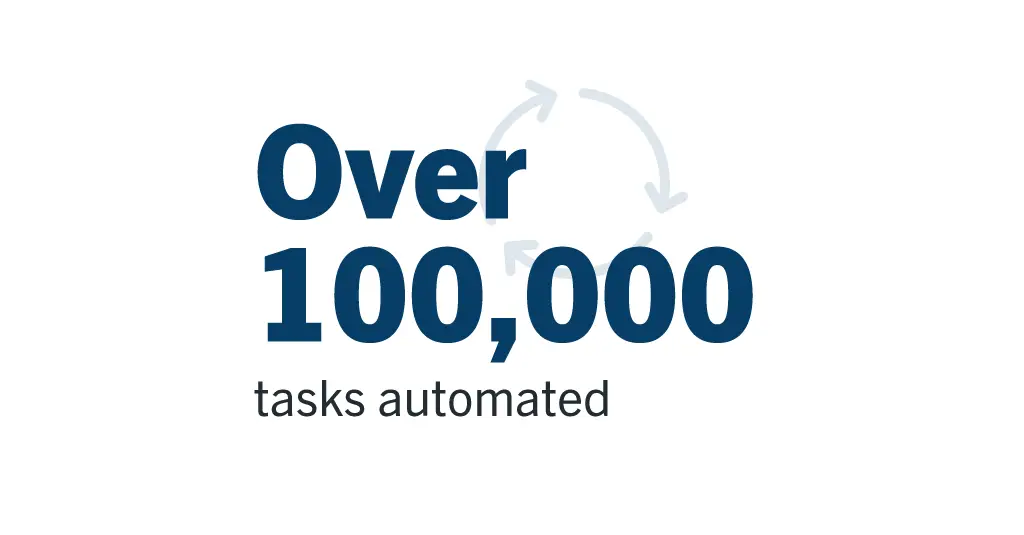
Within the first three months of launch, EASY Claims significantly improved efficiency at MSIG, automating over 100,000 tasks that previously required manual user input.

Additionally, the number of clients submitting claims via the new system has increased by up to 80%. This has streamlined and simplified the claims submission process for customers, aligning with shifting technological expectations and improving response times.

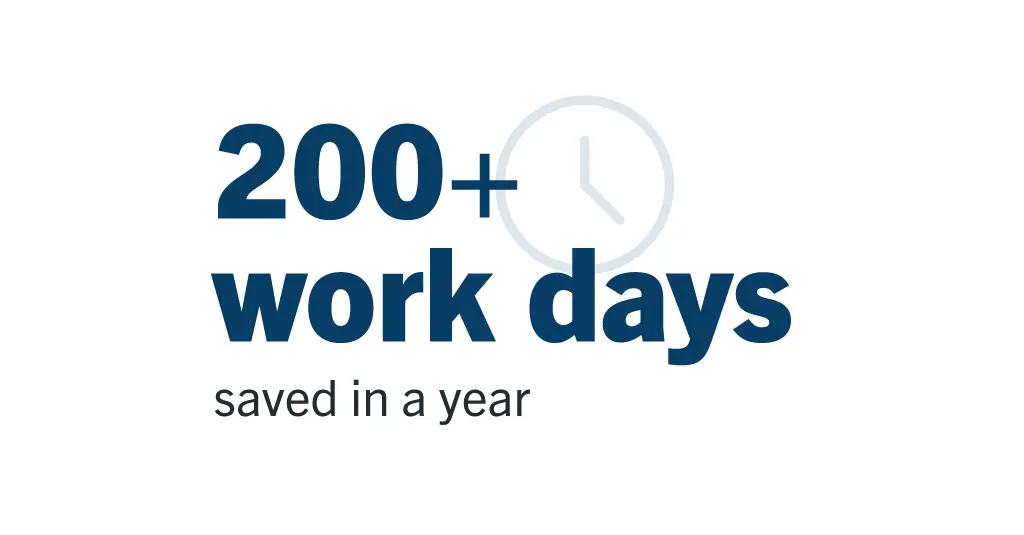
The EASY Claims system also improved the experience for staff processing customer submissions. Originally, acknowledging a newly submitted claim could take two days. Today, it takes fewer than 15 minutes. This translates to a savings of more than 200 work days a year for the claims processing staff organization-wide. The property claims management team specifically was able to save 57 days a year through the EASY Claims system.

The initiative has created the opportunity for ongoing optimization. In 2022, MSIG introduced Zero Touch for Helper insurance plan claims. Zero Touch is MSIG’s digital solution for claims assessment, enabling customers to submit their claims form, supporting documents and contact details online. The system then checks the customer’s claims history, policy validity and claim payment amount. For eligible clinical or dental expenses claims, payments are settled in just two working days. MSIG is planning to add Zero Touch to more products, creating a more seamless customer experience across product lines.

Along with facilitating claims submission for customers and acknowledgement in the backend, the automated process has helped save 12 days a year during the claims finalization stage. In terms of improved staff efficiency, MSIG has increased overall productivity by 1.4 times per hiring cycle within the Claims department alone. As a team with a significant amount of customer facetime and interaction, the Claims department’s increased productivity has improved both employee and customer experience.

In 2022, MSIG Hong Kong honored over HK$356 million, with a claims ratio of 92.9%, seeing a consistent increase for three consecutive years. The organization also reduced the number of complaints received by 50% in two years.

As the platform that powers the EASY Claims system, Laserfiche has helped to ensure a high level of customer service and a user-friendly, customer-oriented interface. The platform removes friction from the process of filing a claim, with intuitive features such as a “save-as-draft” function that enables customers to retrieve incomplete forms at any time using an email link, and smart suggestions that provide basic information and documents that customers will need to make a claim before they fill out the form. Customers can also receive SMS messages, email confirmations and tracking numbers to stay informed of the status of their claims.

“Claims is only the beginning of our digital transformation. Since implementing Laserfiche, we are looking at expanding to multiple channels, underwriting teams and core business processes to digitize and automate as well,” said Yue.

Investing in the Future

Recognizing that the insurance industry has historically relied on legacy processes, MSIG looked to digitize its claim service, rebuilding it to address both staff and client needs. With core business processes established between 10 to 20 years prior, the firm had an intimate knowledge of its users’ needs, refreshing a part of its business that focused heavily on customer and employee input. Working with Laserfiche to develop a nimble IT strategy, MSIG has been able to improve the customer and back-end experience within the claims process without disrupting day-to-day operations.
“Both business and technology landscapes have experienced so much rapid change and development,” said Yue. “These are the primary driver for MSIG’s digital transformation program, equipping us to anticipate our future needs as well as our customer expectations.”

Experiencing unprecedented and unanticipated changes in 2020, the EASY Claims System has proven itself to be highly adaptable, highlighting the need for digital transformation at MSIG. With claims as an obvious starting point, MSIG is looking to expand Laserfiche to other departments and processes. The organization is preparing to introduce claims process tracking for customers, allowing customers to track their claims in real time through the MSIG app or website — further enhancing visibility and continuing to build trust with customers.

“We now have a way to differentiate ourselves within Hong Kong’s insurance marketplace,” said Yue. “Laserfiche has helped users throughout the company to identify opportunities to improve day-to-day work. The sky is the limit.”

To learn more about how Laserfiche drives digital transformation, schedule a consultation today.