The Laserfiche Run Smarter® Awards celebrate the visionaries and trailblazers who are redefining the possible, using Laserfiche to dismantle operational silos and catalyze a new era of enterprise-wide productivity. These winners are enhancing productivity, reimagining processes and improving lives with Laserfiche technology.
From municipal governments slashing process times by 92% to retail giants unlocking data from millions of invoices, the 2026 winners represent the gold standard of operational excellence. These organizations are reimagining what’s possible when technology and human ingenuity collide. Here is how this year’s elite class of innovators is redefining the way the world works:
Nien-Ling Wacker Visionary of the Year:

Doug Haubert, City Prosecutor, Long Beach City Prosecutor’s Office
Doug Haubert has provided visionary leadership for the Long Beach City Prosecutor’s Office through championing the GUIDES program (Government User Integrated Diversion Enhancement System). By using Laserfiche to turn siloed records into real-time, actionable intelligence, Haubert supports Long Beach officers in addressing complex social issues — from gang violence to mental health — with unprecedented precision and empathy. This digital ecosystem fosters seamless collaboration between law enforcement and service providers, shifting the focus from arrests to high-impact intervention. The result has been a measurable reduction in crime, faster access to critical social services, and a strengthened foundation of community trust.
Digital Transformation Leader of the Year:
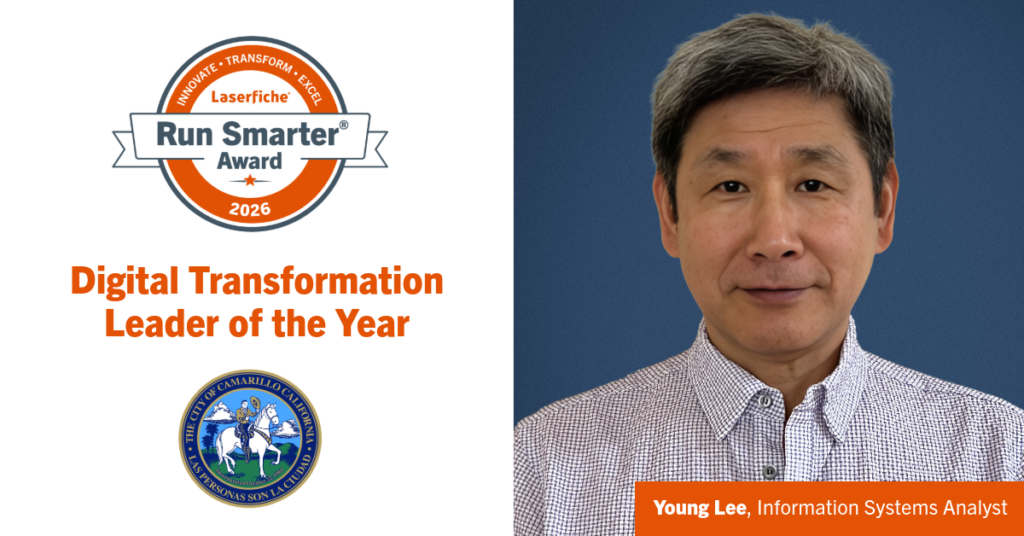
Young Lee, Information Systems Analyst, City of Camarillo, California
Under Young Lee’s leadership, the City of Camarillo transformed a daunting year-end HR and payroll marathon into a sprint. By fostering cross-departmental collaboration and launching a citywide workflow initiative, Lee’s upgraded automated workflow slashed processing time from 50 hours to just four — a staggering 92% increase in efficiency. This digital overhaul didn’t just eliminate administrative bottlenecks; it created higher accuracy and empowered staff to trade manual data entry for community impact. Lee proves that with the right workflow, administrative burdens vanish, delivering a clear ROI and better citizen service.
Laserfiche Champion of the Year:
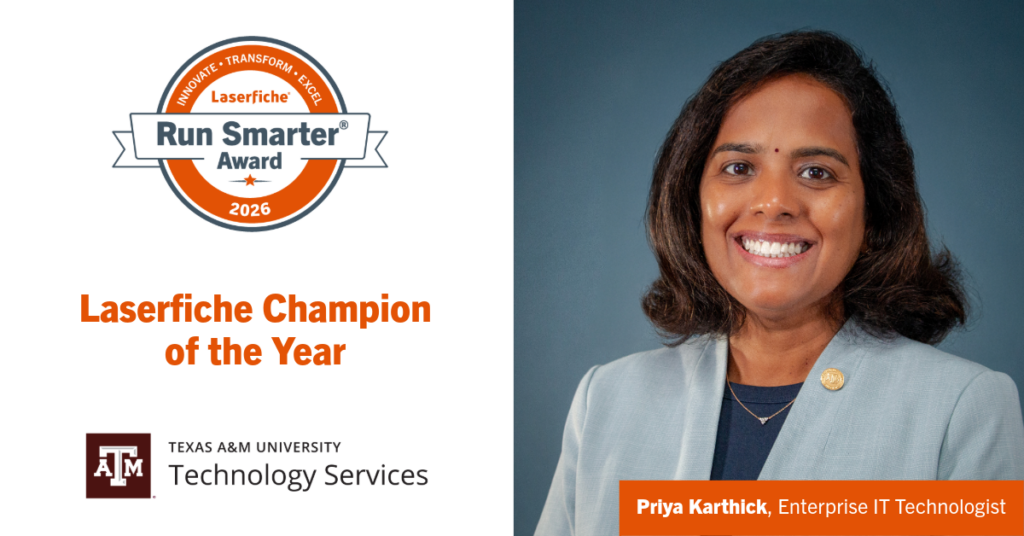
Priya Karthick, Enterprise IT Technologist, Texas A&M Technology Services
As a dedicated Laserfiche Champion, Priya Karthick has moved beyond simple implementation to true advocacy, mentoring peers and spearheading enterprise-wide Laserfiche initiatives that redefine the higher education experience. From automating complex onboarding processes to founding vibrant user groups, Karthick’s work ensures that hiring managers and new employees alike benefit from a seamless, digital-first environment. Her commitment to knowledge-sharing and community building has turned Texas A&M into a beacon of efficiency, proving that digital transformation is most powerful when it’s collaborative.
Best Program ROI:

Choctaw Nation IT Tribal Solutions
The Choctaw Nation is redefining how a tribal government serves its people. Since 2017, the organization has automated 111 distinct programs, turning what was once a months-long application process for tuition and emergency aid into a streamlined experience taking under two weeks. The impact is staggering: an 87% drop in incomplete submissions and over 107,000 staff hours reclaimed in a single year — a productivity boost valued at $3.76 million. By eliminating manual bottlenecks and saving $250,000 annually in administrative costs, the Choctaw Nation is proving that digital maturity isn’t just about efficiency; it’s about providing faster, more reliable support to every tribal member.
Watch the full interview with the Choctaw Nation’s Todd Hughes
Change Maker of the Year:
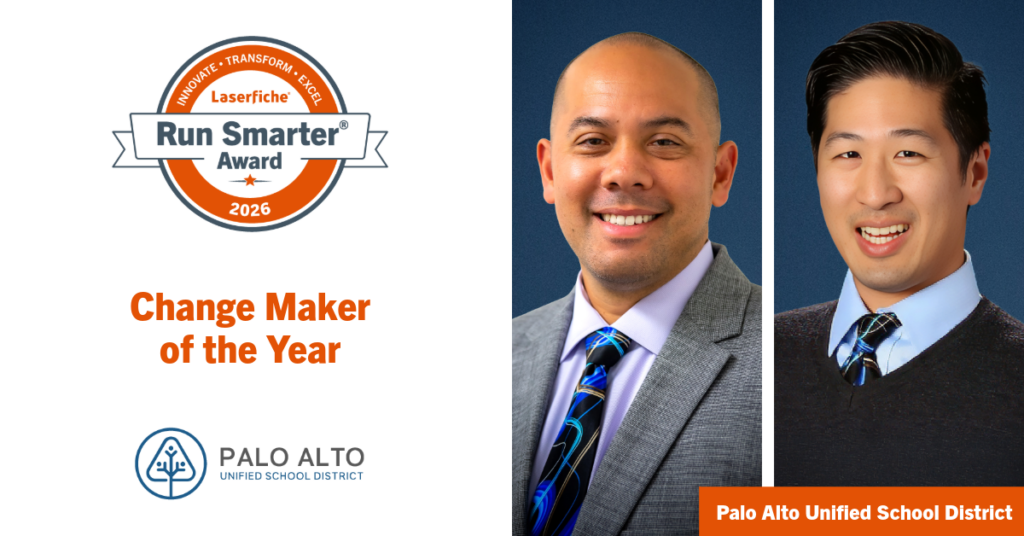
Palo Alto Unified School District Information Services
The Palo Alto Unified School District (PAUSD) turned a cloud migration into a complete operational rebirth. Through “Implementation 2.0,” the district upgrated to Laserfiche Cloud, choosing to rebuild critical business processes from the ground up rather than simply digitizing old habits.
By mastering APIs and modern data connectors, PAUSD successfully integrated Laserfiche with its student information system, automating everything from substitute teacher provisioning to enrollment. This shift has transitioned the IT team from “infrastructure maintenance” to strategic innovation partners. Through this effort, the team has affected profound cultural change where departments across fiscal, HR, and student services now collaborate to eliminate manual data entry and prioritize student success.
See how PAUSD focuses on student success with tech-driven solutions.
Laserfiche Program of the Year, U.S./Canada:
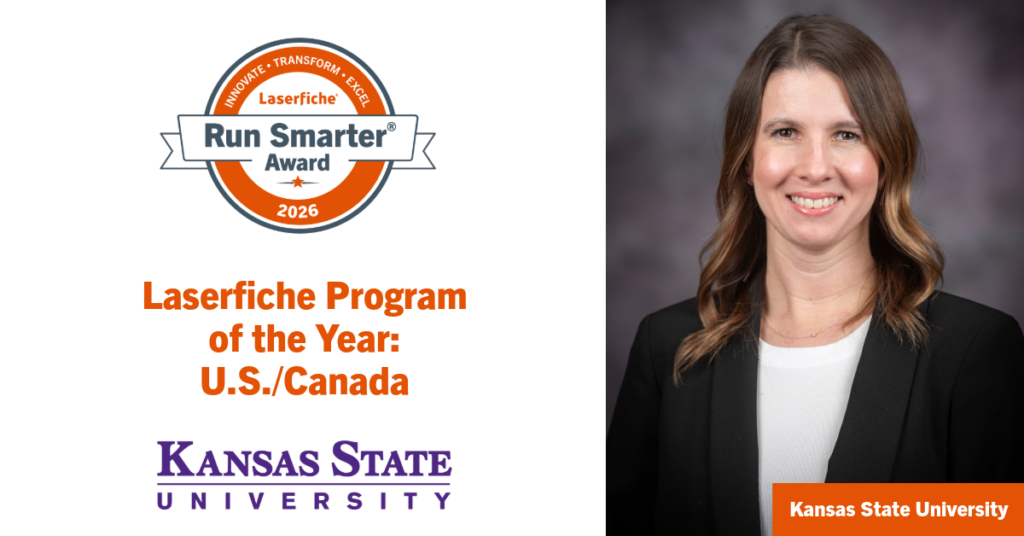
Kansas State University
The team at Kansas State University aims to set the standard for inspiring learning and engagement for their over 21,000 students. Laserfiche has supported that mission by transforming student services through intelligent automation. By automating a process for academic program changes, the university now processes 85% of requests in under a day, and has reclaimed over 49,000 staff hours. This transformation not only enhances student experience but also strengthens operational efficiency and responsiveness.
Laserfiche Program of the Year, EMEA:
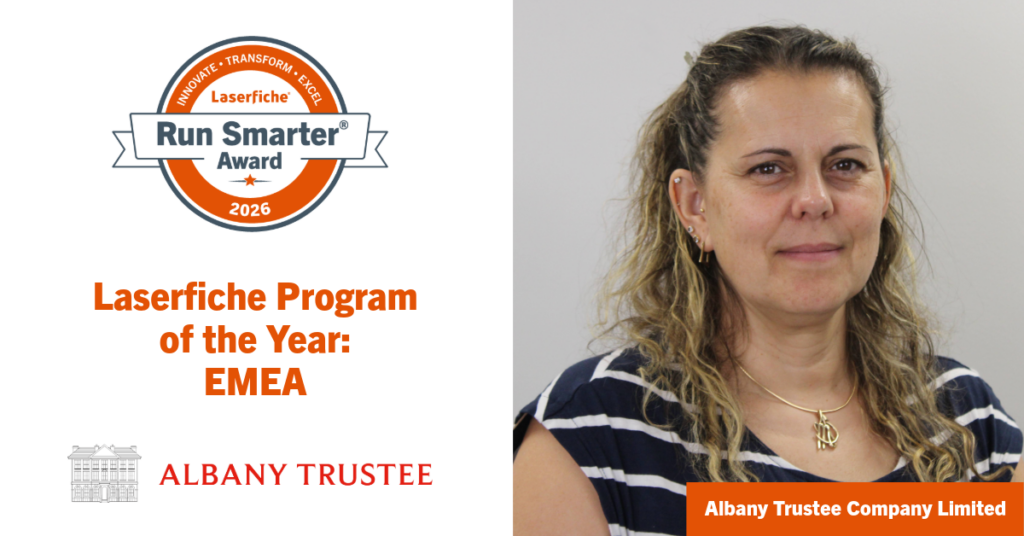
Albany Trustee Company Limited
Guernsey-based Albany Trustee turned its “Project Paperless” into a blueprint for modern fiduciary services. By embedding Laserfiche into the heart of operations, the firm transitioned from static spreadsheets to real-time visibility, ensuring that data integrity and compliance are built directly into their daily workflows. The results go beyond simple time savings; the organization has achieved structured AI adoption, driving higher accuracy in document creation and process analytics. By automating repetitive filing, Albany Trustee has empowered its team to focus on high-value client service. This transformation goes beyond streamlined operations and has sparked a culture of innovation where staff are digitally confident and actively seeking the next technological frontier.
Laserfiche Team of the Year:
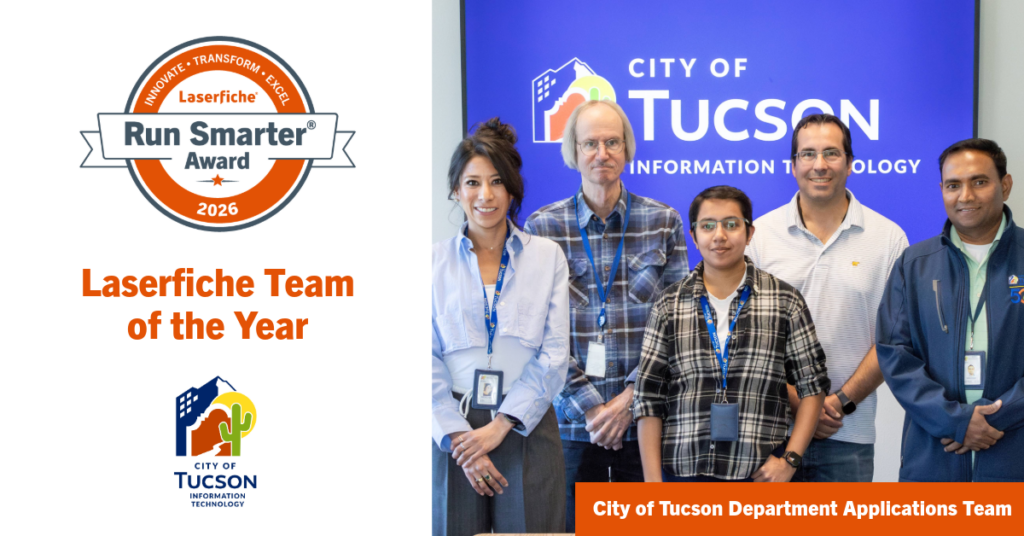
City of Tucson Department Applications Team
The City of Tucson transformed digital compliance into a community asset. Facing upcoming federal requirements, the city’s Laserfiche team proactively overhauled 335 public-facing production forms to support full accessibility and ADA compliance, bridging a critical gap in resident services. Through rigorous research and a structured deployment strategy, the city eliminated screen reader errors and improved usability for all residents — all without additional software investments or vendor intervention. This initiative set a new standard for inclusive governance. By prioritizing dignity and access, Tucson has ensured that every citizen can navigate city services with ease and confidence.
To hear more Laserfiche success stories, register for Empower today.