Bank of China Eliminated 90% of Paper Usage and Simplified Compliance Processes

The Bank of China uses Laserfiche to automate workflows, meet compliance requirements and take a modern approach to banking operations.

Transcript

The Bank of China as a group was founded in 1912 and is the second oldest bank that is still in existence. The bank is the fifth largest bank by capital in the world as of this year. And we are proud to be the most globally oriented. We have over 500 employees and our assets is over $50 billion. The bank started using Laserfiche over 10 years ago and at first, Laserfiche was used as solely a storage for old bank document files as a sort of a hard drive — it’s been over 10 years.

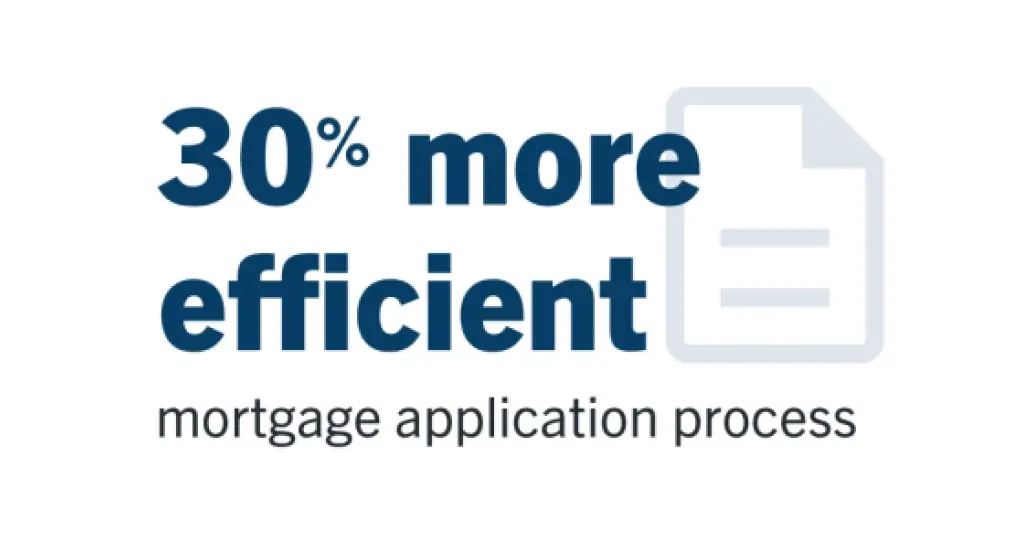
And when I first joined the bank about four years ago, I started looking more into the other services offered by Laserfiche and stumbled into Laserfiche’s offerings that were a lot more than just a repository for documentation management — more process management, workflow management. So that’s where I submitted the idea of paperless to the bank. We got rid of 90% of paper and also helped improve 30% of the manual work and more importantly, Laserfiche also help us meet a lot of regulatory compliance requirements.

My favorite part of Laserfiche I think is the people. Laserfiche helped the bank catch up about 15 years that we were lagging behind, especially when we are talking about paperless, you know, automating manual work. I’m Frank Chen and I’m using Laserfiche to empower Bank of China.

Explore additional insights on the Laserfiche banking solutions page: https://www.laserfiche.com/solutions/financial-services/banks-and-credit-unions/

Glasgow Credit Union Digitally Transforms the Member Experience and Supports Business Resilience

Glasgow Credit Union is one of the largest credit unions in Europe, serving the greater Glasgow area with a service scope focusing on savings and loans. Experiencing steady growth, the organization used Laserfiche to power a number of digital transformation initiatives aimed at reducing reliance on manual processes and ensuring that the organization could scale while maintaining the high-quality customer experience for which the credit union is known.

The organization initially implemented Laserfiche in 2016 as a document management platform, integrating it with Glasgow’s CRM system to improve access to information for customers and employees. Since then, Laserfiche has helped achieve business process automation to digitize and streamline loan processing. With a completely automated lending platform, clients are offered more competitive lending services, enabling customers to complete loan approvals in under an hour.

“Laserfiche is quite central to all we do,” said Paul McFarlane, chief technology officer at Glasgow Credit Union.

Additionally, Glasgow Credit Union’s digital initiatives have supported business continuity during the COVID-19 pandemic, enabling the organization to rapidly pivot to more digitally focused services. This aligns with expansion and scalability needs: Since implementing Laserfiche, membership has expanded to around 55,000 customers, representing nearly GBP 200 million (US$277 million*) in assets.

A Customer-Focused, Streamlined Lending Process

Founded in 1989, Glasgow Credit Union has grown substantially over the past four decades but its aim has remained the same: helping members and ensuring they have access to friendly, professional financial services that meet their needs. As member expectations have evolved, the credit union has prioritized digital transformation to provide the best possible member experience.

“It’s not just us, but in our sector, we didn’t have a lot of scalability in a lot of our processes,” McFarlane said. “So our application journey, specifically to onboard a member and apply for a loan, was quite a cumbersome process because it was paper-heavy and there was a lot of manual tasks. … There was no automation. Initially there were no web services as well.”

Using Laserfiche, the organization created an automated lending platform which digitized and centralized loan applications, increasing accessibility of information for staff; and ultimately accelerated loan processing for clients. With the understanding that an easy and fast new member onboarding is fundamental to a member’s experience, the credit union also digitized and streamlined the member onboarding process by integrating Laserfiche with its existing financial management application, Curtains, along with DocuSign. New members can now join the credit union and apply for funds within 15 minutes — a process that used to take up to three days.

With an eye toward enhancing the full client experience, Glasgow Credit Union also launched an initiative to streamline the borrowing process. This required as fast a turnaround as possible for customer loans to be issued once their loan applications were accepted. Previously handling around 24,000 loan agreements each year, the company manually processed and archived 120,000 sheets of paper. Customers were manually notified by staff at each stage of the loan journey, resulting in 10,000 resource hours each year.

“The feedback from members was phenomenal — the speed, the efficiency, the fact that we didn’t have to wait for the post to deliver the paper, and how easy it was to do business with us after we had improved those processes,” said McFarlane.

The Glasgow Credit Union team re-engineered and automated the loan agreement process so that loans could be completed in under an hour rather than several days. Approximately 80% of applications were completed digitally prior to the pandemic. COVID-19 increased reliance on digital processes, however, and today, nearly all loan applications are now submitted and processed in a digital manner, benefiting both clients and staff in terms of efficiency and turnaround.

“Our work with Laserfiche wasn’t about preparing for something like COVID — I don’t think anybody was preparing for something like COVID,” McFarlane explained. “Our decision to digitalize was all about efficiency; it was about speed and providing a better, slicker service to our members. But if we hadn’t done that, it would have been a different conversation that we’re having today.”

Improving the Customer Journey

Digitization has also benefited Glasgow Credit Union members by providing the ability to initiate joining and borrowing processes even after office business hours. An automated self-serve channel allows the processes to be kicked off without staff supervision. After initiating an application process, Laserfiche integrations with third party applications — DocuSign, Curtains, and a bespoke front-end platform — seamlessly drive the loan application process through a workflow from the initial application stage to final pay out.

Documents are delivered back to customers for signing, bringing them to the next application stage. The automated process saves more than 150 employee hours each week. Employees have reclaimed this time to focus on other parts of the business, expanding operational capacity.

“We’ve got Laserfiche integrated with our core technologies, so users can view documents through our front-end that are pulled from the Laserfiche platform, without having to open up separate applications,” said McFarlane. “Employees find it quite easy that they’re not having to work across multiple platforms.”

Underlying Glasgow Credit Union’s integration and process automation initiatives, the organization has robust records management practices — a critical element to success in the financial services industry. Laserfiche has supported the organization’s information governance, enabling the credit union to manage the full life cycle of documents and supporting compliance with European data protection regulations.

During the first year after deploying Laserfiche, Glasgow Credit Union experienced an income growth exceeding GBP 1 million (US$1.31 million*), as well as a GBP 40 million (US$52.44 million*) increase in loan volumes from 2017 to 2018. Followed by this business growth, the credit union’s team now feels they have an infinite operational capacity for loan processing. After four years, Glasgow Credit Union has achieved ROI equating to their original investment in the Laserfiche platform. Factoring in resource savings and improved customer journey times, the credit union has a scalable model that has resulted in significant growth in business.

As a central, business-critical software solution, Laserfiche has helped Glasgow Credit Union with existing scalability and project prioritization goals, as well as helped to respond to customer needs during the COVID-19 pandemic. Beyond member onboarding and loan applications, the organization is looking to implement Laserfiche in a similar capacity in mortgage applications and other business units.

“I’m amazed at the simplicity of integrating Laserfiche with our existing processes and other pieces of business-critical technology,” said McFarlane. “Our vision is to be the lender of choice within our marketplace in Glasgow – Laserfiche has helped us achieve that.”

*USD conversion subject to current exchange rate.

Find out more about how Laserfiche helps to transform credit unions here.

Discover the benefits of Laserfiche with a Laserfiche demo today.

The Metropolitan St. Louis Sewer District Digitizes to Enhance Records Management and Remote Collaboration Capabilities

The Metropolitan St. Louis Sewer District (MSD) provides comprehensive wastewater and stormwater management services to over 1.3 million people in St. Louis and surrounding areas. In recent years, the organization transformed its document management processes and file sharing, transitioning to Laserfiche Cloud. Using solutions such as Laserfiche Direct Share, MSD modernized the internal and external user experience while increasing efficiency and supporting information governance. As a result of investing in a robust digital infrastructure, MSD also adapted quickly to the challenges of the COVID-19 pandemic, equipping employees with tools to work remotely.

“The ease of adoption has been accelerated because Laserfiche is so easy to use,” said John Daly, information governance manager at MSD. “You don’t have to be a records management information governance expert to succeed with it.”

Testing the Waters for a Digital Future

Since 1954, MSD’s mission has been to protect the public’s health, safety and water environment by responsibly providing wastewater and stormwater management. While its mission hasn’t changed, MSD has identified opportunities for improving operations, empowering its employees and delivering consistent, high-quality customer service.

As local governments, agencies and special districts grow in size and services, the ability to share information and collaborate while also maintaining information governance becomes increasingly important. MSD implemented Laserfiche Cloud to enhance information sharing both internally and externally, while facilitating regulatory compliance, safeguarding electronic records and simplifying records management with Laserfiche’s records management capabilities. Along with automatic updates and easy scalability, Laserfiche Cloud has streamlined document search and retrieval, allowing staff to perform more efficiently and improve the quality of information delivered to stakeholders.

“The biggest impact of MSD’s Laserfiche Cloud initiative has been on employee productivity,” said Daly. “The ability for staff in different departments to access documents organization-wide has saved countless hours previously spent on manually requesting and sharing files.”

As part of this digital transformation initiative, staff are able to preserve critical information dating back decades — in addition to streamlining document management, this increases accessibility of important content while enabling oversight across the organization.

The operational benefits adopting a Laserfiche Cloud system were especially clear during the COVID-19 pandemic, helping staff transition to working remotely and contributing to business resiliency during the major disruption. MSD was able to continue meeting customer needs and keep staff safe at the same time. “With a high level of agility, flexibility and scalability, we couldn’t be happier with Laserfiche Cloud and its role in our organization as a core business application,” added Daly.

Interoperability is also key to MSD’s Laserfiche Cloud system, which includes custom-built integrations with Outlook and DocuSign that facilitate approval processes and improve the user experience. Designed and implemented in partnership with Accelerated Information Systems, MSD’s Laserfiche solution provider, MSD staff can drag-and-drop email directly from Outlook into the Laserfiche repository. All relevant record retention schedules are automatically applied to these uploaded emails, and attachments appear in the file’s metadata just as they would within Outlook.

“It has been extraordinary working with John Daly and the MSD team on their digital transformation,” said Zaheer Master, president at Accelerated Information Systems. “Going from a small, self-hosted Laserfiche implementation to the limitless capabilities of Laserfiche Cloud enabled MSD to better serve their constituents, even while working remotely during COVID-19. As a premier Laserfiche Cloud provider, Accelerated is excited to work with John and MSD to continue to expand their Laserfiche solution.”

“Laserfiche has really opened our eyes to new possibilities we had not even considered before,” said Daly. “We have really noticed an improvement in our overall operations since developing these integrations to automating document management processes.”

A Transparent Pipeline of Content

In addition to addressing the needs of staff members, MSD reimagined the way staff could share documents with people outside of the organization. Rather than rely on traditional methods of information sharing that lacked trackability such as email, USB drives or discs, MSD deployed Laserfiche Direct Share, which allows users to share content from their Laserfiche repository with external customers or community members in an audited and tracked manner.

“Direct Share has been one of the most useful solutions for us at MSD,” said Daly. “For the first time in the history of our organization, we are able to send documents securely and safely, which is a huge game changer.”

MSD has found Direct Share particularly useful for the legal department, which frequently sends and receives large files, and benefits from the visibility and security measures Direct Share provides. MSD attorneys can password-protect links, set the amount of time that recipients can access the document, and manage and track sharing and downloading activities

“I don’t have attorneys calling me anymore, saying, ‘How can I get these case files to someone?’” Daly said. “My phone doesn’t ring as much because now they are using Direct Share to their benefit.”

A Clear Path for Digital Transformation

Using Laserfiche Cloud, MSD continues to modernize processes enterprise-wide to reimagine how employees, vendors and citizens interact with the organization. As part of its commitment to transparency, the district created a Laserfiche-powered public portal on its new website, which gives citizens frictionless access to public documents such as those related to environmental compliance, annual reports, budgets, diversity and more.

Additionally, MSD is working to deploy a number of Laserfiche electronic forms to digitally manage activities such as travel reimbursement, company vehicle requests, badge requests, and business card requests, with more in the works. By digitizing information, forms and processes, MSD is uncovering greater efficiencies while improving the experience for employees and citizens alike.

“For me it’s all about the customer — whether internal or external,” Daly said. “Every day we have the opportunity to make someone’s day better and meeting people’s needs. Every day I’m working, I’m asking what paper-based processes we currently have that could become digital. When customers and employees find information in seconds, rather than minutes, that’s providing us with real organizational value.”

Request a demo to learn more about how Laserfiche Cloud can help your team accelerate how business gets done. 

Royal London FSI (Insurance)

In its efforts to move to a digital-first environment, find out how Royal London automated, optimized and transformed their organization

Leesburg, Virginia Supports Community and Local Businesses with Laserfiche Cloud

The information technology department for Leesburg, the largest town in Virginia, has a mission to “exceed the Town of Leesburg’s residents’ and employees’ expectations in delivering accessible and reilable technology services — creating a greater good for the local community.” This mission has the department constantly looking ahead to the technology solutions that will allow for the highest standards of customer service, security and system reliability, even in times of change.

The need for greater adaptability led the town to move its enterprise content management (ECM) to Laserfiche Cloud. The cloud-based system has been an invaluable asset to Leesburg government staff as it allowed for flexibility during stay-at-home mandates during the COVID-19 pandemic, but also because it has enabled IT to quickly respond to all types of needs — from internal service requests to public-facing financial relief programs.

The town has been able to expand its digital capabilities beyond the limitations of self-hosted servers with Laserfiche Cloud. This flexible and scalable environment has enabled Leesburg to achieve business continuity while supporting both staff and the community, even as remote and hybrid work becomes more prevalent.

“Laserfiche has helped us to handle data collection digitally and be elastic while responding to major changes within our IT infrastructure as staff work from home,” said Jakub Jedrzejczak, Director of IT at Leesburg. “I’m so impressed by Laserfiche Cloud and its automated features and scalability.”

Automating processes in Laserfiche Cloud has helped Leesburg be more agile, while positioning the town for long-term success. Using Laserfiche’s electronic forms and business process automation capabilities, Leesburg reduced manual tasks under tight schedules and continues to improve the quality of service provided to the community. This has streamlined response times to citizens, businesses and other organizations while enhancing the overall digital experience and maintaining fairness and transparency

Solutions to Support Local Businesses, Nonprofits and Town Staff

“Access to documents was key for us,” Jedrzejczak said. “We had to streamline a lot of internal processes and external services that we offer to support to our community.”

Like many other localities, during the pandemic, Leesburg needed a solution to process $6 million in funding under the Coronavirus Aid, Relief, and Economic Security (CARES) Act to support eligible businesses and nonprofit organizations.

“Distribution of relief packages is very time sensitive,” Jedrzejczak said. “Businesses and nonprofits can’t afford to wait months for government IT to develop an effective solution, or for us to implement a new system. The faster we can process data, the faster we can provide support to our community.”

Though the town already maintained detailed information on local businesses and nonprofit organizations, the primary challenge for the Leesburg IT department was authenticating existing data and determining eligibility. Laserfiche Cloud was implemented to streamline the authentication and cross-referencing processes based on existing data on thousands of local businesses and nonprofit organizations in the finance department database. Using this data, a dedicated form was set up with required fields relating to license information, employer identification number (EIN) and other conditions. If a business or nonprofit did not meet specific conditions — such as the revenue threshold or funding information — a pop-up notification would appear to indicate that the applicant is ineligible for CARES Act funding. Applications were sorted into separate folders within the Laserfiche repository based on whether they were accepted or not, which were concurrently monitored by town staff to ensure accuracy.

The metadata from the forms submissions helped the Leesburg team determine that over 330 businesses and over 20 nonprofits were eligible for funding. Not having to sort through data manually streamlined this process, reclaiming time for staff members to focus on citizen services at a time when the town needed them most.

The form helped with the quality of CARES Act submissions as well. Applications completed using the Laserfiche online form could not be submitted with incomplete or incorrect information, meaning that staff members did not have to spend time manually verifying missing details, business licenses and misspelled organization names.

“The more that we can guide residents with requests, the faster we can respond to their needs — often in minutes rather than days if the right information in the right format is submitted,” said Jedrzejczak.

The Digital Transformation Domino Effect

Amid changing budgets and uncertain economic conditions, governments must digitize and standardize public services. At the same time, it is also increasingly important for governments to respond to disruptions quickly, using flexible and scalable solutions that enable them to keep information secure. For these reasons, Leesburg is relying on the cloud for core technology systems including ERP, asset management and ECM.

“I can eliminate the need for maintenance, and have a scalable system that has a predictable cost, and I always inherit functionality — that is why we choose Laserfiche Cloud,” Jedrzejczak said. “I don’t have to worry about uptime. I don’t have to worry about the security. I know these two components are being addressed by the Laserfiche Cloud platform. I can focus on the development of the systems and focusing on user needs versus the back end maintenance.”

While town staff work with Laserfiche Solution Provider MCCi for complex projects, Leesburg is preemptively developing solutions in-house, including the electronic forms and digital processes related to the CARES Act. Laserfiche has empowered IT department staff to create a digital town hall where innovative solutions modernize citizen services. This has enabled staff to train new users on the platform based on specific needs and connect with the Laserfiche community to share best practices on ways to streamline business processes to increase efficiencies.

Today, most of the municipality’s departments are using Laserfiche. “We support internal processes, such as in our finance department, as well as external processes,” Jedrzejczak said. “Our town council uses Laserfiche to review documents; our utilities department uses it to gather information from residents, and we process a lot of forms and approvals through Laserfiche.”

Jedrzejczak added that most local governments today experience information overload — too many emails, and too much data to process.

“Information overload is a problem, but Laserfiche helps us with it. We can’t rely on in-person or paper-based communication to gather and process information anymore,” said Jedrzejczak. “There is so much that needs to be digitized — we just can’t have paper driving processes outside the office.”

The town has been in the process of creating a digital town hall to increase access to services even further. Leesburg is also working on integrations between Laserfiche and other core systems that will enable further automation and enhanced collaboration across the organization.

Looking ahead, Leesburg is building on its success by reimagining can continuing to modernize how it delivers services.

Want to gain more insights into modernizing service delivery? Read the Center for Digital Government report: “The Way Forward: Insights for Government Leaders on Modernizing Service Delivery” to understand why technology plays a critical role in generating cost savings, continuing operations and meeting growing constituent demands.

What Is Information Management?

Information management (IM) is “the collection and management of information from one or more sources and the distribution of that information to one or more audiences.”

Information management can take on many forms. In fact, it’s all around us. Your email inbox, the file system on your computer or phone, and even a physical filing cabinet are all examples of information management.

Still, with so many forms of information—such as text, audio, videos and more—along with swaths of new and old devices distributing it, it’s hard to keep track of all that’s coming in. This is especially cumbersome in a business environment, where up-to-date and accurate information is crucial.

Although the components of information management can be difficult to define, we’ll break down this concept into three key categories: accessibility, storage and governance.

Accessibility

Accessibility in the context of information management comes down to whether or not data is easy for users to access when they need it. Features such as full-text search and metadata fields can support organization and search-ability, which are essential to making information available to users once they have access to a system.

For a look at how information management principles could play out in the physical world, let’s use the example of a local library.

Here, the public can browse books organized alphabetically by metadata such as author and title. This way, if someone were looking for a work by one of their favorite writers, it would be accessible and easy for them to find. They can also always ask the librarian, whose encyclopedic knowledge of book titles, authors and famous quotes makes them almost like a human search engine, enabling them to find books even faster. A library not using these information management strategies might just have books of varying authors, titles and genres mixed, stacked and sorted any which way along with an unfortunately empty front desk—putting the burden entirely on eager readers to find what they need.

Storage and Preservation

Another key component of information management is ensuring that processes and methodologies are in place for the proper storage, maintenance and disposal of data. Certain laws and regulations even establish special retention rules for important or sensitive information types. In addition, it’s imperative to keep data updated to avoid confusion and protect it in case of disaster.

Let’s return to our imaginary library. To establish some retention rules, the library might only keep out the most recent five years of magazines and newspapers, and retire older issues to an archives room in the back of the building or in the basement—save for historically significant issues kept for students and curious historians.

The library might also preserve all issues, new and old, in a secure environment such as plastic sleeves to keep them from wear and tear.

Lastly, to ensure that reference materials have the most updated information, encyclopedias and dictionaries would be put under some form of version control—always available in the most recent edition, with earlier editions available by special request.

Governance

Good governance is about having controls in place to ensure that processes and procedures are followed. It’s also especially important to establish and enforce security policies so that only those authorized to view or edit information can do so.

For a library to enforce strict information governance, it might need to take some controversial measures. For one, it might enforce access rights by keeping books under lock and key to make sure unauthorized users can’t read or tamper with them. Second, to ensure information remains intact and reduce fraud, books would need to be returned by the person that borrowed them unless they get express written permission from the library. To track activity, the library might also want to install security cameras to make sure visitors are following the rules, and put trackers on each book that would beep in case of theft. Lastly, the classic check-in and check-out log practices might have to be revised to include permanent ink and a preserved archive of all logs for each and every book, in case this library was audited by a governing body and needed to present a thorough report.

Information Management Solutions for the Real World

It can be difficult to support information management principles in a non-digital setting. That’s why organizations seeking to better manage information need a scalable solution that gives them the tools and capabilities for success.

In terms of the future and innovations in the information management space, intelligent information management (IIM) is becoming increasingly popular. This methodology aims to take the core principles of information management and enhance them to account for new analytics technologies and forms of content, such as social media.

To summarize, information management, in a business sense, is a way for staff to easily access and share information, while also keeping it up-to-date, preserved and secure. While you can manage your information by conventional, paper-based methods, it is far more cost-effective to do so with digital, innovative solutions.

Nature Coast Women’s Care & Family Medicine Accelerates Patient Processing with Laserfiche Cloud

Nature Coast Women’s Care & Family Medicine developed an automated patient intake process using Laserfiche Cloud. As a tech-forward, comprehensive family healthcare center that offers a wide range of services — including obstetrics, gynecology, preventative services, aesthetic medicine and family medicine — Nature Coast modernized its patient experience using digital forms, and shortened patient wait times by 75%. Accelerating patient processing proved to be an especially significant benefit as COVID-19 arrived in the U.S. and it became more important to lessen the amount of time patients were in the waiting room.

A Faster, Modern Patient Experience

Located in Tallahassee, Florida, Nature Coast Women’s Care & Family Medicine was started by Dr. Chukwuma M. Okoroji to advocate for patients’ health throughout all stages of their life. The practice prides itself on combining technology innovation with a proactive approach to patient care. The practice’s strategic planning led to the implementation of Laserfiche Cloud as a means to reimagine the patient intake process.

“Before using Laserfiche, our patients were instructed to come into the office early to fill out their new patient packet, and bring their license, insurance card — just all these pieces of paper,” said Tamearia Williams, practice administrator at Nature Coast Women’s Care & Family Medicine. “They’re filling out demographic information, financial information, etc. They would sit out in the lobby for about 10 to 15 minutes, sometimes longer, to fill out that paperwork.”

Once the front desk staff receives the paperwork, they check to make sure everything is complete and accurate before scanning the packet into the patient chart in the electronic medical record system. While the legacy process was similar to many other clinics’ patient intake process, the Nature Coast team saw opportunities for improvement. By digitizing the intake form, the clinic could reduce errors that may occur when patients fill the form out with a pen and paper, and ensure all necessary information is captured without having to return the form to the patient. Additionally, offering the ability to submit the form online would reduce wait times for all patients and streamline work for the practice.

The Nature Coast team worked with Business Automation Pros, a Laserfiche solution provider, to implement Laserfiche Cloud content management and realize their vision for a digital patient intake process.

“Nature Coast Women’s Care & Family Medicine is one of the few healthcare facilities in the region that has a digital patient intake process, which is a testament to the organization’s forward-thinking approach, and commitment to providing the best possible experience for patients,” said Ja’Baree Allen, president of Business Automation Pros. “We worked with the Nature Coast team to digitize the process just before COVID-19 arrived in the U.S. and stay-at-home orders began to take effect, enabling the clinic to continue caring for patients without missing a beat.”

Using Laserfiche, Nature Coast Women’s Care & Family Medicine replaced the in-person, manual process with an online form that patients can submit before even setting foot in the office.

Once the patient submits the intake packet online, the information is sent to the front desk team, who receive an email notification of the new patient. The information is pushed over to eClinicalWorks, the electronic health records system.

“Our front desk staff just needs to press a button and all the patient’s information is put into eClinicalWorks, which sets up the initial appointment,” Williams said. “There’s no wait time once they arrive. Laserfiche frees up a lot of time for staff and reduces the amount of time patients are in the office.”

The Cloud Advantage

For the team at Nature Coast, selecting a cloud-based content management system aligned well with the practice’s approach to technology. “We’re very tech driven here, so we like cloud-based everything,” Williams said. “We are in this office to treat our patients. So we need our technology to be top-of-the-line, all across the board. We need the ability to be remote, now more than ever. And no matter where we are, we need access to our files and our electronic medical records.”

The need to protect patient information also played a large role in the decision to implement Laserfiche Cloud.

“Being a healthcare organization, data security, HIPPAA and regulatory compliance plays a large role in our decision-making process,” Williams added. “Protecting patient information is just something that we know we must do on a day-to-day basis. Laserfiche offers the ability to see who can see what in what folders on a granular level, which is a big benefit. And Laserfiche records management is DoD-certified, which makes us feel very secure using the system and protecting the information that we are putting into the system.”

Female Doctor Wearing Scrubs In Hospital Corridor Using Digital Tablet

A Prescription for Digital Transformation

Since implementation, Nature Coast has received positive feedback from patients and staff about the new digital intake process. “Patients aren’t sitting out in the waiting room filling out paperwork, and there’s no longer the issue of forgotten driver’s licenses or insurance cards — they’ve already sent us the information we need,” Williams said. “Nothing is missed. They get here and check in, they’re seen, and then they’re on their way.” She estimates that they have shortened wait times for new patients by 75%.

Nature Coast Women’s Care & Family Medicine continues to build on the success of the new patient intake process. Human resources and financial are the next departments that will digitize records and processes, with plans to put the clinic’s job application online using Laserfiche Forms. As Nature Coast automates more of the clinic’s repetitive tasks, Williams also plans to take advantage of Laserfiche’s process analytics to help grow the practice.

“We’re hoping to increase our new patient volume,” Williams said. “Once we get more data, and more of the organization starts using Laserfiche, those analytics will be key.”

Find out how Laserfiche Cloud can transform how you do business. Experience Laserfiche Cloud today.

Why Businesses and Organizations Need Secure File Sharing

With data privacy and governance rules that seem to get stricter each year, today’s businesses and organizations need to be more diligent than ever with their content. At the same time, the fast pace of business, technology and customer behavior requires content to be shared at record pace.

When an organization needs to share sensitive or confidential information with an outside source, be it a client, vendor or customer, things can get complicated. Organizations need to make this information accessible to the intended participants, while also putting in effort to preserve privacy and security – for the organization’s own benefit, and to stay in compliance with current industry laws, standards and regulations.

Finding a solution that meets your security and accessibility needs can be a tough balancing act. Many file sharing methods offer convenience at the expense of security and privacy, or the other way around.

However, secure file sharing technologies allow businesses to toe this line with ease – with a simple click of a button, you’re able to share files with others, while gaining the peace of mind of knowing your file sharing activity can be monitored and logged for auditors later.

Traditional File Sharing Isn’t Always Secure

While security of sensitive content is increasingly a concern, many organizations still rely on traditional ways of sharing files, opening up potential vulnerabilities.

These are some of the common methods today’s organizations use to share files, each with its own security challenges:

Paper

A popular method for sharing information that’s centuries old. Still, paper can get easily lost in the shuffle of day-to-day business operations, which is especially troublesome when dealing with sensitive or confidential information. Paper documents containing sensitive information can also be harder to permanently delete, usually requiring secure shredding services for proper disposal.

Email

Although you may be able to password-protect an attached file (depending on the application you use to create it,) emails themselves can’t be password protected. They can be encrypted (in other words, “scrambling” the message in transit so would-be interceptors can’t read it) but this by no means implies the content is secure once it reaches its destination.

This is especially true since emails received generally don’t have an expiration date – they can stay on a machine or server indefinitely unless deleted by a user or administrator. Even without these concerns, email attachments usually have file size limits, so the document you’re sending might simply be too large to share this way in the first place.

File Transfer Protocol (FTP)

Another option for sharing files is using an FTP server. Think of it as a network drive with a very specific way of moving files to and from it – the actual file transfer protocol itself.

On its own, FTP does not provide many built-in security features, or a way to track and monitor user activities being performed. The traditional FTP protocol doesn’t support encryption either, which means outside parties may be able to read or intercept data being sent. Your IT department may be able to create custom settings and features to make up for this lack of built-in security, however that’s only if you own the server, and would require heavy lifting as far as time and resources to make happen.

A More Secure Approach to File Sharing

Secure file sharing software offers a more locked-down alternative to paper and email, while still being easy and convenient to use. It also provides powerful security without the need for extensive infrastructure or IT resources:

  • Password protection helps to ensure that once a file reaches a client, constituent or customer, that it can only be viewed by those with the password.
  • Cloud hosted content means your organization doesn’t have to configure external-facing network security in order to share files.
  • Expiring URLs limit the amount of time for sharing. Largely, this reduces the risk that others will post your link online for extended periods of time.
  • Link deactivation can be performed by some secure file sharing tools. This functionality adds flexibility, enabling you to shut down a link regardless of its expiration date.
  • Audit trails are likely one of the most important reasons to choose a secure file sharing solution. Across industries, countries, states and jurisdictions, strict data governance regulations are increasingly common. One of the easiest ways to appease auditors is to keep accurate logs of your activity, including file sharing.

Improve Your File Sharing Practices

For organizations where protecting sensitive information is a priority, it’s practically essential to add secure file sharing software as part of your enterprise toolkit. Laserfiche’s secure file sharing feature, direct share, gives you the ability to share information securely, internally and externally, as part of Laserfiche’s robust enterprise content management platform.

Interested in seeing how Laserfiche can provide a way to manage your documents while supporting information governance efforts? Schedule a demo to learn more.

U.K. Law Firm Modernizes Legal Forms

SITUATION

• Paperwork after courtroom or police station visits took time away from client service
• Manual processes caused delays in billing and case completion
• Compliance and governance practices added time and burden of manual tasks on employees

RESULTS

• Less time spent on manual routing of information and data entry
• Faster, more responsive client service
• Increased accountability and transparency across the firm
• Reduction in administrative costs

A general practice law firm located in the United Kingdom offers a broad range of services across many types of U.K. law — such as crime, personal injury, property, and commercial — and needed a way to create clear accountability and support compliance for each litigator’s daily activities.

Helping Firm-wide Compliance

Prior to using Laserfiche, lawyers would fill out a 40-page form after courtroom or police station visits, creating a cumbersome and time-consuming process for both the lawyers and clients, as well as delays in billing and case completion.

“The compliance wasn’t there and the money wasn’t there,” said the firm’s operations manager. “The starting point for us was to deal with that particular issue of ensuring that when someone went to the police station, the paperwork actually got to us and got to us on time, instead of two weeks later.”

Laserfiche’s advanced electronic forms capabilities were an attractive solution for improving processing times and creating compliance controls. The company selected Laserfiche to bring information accessibility and accountability to the firm’s client and administrative processes.

Taking the Leg Work Out of Legal Work

The firm began by implementing mobile forms within its Crime and Litigation Department. With Laserfiche Forms, litigators can now use iPads to immediately capture and update client information at police stations or courtrooms, then instantly send the information to the firm’s administrative department for end-to-end processing. Forms-based workflow and analytics automatically track litigators’ court attendances and time reporting, simplifying accountability and providing more accurate data for billing.

“Laserfiche gave us a fantastic vehicle for that,” said the operations manager. “The Laserfiche system could capture information from the client, which is more and more important from a data protection point of view now. There was accountability. Things weren’t just going to disappear.”

Benefits include:

  • Solicitors can instantly and accurately capture client information on mobile devices.
  • Client paperwork is automatically sent from lawyers to administrative teams for processing.
  • Offline access to documents helps solicitors address client needs on the fly.
  • Police station visits, court attendances and litigator timecards are automatically tracked, creating more accurate and transparent reporting.
  • Administrative costs in the company’s Crime department were reduced.

“Laserfiche looks after all the typical elements of what a lawyer does,” added the operations manager. “That’s been the biggest breakthrough for us as a practice, and the most spectacular application of it for the firm as a whole.”

Shufro Rose Embraces Process Automation to Keep the Focus on Clients

SITUATION

• Shufro Rose needed a platform to automate key processes and integrate with the firm’s tech stack.
• The firm wanted to standardize the experience for advisors so that they could continue providing the highest standard of service to clients.

RESULTS

• Built a digital infrastructure strategy with Laserfiche that has enabled the firm to thrive through change
• Improved back-office efficiencies that make employees’ lives easier
• Kept client-facing staff focused on clients

Wealth management firms need consistent, standardized processes to scale their businesses successfully. When Shufro Rose began looking for ways to digitize its workflows, its customer relationship management tool was unable to produce the robust audit trails or perform the sophisticated workflow logic the firm needed to support its growth. It turned to Laserfiche to manage its books and records document repository and manage its workflows.

Today, the New York City-based independent wealth management firm manages approximately $2 billion in assets across 1,200 households and roughly 2,700 accounts. As it has grown, it has also steadily converted more and more of its business processes to digital workflows that integrate tools such as Tamarac and Docusign with Laserfiche.

“[Laserfiche is] our books and records document repository, storing all the client paperwork we’re required to have by regulation, but it also serves as an operational workload tool for things like account opening, moving money, so that our client-facing and operational teams can work as efficiently and effectively as possible.”

— Vibhaw Arya, chief operating officer at Shufro Rose

Building Flexible Workflows Driven By Front-End Needs

Laserfiche allows Shufro Rose to design automated workflows that make its front-end and back-end processes more efficient simultaneously. The firm approaches digitizing a process by starting with a front-end client request. That requires the team to think about the data points it needs to move forward each step of the way. The ability to integrate the process with Tamarac means the firm can pre-populate information it already has, minimizing data entry errors and enabling advisors and their staff to focus on client service, and obtaining only the information they still need.

Digitizing the firm’s money movement process was an early target. The ability to create electronic forms using Laserfiche, which are pre-populated with information saves administrative time and energy. The process also employs sophisticated logic to mitigate risk dynamically, based on the type of transaction taking place. For example, a request to write a first-party check from an investment account with all the information on file and documented can be approved without as much intervention as a client request to wire funds to a car dealership. In the latter case, the firm would need a letter of authorization on file, and may also need to get approvals from the portfolio manager and chief compliance officer.

Using workflows built with Laserfiche, Shufro Rose was able to automate the sending of approval requests as appropriate depending on the situation. The system prompts the appropriate people for secure, electronic approvals, reducing bottlenecks that could slow the process. Because the workflow automatically produces and files a paper trail in the Laserfiche repository, the firm’s record-keeping and compliance requirements are met without the need for additional intervention by staff.

“The repository is our books and records,” said Arya. “We have it all within one platform that keeps it all together and ensures we’ve got full audit trails.”

One of the firm’s significant Laserfiche initiatives has been to streamline the account opening process. This process originally relied heavily upon manual data entry and manually scanning numerous account documents. Shufro Rose created an electronic account opening form in Laserfiche that captures all client information necessary to open a new account in a consistent digital format. A Laserfiche workflow then automatically routes information to relevant operations and client service personnel for execution and review. Any required signatures required for account opening are executed through an integration with DocuSign.

Supporting Compliance and Risk Management

As Shufro Rose turned its attention to other business processes, it uncovered additional benefits to its operations. “The other thing Laserfiche Forms helps us do, given that it’s very checkbox-oriented and data-entry oriented, it also helps us create the operational procedures within Laserfiche itself—it’s become our digital operations management in a lot of ways,” said Arya.

Operational procedures are automatically documented because they live on the Laserfiche form used for the process. Because the process is digital, it’s also consistent. With workflow logic built into the process, steps don’t get forgotten or skipped. And the firm is able to keep track of things at all times using dashboards to monitor the status of requests. “It actually helps us onboard new employees as we’re trying to grow—it becomes a type of training tool, because the process helps you drive what’s needed,” Arya said.

Managing Increasing Complexity

With the help of its Laserfiche implementation partner, Accelerated Information Systems, Shufro Rose has been able to take advantage of the flexibility provided by Laserfiche’s API functions to automate more complex processes.

When teams initiate requests for gift letters, produced when clients donate stock, often to unlock tax benefits, Laserfiche uses an API connection to pull in the historical prices of the stock or stocks being gifted. The process then automatically generates the gift letter to send to the client, which the client can then pass to their tax accountant. At the end of the process, the paperwork and audit trail are filed in the Laserfiche repository without the need to scan paperwork manually.

More Benefits to Unlock

As Shufro Rose continues to grow, it has additional enhancements already in the pipeline. In 2023, it plans to automate the creation of investment policy statements for new and existing accounts, as well as the complex process of splitting existing accounts, for example, when transferring IRA account assets to beneficiaries.

“Shufro Rose’s approach to digital transformation is firmly rooted in its dedication to serving clients,” said Zaheer Master, president of Accelerated Information Systems, the solution provider that implemented Laserfiche at Shufro Rose. “The firm’s vision and use of Laserfiche has positioned it for success, even in times of dramatic change.”

Improving back-office efficiencies makes employees’ lives easier and keeps client-facing staff focused on activities that produce value for clients. With compliance functions automated and processes well documented, operations can run more smoothly without compromising on risk mitigation. “There are so many intangible values that have come out of this process,” Arya said. As organizations scale, process automation can ensure those benefits multiply.